Japanese
English
- 有料閲覧
PPV購入案内
1,320円 (1,200円+税10%) こちらは、1019ページから1023ページの文献です。購入には医書.jp本会員登録が必要です。
会員登録完了後に改めて上記「購入サイトへ」を選択してください。
または「購入サイトへ」選択後に「購入ログイン」、「新規会員登録」の順に進んでください。
会員登録について詳しくはをご確認ください。
- Abstract 文献概要
- 1ページ目 Look Inside
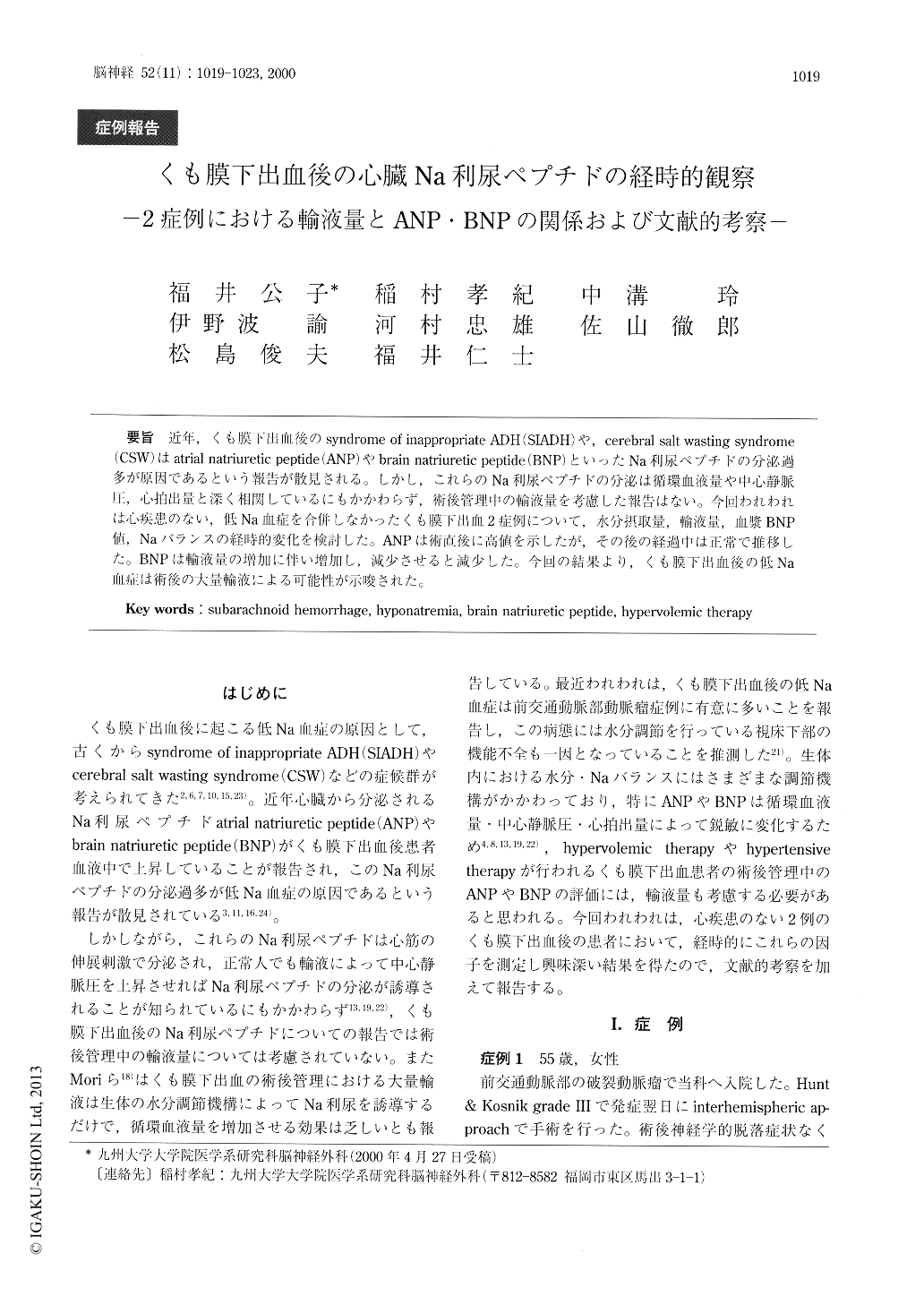
近年,くも膜下出血後のsyndrome of inappropriate ADH(SIADH)や,cerebral salt wasting syndrome(CSW)はatrial natriuretic peptide(ANP)やbrain natriuretic peptide(BNP)といったNa利尿ペプチドの分泌過多が原因であるという報告が散見される。しかし,これらのNa利尿ペプチドの分泌は循環血液量や中心静脈圧,心拍出量と深く相関しているにもかかわらず,術後管理中の輸液量を考慮した報告はない。今回われわれは心疾患のない,低Na血症を合併しなかったくも膜下出血2症例について,水分摂取量,輸液量,血漿BNP値,Naバランスの経時的変化を検討した。ANPは術直後に高値を示したが,その後の経過中は正常で推移した。BNPは輸液量の増加に伴い増加し,減少させると減少した。今回の結果より,くも膜下出血後の低Na血症は術後の大量輸液による可能性が示唆された。
Several authors described elevated natriuretic pep-tides, atrial natriuretic peptide (ANP) and brain natriu-retic peptide (BNP), in patients with subarachnoid hemorrhage (SAH), which were account for inappro-priate antidiuretic hormone (SIADH) or cerebral salt wasting syndrome (CSW). Although the secretion of natriuretic peptide depends on the total blood volume, central venous pressure, and cardiac output volume, the volume of fluid intake in patients with SAH had not been taken in consideration in previous report.
Copyright © 2000, Igaku-Shoin Ltd. All rights reserved.