Japanese
English
- 有料閲覧
PPV購入案内
1,320円 (1,200円+税10%) こちらは、981ページから989ページの文献です。購入には医書.jp本会員登録が必要です。
会員登録完了後に改めて上記「購入サイトへ」を選択してください。
または「購入サイトへ」選択後に「購入ログイン」、「新規会員登録」の順に進んでください。
会員登録について詳しくはをご確認ください。
- Abstract 文献概要
- 1ページ目 Look Inside
- 参考文献 Reference
- サイト内被引用 Cited by
抄録
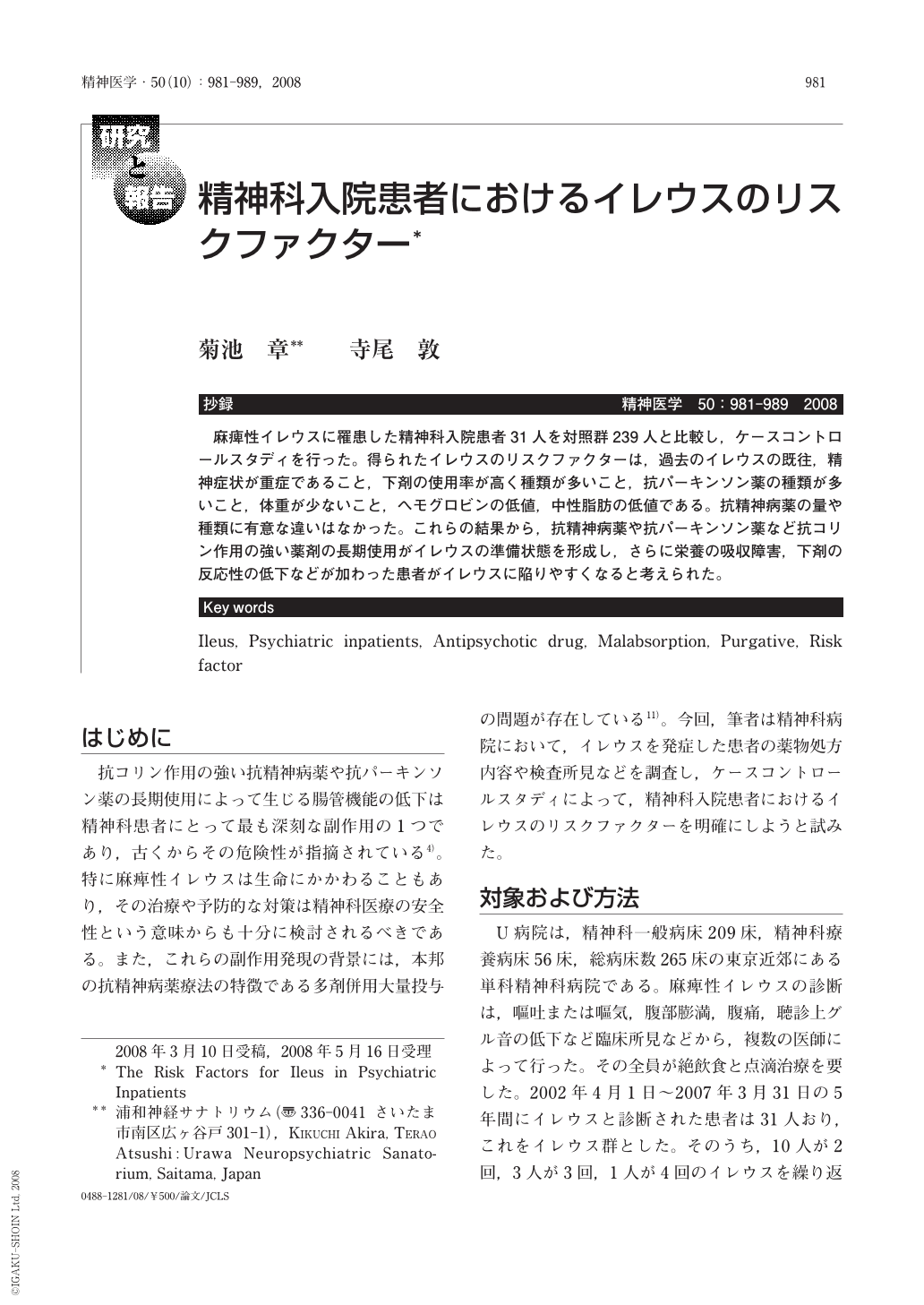
麻痺性イレウスに罹患した精神科入院患者31人を対照群239人と比較し,ケースコントロールスタディを行った。得られたイレウスのリスクファクターは,過去のイレウスの既往,精神症状が重症であること,下剤の使用率が高く種類が多いこと,抗パーキンソン薬の種類が多いこと,体重が少ないこと,ヘモグロビンの低値,中性脂肪の低値である。抗精神病薬の量や種類に有意な違いはなかった。これらの結果から,抗精神病薬や抗パーキンソン薬など抗コリン作用の強い薬剤の長期使用がイレウスの準備状態を形成し,さらに栄養の吸収障害,下剤の反応性の低下などが加わった患者がイレウスに陥りやすくなると考えられた。
A case-control study was performed with 239 controls and 31 inpatients of a psychiatric hospital who were suffering from paralytic ileus. The risk factors for ileus were found to be as follows:a history of ileus, severe psychiatric symptoms, frequent laxative use;use of many types of laxatives, use of many types of antiparkinsons drugs, low body weight, low levels of hemoglobin level, and low triglycerides level in the body. No significant differences were observed in the doses and types of antipsychotic drugs. These results indicate that the long-term use of drugs with strong anticholinergic effects, such as antipsychotic and antiparkinson's drugs, leads to a pre-ileus condition. Patients who suffered with malnutrition due to malabsorption and who showed decreased responses to laxatives were considered more likely to develop ileus.
Copyright © 2008, Igaku-Shoin Ltd. All rights reserved.