Japanese
English
- 有料閲覧
PPV購入案内
1,320円 (1,200円+税10%) こちらは、61ページから63ページの文献です。購入には医書.jp本会員登録が必要です。
会員登録完了後に改めて上記「購入サイトへ」を選択してください。
または「購入サイトへ」選択後に「購入ログイン」、「新規会員登録」の順に進んでください。
会員登録について詳しくはをご確認ください。
- Abstract 文献概要
- 1ページ目 Look Inside
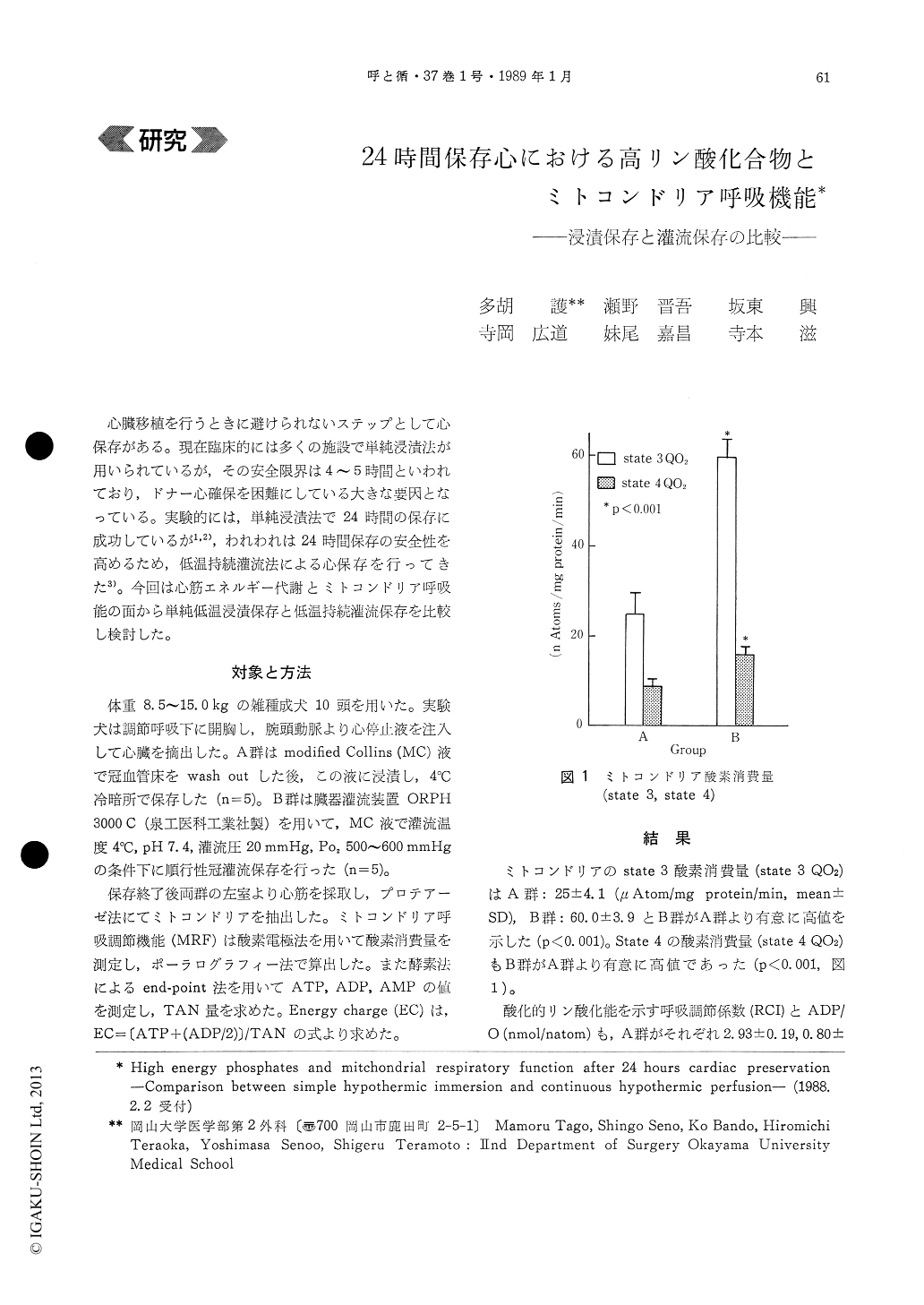
心臓移植を行うときに避けられないステップとして心保存がある。現在臨床的には多くの施設で単純浸漬法が用いられているが,その安全限界は4〜5時間といわれており,ドナー心確保を困難にしている大きな要因となっている。実験的には,単純浸漬法で24時間の保存に成功しているが1,2),われわれは24時間保存の安全性を高めるため,低温持続灌流法による心保存を行ってきた3)。今回は心筋エネルギー代謝とミトコンドリア呼吸能の面から単純低温浸漬保存と低温持続灌流保存を比較し検討した。
Cardiac preservation is one of the most impor-tant step during heart transplantation. Prolonged preservation period is necessary to get the greater donor pool.
To get safe prolonged preservation two methods, simple hypothermic immersion method (group A) and continuous hypothermic perfusion method (group B), were compared in this report by evaluating the my-ocardiac high energy phosphate level and mitchon-drial respiratory function.
The values of ATP, TAN and Energy charge were significantly higher in group B than group A (p<0. 001). Mitchondrial respiratory function such as state 3 QO2, state 4 QO2, RCI and ADP/O also showed significantly higher values in group B than group A (p<0. 001).
These date indicate that continuous hypothermic perfusion method provides better preservation than simple hypothermic immersion method for 24 hours cardiac preservation.
Copyright © 1989, Igaku-Shoin Ltd. All rights reserved.