Japanese
English
- 有料閲覧
PPV購入案内
1,320円 (1,200円+税10%) こちらは、385ページから388ページの文献です。購入には医書.jp本会員登録が必要です。
会員登録完了後に改めて上記「購入サイトへ」を選択してください。
または「購入サイトへ」選択後に「購入ログイン」、「新規会員登録」の順に進んでください。
会員登録について詳しくはをご確認ください。
- Abstract 文献概要
- 1ページ目 Look Inside
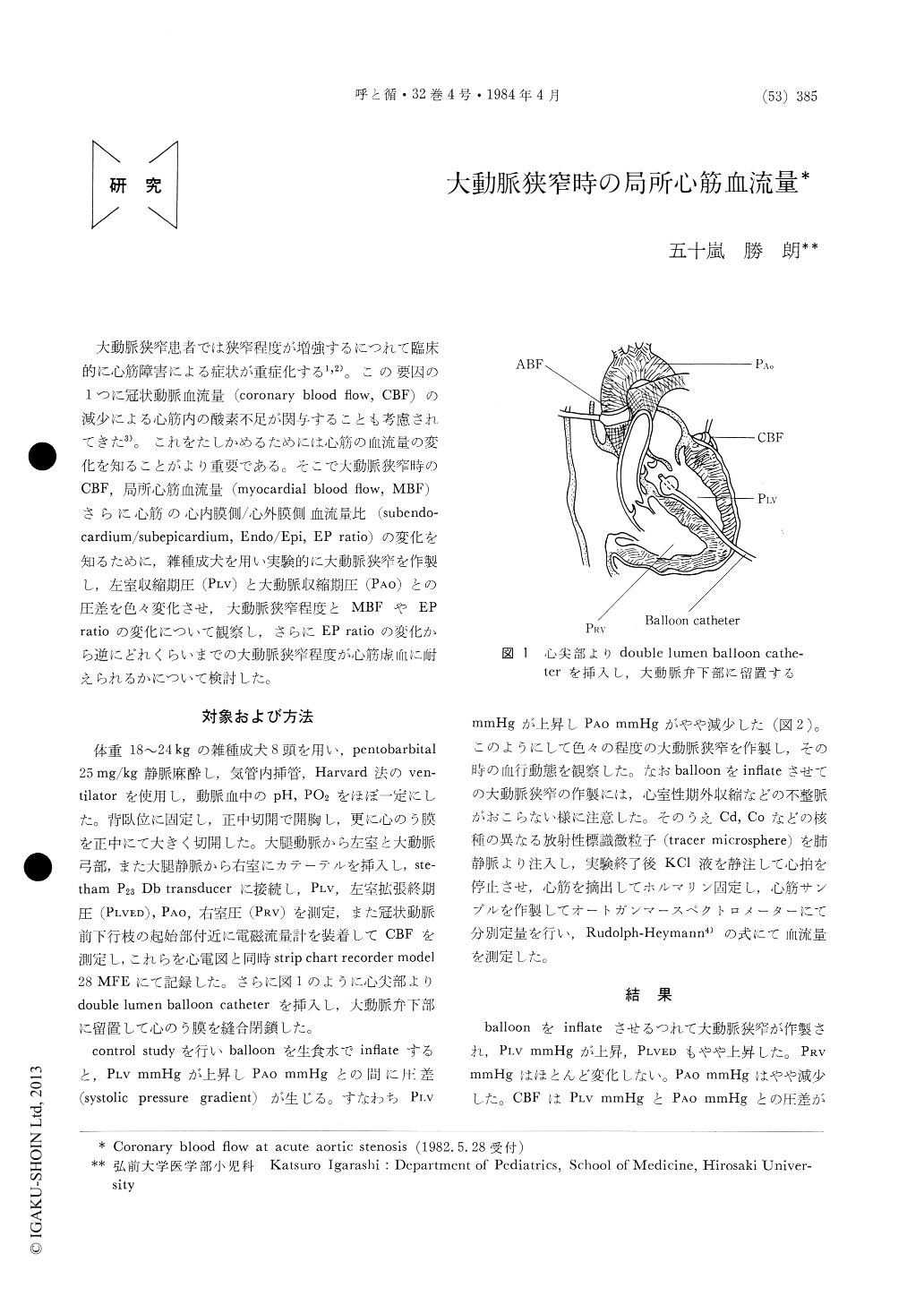
大動脈狭窄患者では狭窄程度が増強するにつれて臨床的に心筋障害による症状が重症化する1,2)。この要因の1つに冠状動脈血流量(coronary blood flow, CBF)の減少による心筋内の酸素不足が関与することも考慮されてきた3)。これをたしかめるためには心筋の血流量の変化を知ることがより重要である。そこで大動脈狭窄時のCBF,局所心筋血流量(myocardial blood flow, MBF)さらに心筋の心内膜側/心外膜側血流量比(subendo—cardium/subepicardium, Endo/Epi, EP ratio)の変化を知るために,雑種成犬を用い実験的に大動脈狭窄を作製し,左室収縮期圧(PLV)と大動脈収縮期圧(PAO)との圧差を色々変化させ,大動脈狭窄程度とMBFやEPratioの変化について観察し,さらにEP ratioの変化から逆にどれくらいまでの大動脈狭窄程度が心筋虚血に耐えられるかについて検討した。
A study was made of the correlation between the severity of aortic stenosis and the coronary blood flow (CBF), EP ratio. A mongrel adult dog was anesthetized and the chest was opened. A balloon catheter was introduced from the apical region and the balloon was inflated infravalvular portion to create stenosis. As the degree of stenosis became higher, the peak systolic left ventricular pressure increased and the coronary blood flow, EP ratio decreased. There was good correlation between the left ventricular pressure percent control and PLV-PAO gradient mmHg. The coronary blood flow was correlated to the myocardial blood flow. Above mentioned results, the degree of stenosis became higher, the PLV-PAO gradient mmHg increased and the EP ratio decreased.
Copyright © 1984, Igaku-Shoin Ltd. All rights reserved.