Japanese
English
- 有料閲覧
PPV購入案内
1,320円 (1,200円+税10%) こちらは、555ページから561ページの文献です。購入には医書.jp本会員登録が必要です。
会員登録完了後に改めて上記「購入サイトへ」を選択してください。
または「購入サイトへ」選択後に「購入ログイン」、「新規会員登録」の順に進んでください。
会員登録について詳しくはをご確認ください。
- Abstract 文献概要
- 1ページ目 Look Inside
- 参考文献 Reference
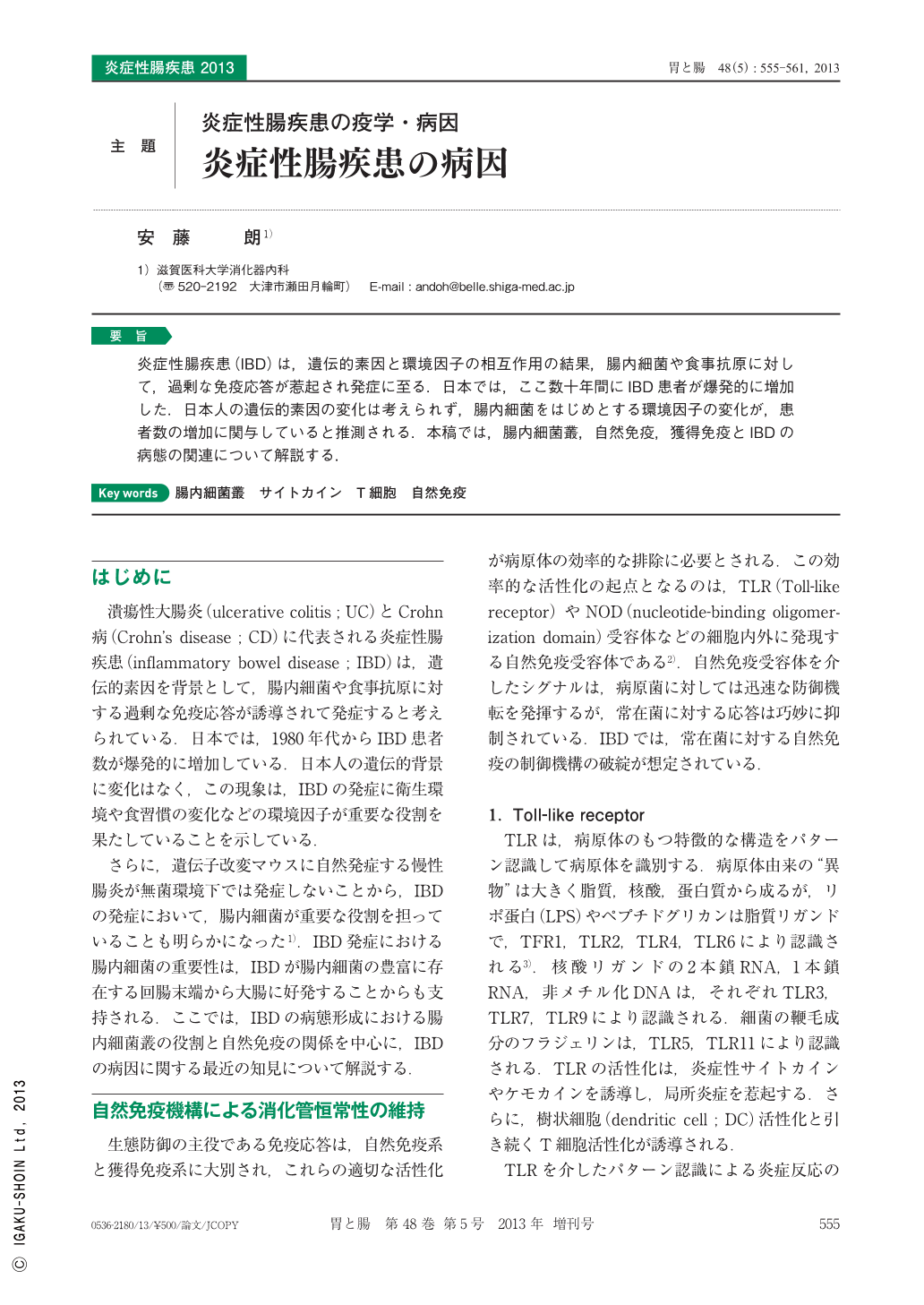
炎症性腸疾患(IBD)は,遺伝的素因と環境因子の相互作用の結果,腸内細菌や食事抗原に対して,過剰な免疫応答が惹起され発症に至る.日本では,ここ数十年間にIBD患者が爆発的に増加した.日本人の遺伝的素因の変化は考えられず,腸内細菌をはじめとする環境因子の変化が,患者数の増加に関与していると推測される.本稿では,腸内細菌叢,自然免疫,獲得免疫とIBDの病態の関連について解説する.
IBD(inflammatory bowel diseases)are chronic intestinal disorders of unknown etiology. The current hypothesis concerning the pathogenesis of IBD is that the mucosal immune system shows an aberrant response towards luminal antigens such as dietary factors and/or commensal microbiota in genetically susceptible individuals. In particular, the commensal microbiota is regarded as the major environmental factor relevant to IBD, and evidence for its role is provided through a variety of clinical and experimental studies. In this review, the changes in the gut microbiota and immune systems underlying the pathogenesis of IBD are described.
Copyright © 2013, Igaku-Shoin Ltd. All rights reserved.