Japanese
English
- 有料閲覧
PPV購入案内
1,320円 (1,200円+税10%) こちらは、1139ページから1145ページの文献です。購入には医書.jp本会員登録が必要です。
会員登録完了後に改めて上記「購入サイトへ」を選択してください。
または「購入サイトへ」選択後に「購入ログイン」、「新規会員登録」の順に進んでください。
会員登録について詳しくはをご確認ください。
- Abstract 文献概要
- 1ページ目 Look Inside
- 参考文献 Reference
- サイト内被引用 Cited by
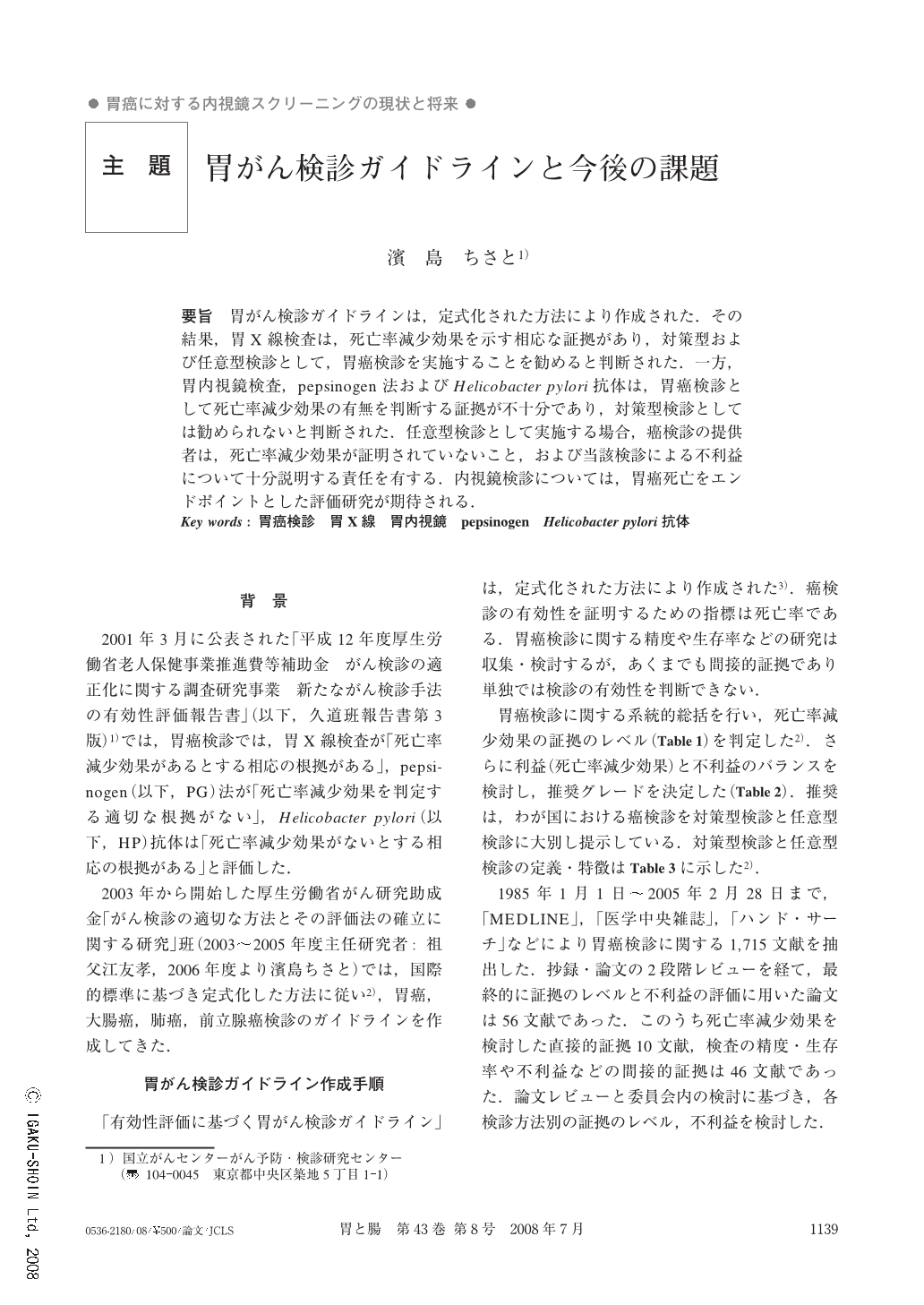
要旨 胃がん検診ガイドラインは,定式化された方法により作成された.その結果,胃X線検査は,死亡率減少効果を示す相応な証拠があり,対策型および任意型検診として,胃癌検診を実施することを勧めると判断された.一方,胃内視鏡検査,pepsinogen法およびHelicobacter pylori抗体は,胃癌検診として死亡率減少効果の有無を判断する証拠が不十分であり,対策型検診としては勧められないと判断された.任意型検診として実施する場合,癌検診の提供者は,死亡率減少効果が証明されていないこと,および当該検診による不利益について十分説明する責任を有する.内視鏡検診については,胃癌死亡をエンドポイントとした評価研究が期待される.
Based on the standardized method developed for the Japanese Guidelines for Cancer Screening, the efficacies of various methods for gastric cancer screening were evaluated and the guideline was decided on. Four methods for gastric cancer screening were evaluated;photofluorography, endoscopy, serum pepsinogen test and Helicobacter pylori antibody. Based on the balance of benefit (mortality reduction from gastric cancer) and harm, the recommendations for population-based and opportunistic screening were formulated. Gastric cancer screening using photofluorography was recommended for both screening programs. The other methods were not recommended for population-based screening due to insufficient evidence. In opportunistic screening, if individuals request screening, they should be given appropriate information, and the decision-making should be made at the individual level. Further study, evaluating mortality reduction due to gastric cancer through the use of endoscopic screening, is required.
Copyright © 2008, Igaku-Shoin Ltd. All rights reserved.