Japanese
English
- 有料閲覧
- Abstract 文献概要
- 1ページ目 Look Inside
- 参考文献 Reference
はじめに
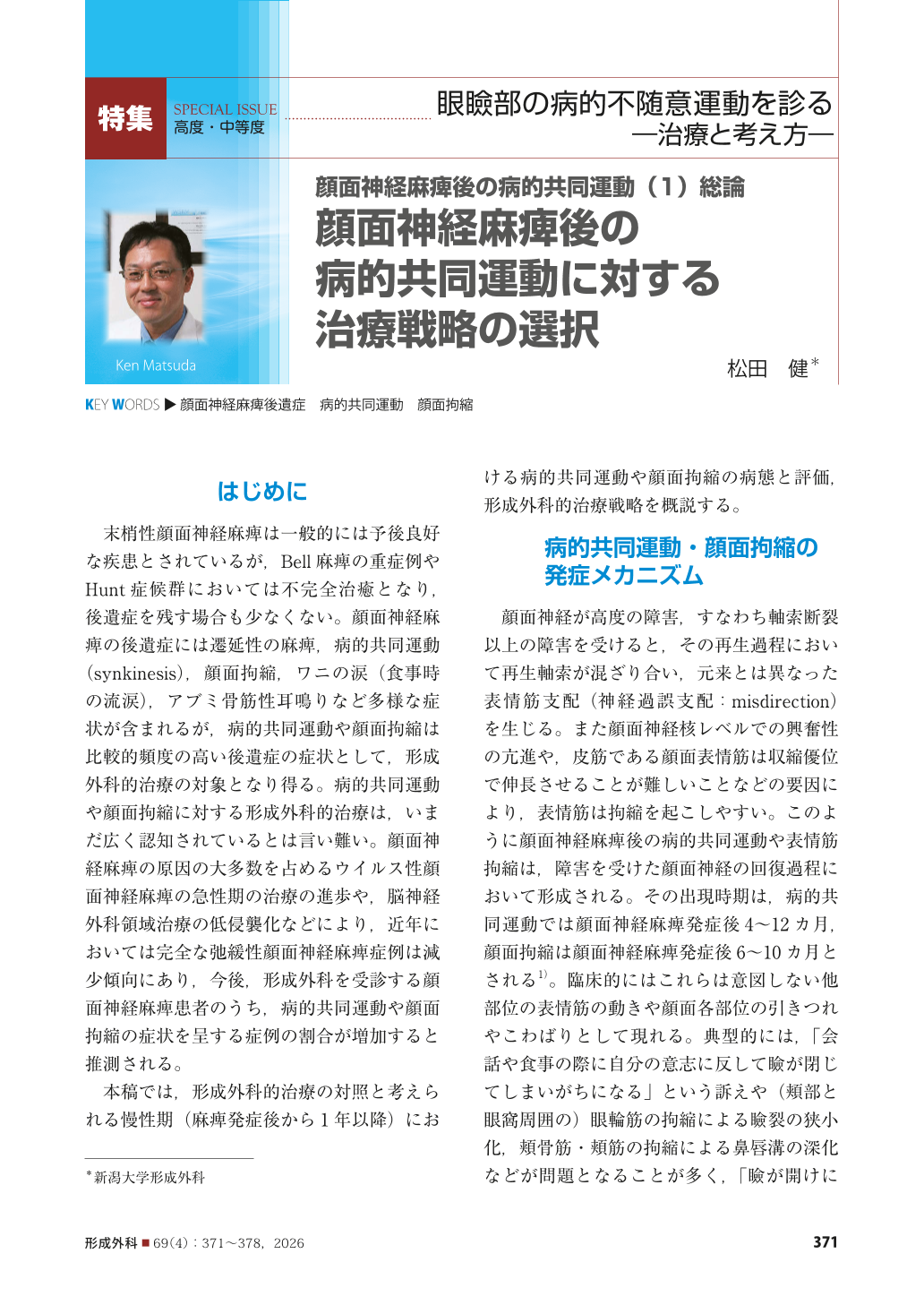
末梢性顔面神経麻痺は一般的には予後良好な疾患とされているが,Bell麻痺の重症例やHunt症候群においては不完全治癒となり,後遺症を残す場合も少なくない。顔面神経麻痺の後遺症には遷延性の麻痺,病的共同運動(synkinesis),顔面拘縮,ワニの涙(食事時の流涙),アブミ骨筋性耳鳴りなど多様な症状が含まれるが,病的共同運動や顔面拘縮は比較的頻度の高い後遺症の症状として,形成外科的治療の対象となり得る。病的共同運動や顔面拘縮に対する形成外科的治療は,いまだ広く認知されているとは言い難い。顔面神経麻痺の原因の大多数を占めるウイルス性顔面神経麻痺の急性期の治療の進歩や,脳神経外科領域治療の低侵襲化などにより,近年においては完全な弛緩性顔面神経麻痺症例は減少傾向にあり,今後,形成外科を受診する顔面神経麻痺患者のうち,病的共同運動や顔面拘縮の症状を呈する症例の割合が増加すると推測される。
本稿では,形成外科的治療の対照と考えられる慢性期(麻痺発症後から1年以降)における病的共同運動や顔面拘縮の病態と評価,形成外科的治療戦略を概説する。
Facial paralysis is generally considered a condition with a favorable prognosis. However, incomplete recovery is common in severe cases of Bellʼs palsy and in Huntʼs syndrome, which often leave sequelae. The sequelae of facial paralysis encompass a wide range of symptoms, including persistent paralysis, synkinesis, facial contracture, crocodile tears, and stapedial muscle tinnitus. Synkinesis and facial contracture, being relatively common sequelae, may be candidates for plastic surgical treatment; however, plastic surgical treatment for synkinesis and facial contracture is not yet widely recognized. Advances in acute-phase treatment for viral facial nerve paralysis (which accounts for the majority of cases) and the trend toward minimally invasive neurosurgical interventions have led to a recent decline in the number of cases of complete flaccid facial nerve paralysis. The proportion of patients with facial paralysis who present with pathological synkinesis or facial contracture when consulting a plastic surgeon is thus expected to increase.
Copyright© 2026 KOKUSEIDO CO., LTD. All Rights Reserved.