Japanese
English
- 有料閲覧
- Abstract 文献概要
- 1ページ目 Look Inside
- 参考文献 Reference
はじめに
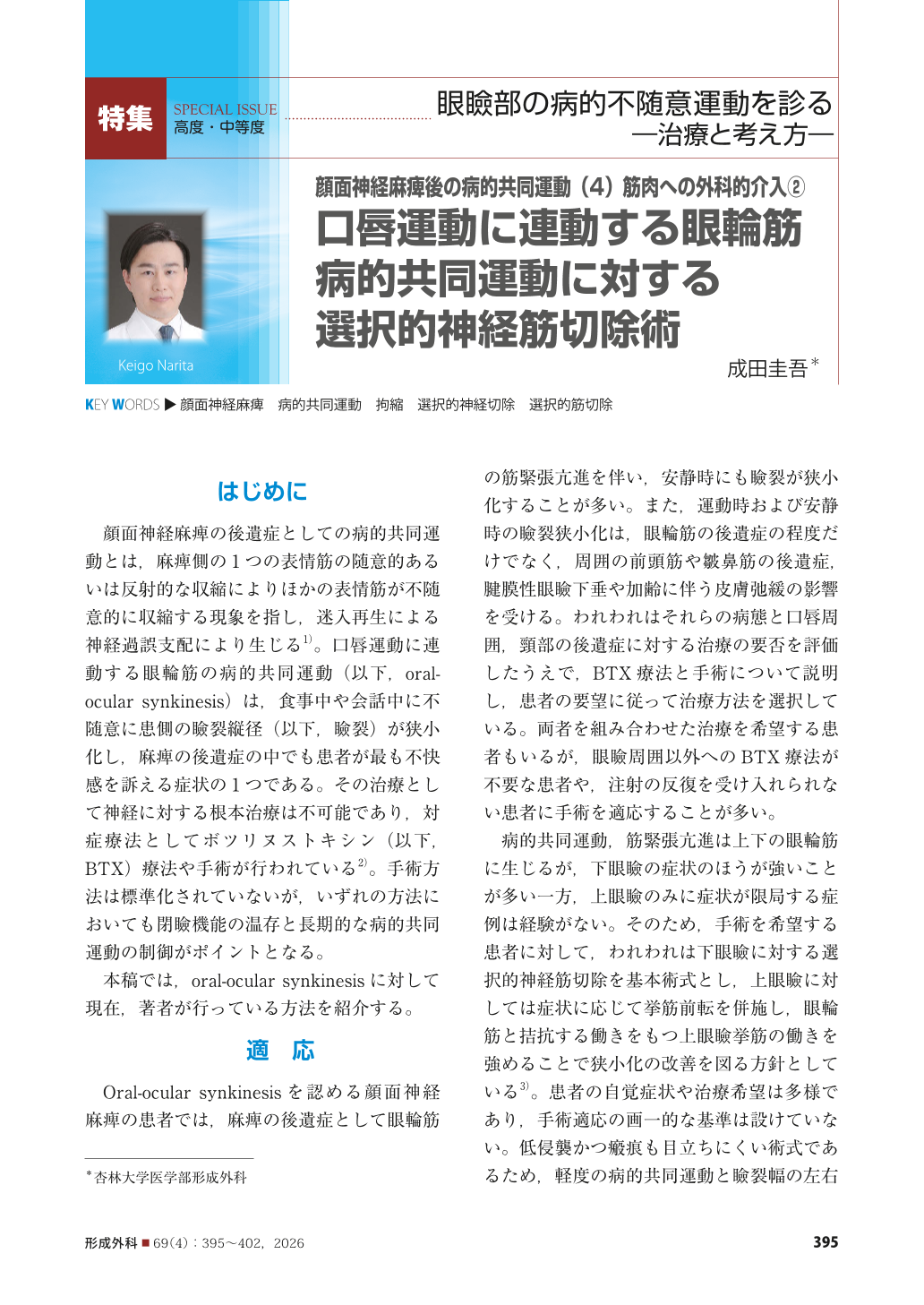
顔面神経麻痺の後遺症としての病的共同運動とは,麻痺側の1つの表情筋の随意的あるいは反射的な収縮によりほかの表情筋が不随意的に収縮する現象を指し,迷入再生による神経過誤支配により生じる 1)。口唇運動に連動する眼輪筋の病的共同運動(以下,oral-ocular synkinesis)は,食事中や会話中に不随意に患側の瞼裂縦径(以下,瞼裂)が狭小化し,麻痺の後遺症の中でも患者が最も不快感を訴える症状の1つである。その治療として神経に対する根本治療は不可能であり,対症療法としてボツリヌストキシン(以下,BTX)療法や手術が行われている 2)。手術方法は標準化されていないが,いずれの方法においても閉瞼機能の温存と長期的な病的共同運動の制御がポイントとなる。
本稿では,oral-ocular synkinesisに対して現在,著者が行っている方法を紹介する。
Oral-ocular synkinesis is a common sequela of facial paralysis. It is defined as coordinated, involuntary eye closure when eating and speaking. Patients with oral-ocular synkinesis usually complain of intermittent narrowing of the eyelid fissures as well as continuous narrowing by a hypertonic orbicularis oculi muscle. Repetitive botulinum toxin injection therapy is a standard treatment for these symptoms; no surgical treatment has been established. We have treated these symptoms by performing the resection of a peripheral strip (3- to 4-mm wide) of the lower orbicularis oculi muscle together with the innervating facial nerve branches. Our method could contribute to the long-term relief of synkinetic movement and hypertonicity of the lower orbicularis oculi muscle with the preservation of eye closure function. The combination of our selective neuromyectomy and the advancement of levator aponeurosis for the upper eyelid is a useful surgical option for the treatment of periocular synkinesis, although the indications for postpareic patients with weak eye closure demand particular care and attention.
Copyright© 2026 KOKUSEIDO CO., LTD. All Rights Reserved.