Japanese
English
- 有料閲覧
- Abstract 文献概要
- 1ページ目 Look Inside
- 参考文献 Reference
はじめに
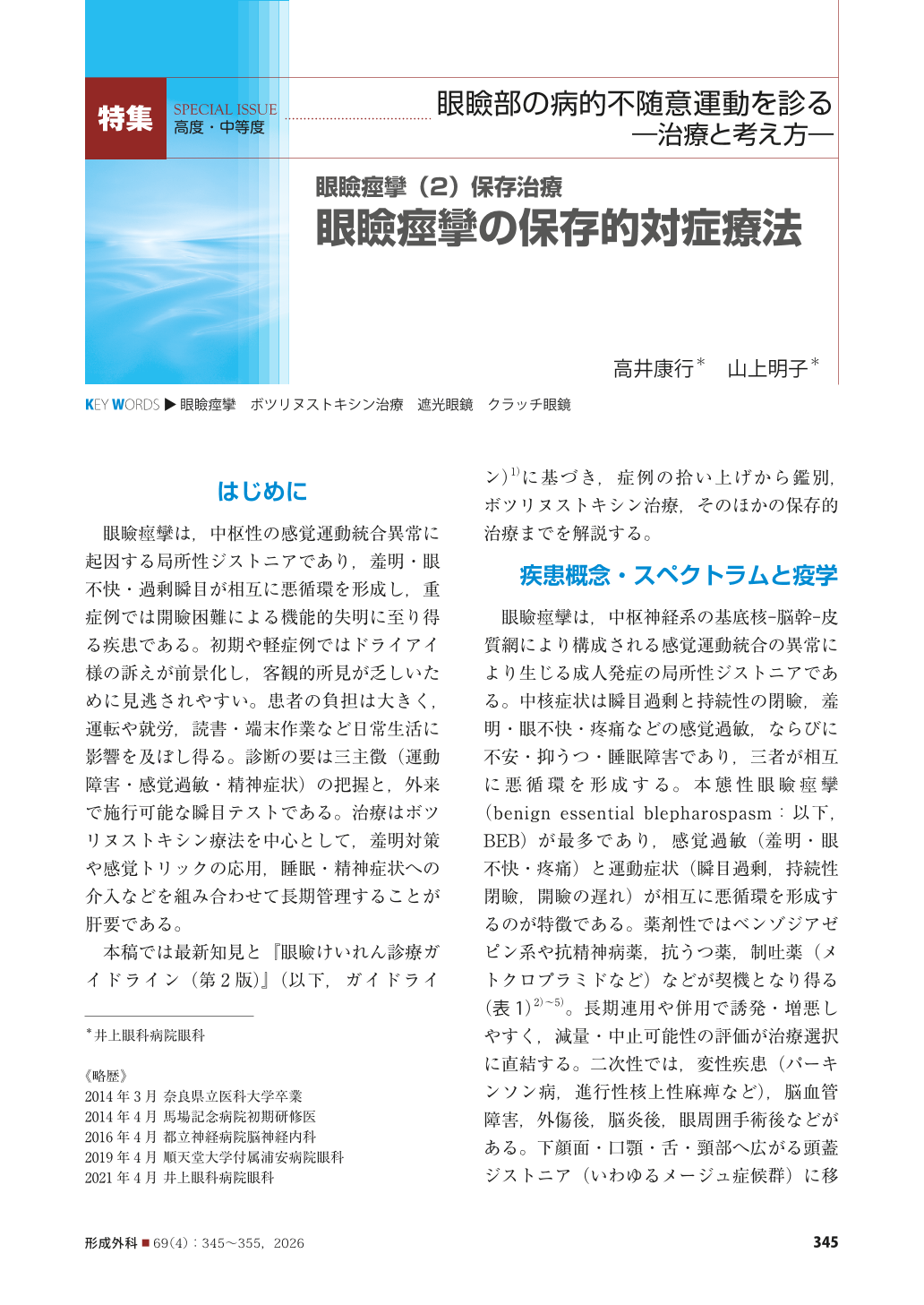
眼瞼痙攣は,中枢性の感覚運動統合異常に起因する局所性ジストニアであり,羞明・眼不快・過剰瞬目が相互に悪循環を形成し,重症例では開瞼困難による機能的失明に至り得る疾患である。初期や軽症例ではドライアイ様の訴えが前景化し,客観的所見が乏しいために見逃されやすい。患者の負担は大きく,運転や就労,読書・端末作業など日常生活に影響を及ぼし得る。診断の要は三主徴(運動障害・感覚過敏・精神症状)の把握と,外来で施行可能な瞬目テストである。治療はボツリヌストキシン療法を中心として,羞明対策や感覚トリックの応用,睡眠・精神症状への介入などを組み合わせて長期管理することが肝要である。
本稿では最新知見と『眼瞼けいれん診療ガイドライン(第2版)』(以下,ガイドライン) 1)に基づき,症例の拾い上げから鑑別,ボツリヌストキシン治療,そのほかの保存的治療までを解説する。
Blepharospasm is recognized as an adult-onset focal dystonia characterized by impaired blink control. Its clinical diagnosis generally involves a structured process, often beginning with screening via a 10-item questionnaire, where three or more positive responses suggest the condition. This is typically followed by history-taking during which facial signs are checked, such as frequent forceful blinking, glabellar tightening, and photosensitivity. A three-task blink test assessing light, rapid, and forceful blinking/reopening may also be used to help grade the severity of the condition, sometimes using a 0- to 8-point scale. Treatment approaches are broadly categorized into two layers. Botulinum toxin type A injection is frequently considered the first-line therapy for blepharospasm, usually followed by a review at 2–3 weeks to assess the treatmentʼs efficacy and adjust injection sites if necessary. Secondly, non-pharmacological measures are often added; these may include aids such as FL-41 lenses or wavelength-selective lenses, the planned short-term use of high-density light-reduction glasses, environmental (lighting/screen) adjustments, and coached sensory tricks. A medication review is also important, aiming to discontinue a patientʼs dopamine-blocking antiemetics or antipsychotics and long-term benzodiazepines when possible. Selective oral adjuncts may be utilized to support specific cases. This overall pathway is designed to facilitate the timely identification of blepharospasm and achieve practical, durable symptom control.
Copyright© 2026 KOKUSEIDO CO., LTD. All Rights Reserved.