Japanese
English
- 有料閲覧
- Abstract 文献概要
- 1ページ目 Look Inside
- 参考文献 Reference
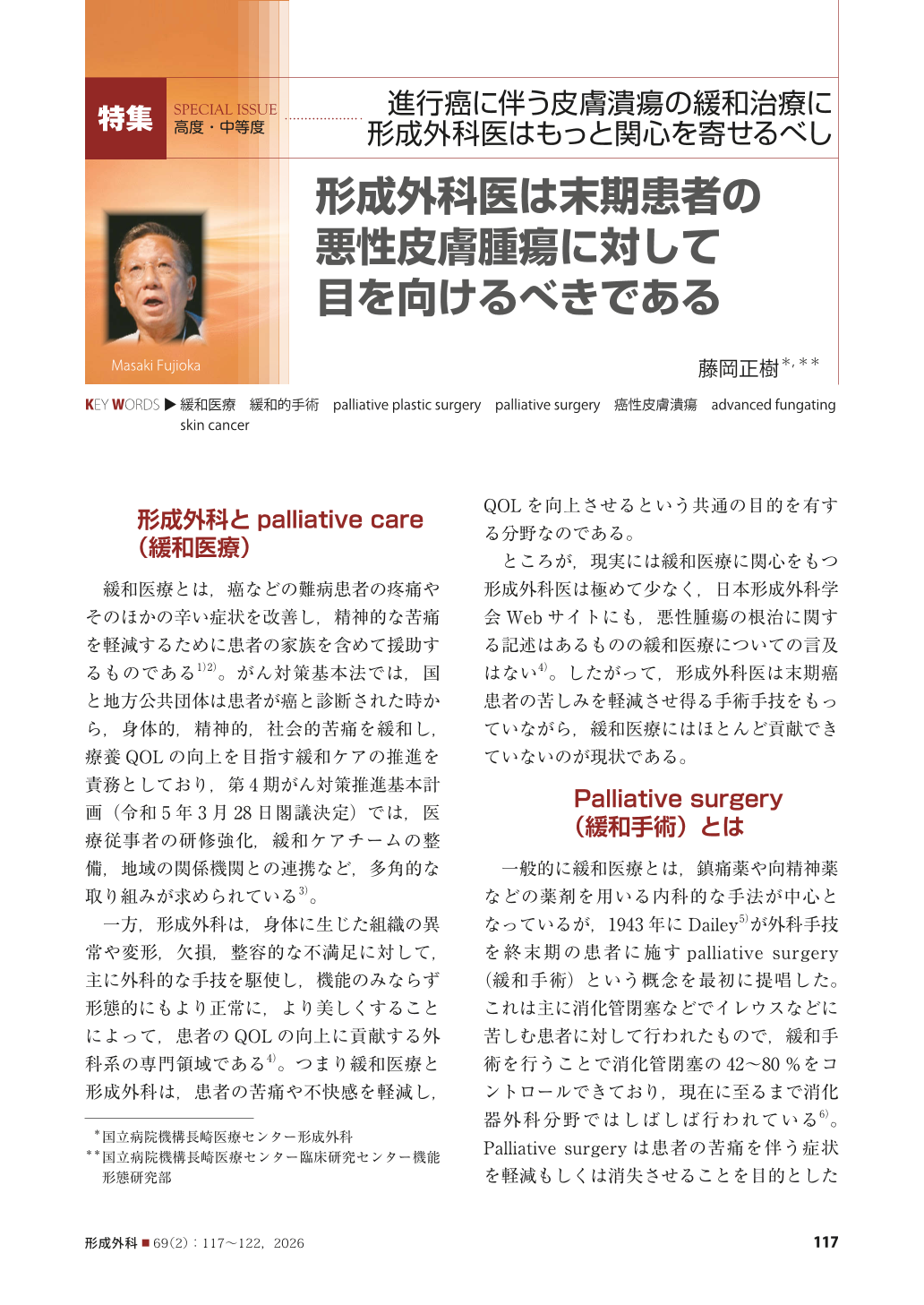
Ⅰ 形成外科とpalliative care(緩和医療)
緩和医療とは,癌などの難病患者の疼痛やそのほかの辛い症状を改善し,精神的な苦痛を軽減するために患者の家族を含めて援助するものである 1)2)。がん対策基本法では,国と地方公共団体は患者が癌と診断された時から,身体的,精神的,社会的苦痛を緩和し,療養QOLの向上を目指す緩和ケアの推進を責務としており,第4期がん対策推進基本計画(令和5年3月28日閣議決定)では,医療従事者の研修強化,緩和ケアチームの整備,地域の関係機関との連携など,多角的な取り組みが求められている 3)。
一方,形成外科は,身体に生じた組織の異常や変形,欠損,整容的な不満足に対して,主に外科的な手技を駆使し,機能のみならず形態的にもより正常に,より美しくすることによって,患者のQOLの向上に貢献する外科系の専門領域である 4)。つまり緩和医療と形成外科は,患者の苦痛や不快感を軽減し,QOLを向上させるという共通の目的を有する分野なのである。
ところが,現実には緩和医療に関心をもつ形成外科医は極めて少なく,日本形成外科学会Webサイトにも,悪性腫瘍の根治に関する記述はあるものの緩和医療についての言及はない 4)。したがって,形成外科医は末期癌患者の苦しみを軽減させ得る手術手技をもっていながら,緩和医療にはほとんど貢献できていないのが現状である。
Palliative care and plastic surgery are medical fields that share a common goal of alleviating patientsʼ pain and discomfort and improving their quality of life. Cases of surgical intervention for skin ulcers in terminally ill cancer patients began to be reported in Japan in the early 2010s, and the outcomes of these cases demonstrated the effectiveness of palliative plastic surgery for the persistent pain, excessive exudate and bleeding, foul odor, and psychological distress caused by fungating ulcers associated with terminal cancer. However, there are still very few plastic surgeons who are interested in palliative care, and although plastic surgeons as a group are skilled in surgical techniques that could alleviate the suffering of terminally ill cancer patients, they have made little contribution to palliative care. As a result, many terminally ill cancer patients with cancerous skin ulcers have no effective treatment options and are thus obliged to spend their short remaining months or years in pain. This article describes specific examples and precautions for palliative plastic surgery for these patients. Plastic surgeons should pay more attention to end-of-life care and use palliative plastic surgery to improve the quality of life of patients suffering from terminal skin conditions.
Copyright© 2026 KOKUSEIDO CO., LTD. All Rights Reserved.