Japanese
English
- 有料閲覧
- Abstract 文献概要
- 1ページ目 Look Inside
- 参考文献 Reference
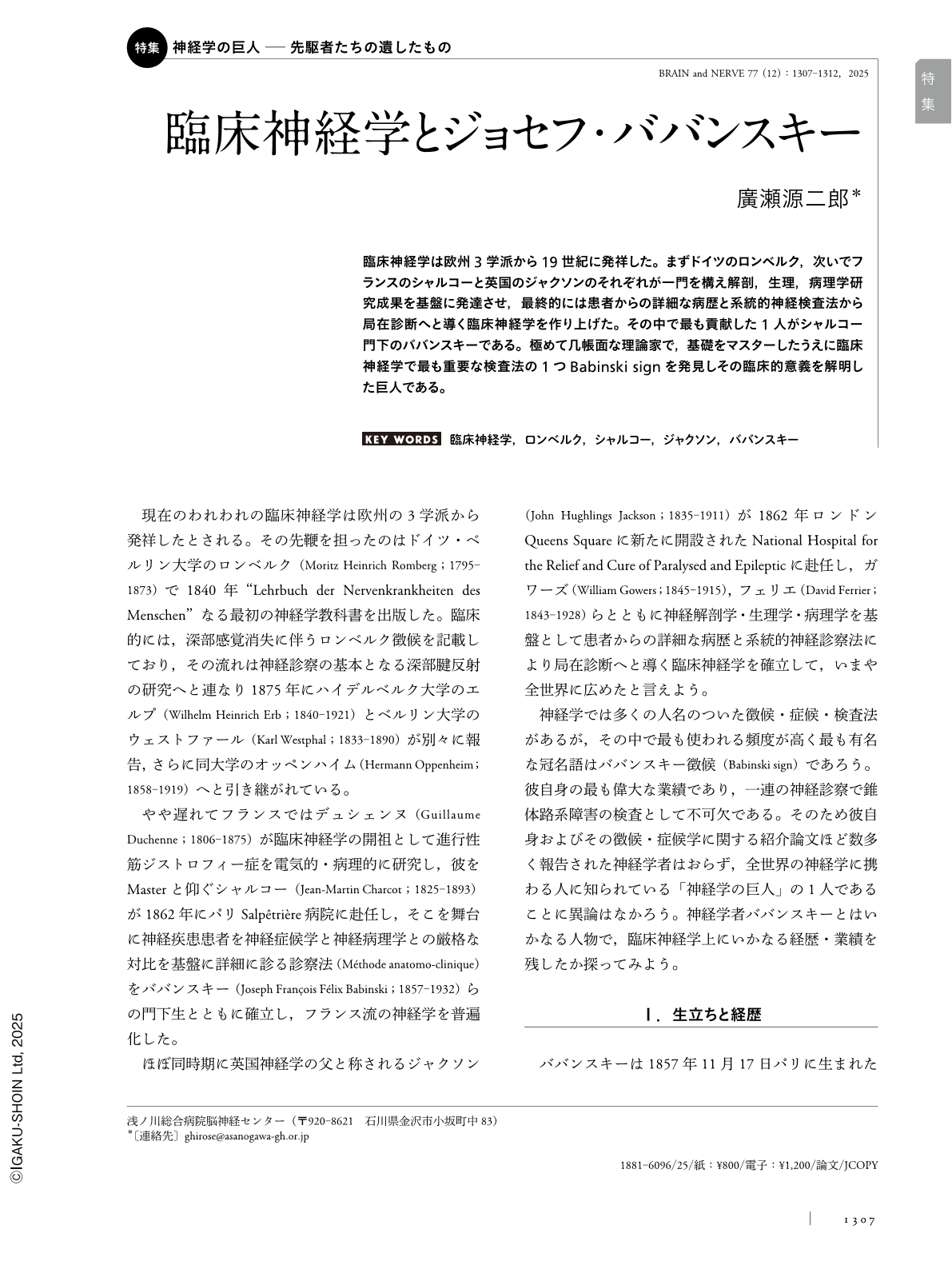
臨床神経学は欧州3学派から19世紀に発祥した。まずドイツのロンベルク,次いでフランスのシャルコーと英国のジャクソンのそれぞれが一門を構え解剖,生理,病理学研究成果を基盤に発達させ,最終的には患者からの詳細な病歴と系統的神経検査法から局在診断へと導く臨床神経学を作り上げた。その中で最も貢献した1人がシャルコー門下のババンスキーである。極めて几帳面な理論家で,基礎をマスターしたうえに臨床神経学で最も重要な検査法の1つBabinski signを発見しその臨床的意義を解明した巨人である。
Abstract
Clinical neurology emerged from three European schools of neurology in the 19th century. Romberg established the first neurology school at the University of Berlin, Germany, around 1840, followed by Charcot at the Salpêtrière in Paris in 1862, and, around the same time, Jackson at Queen Square in London. Each went on to establish their own unique neurology schools, supported by the dedicated work of their disciples in the fields of neuroanatomy, neurophysiology, and neuropathology. Among these disciples, Babinski made one of the most important contributions to clinical neurology through the discovery of the “Babinski sign” and his clarification of its clinical significance.
Copyright © 2025, Igaku-Shoin Ltd. All rights reserved.