Japanese
English
- 有料閲覧
- Abstract 文献概要
- 1ページ目 Look Inside
- 参考文献 Reference
Point
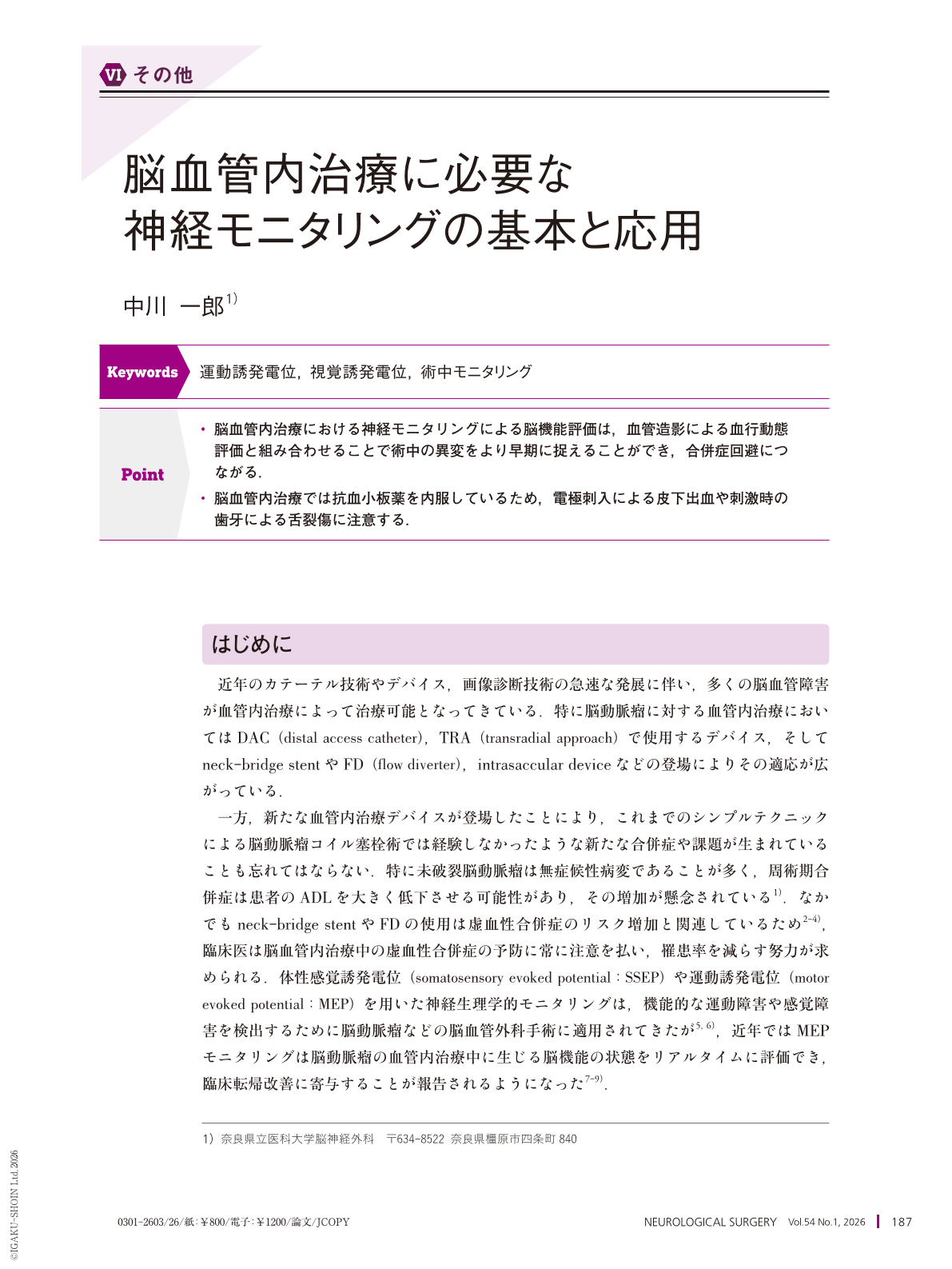
・脳血管内治療における神経モニタリングによる脳機能評価は,血管造影による血行動態評価と組み合わせることで術中の異変をより早期に捉えることができ,合併症回避につながる.
・脳血管内治療では抗血小板薬を内服しているため,電極刺入による皮下出血や刺激時の歯牙による舌裂傷に注意する.
Rapid advances in catheter technologies, devices, and imaging techniques have broadened the range of cerebrovascular disorders that can be treated with neuroendovascular therapy. The indications for treating cerebral aneurysms have expanded with the introduction of distal access catheters, trans-radial devices, and innovations such as neck-bridge stents, flow diverters, and intrasaccular devices. Although these developments have increased therapeutic options, they have also introduced new complications and clinical challenges.
Neurophysiological monitoring has long been used in cerebrovascular and intracranial tumor surgery to detect motor, sensory, and visual dysfunction. More recently, its application to neuroendovascular procedures has enabled real-time assessment of brain function during the procedure. Growing evidence indicates that such monitoring may help prevent neurological injury and improve outcomes. This article summarizes current knowledge and emerging challenges in neurophysiological monitoring for neuroendovascular therapy, with emphasis on cerebral aneurysm embolization.
Copyright © 2026, Igaku-Shoin Ltd. All rights reserved.