Japanese
English
- 有料閲覧
PPV購入案内
1,320円 (1,200円+税10%) こちらは、358ページから368ページの文献です。購入には医書.jp本会員登録が必要です。
会員登録完了後に改めて上記「購入サイトへ」を選択してください。
または「購入サイトへ」選択後に「購入ログイン」、「新規会員登録」の順に進んでください。
会員登録について詳しくはをご確認ください。
- Abstract 文献概要
- 1ページ目 Look Inside
- 参考文献 Reference
要旨
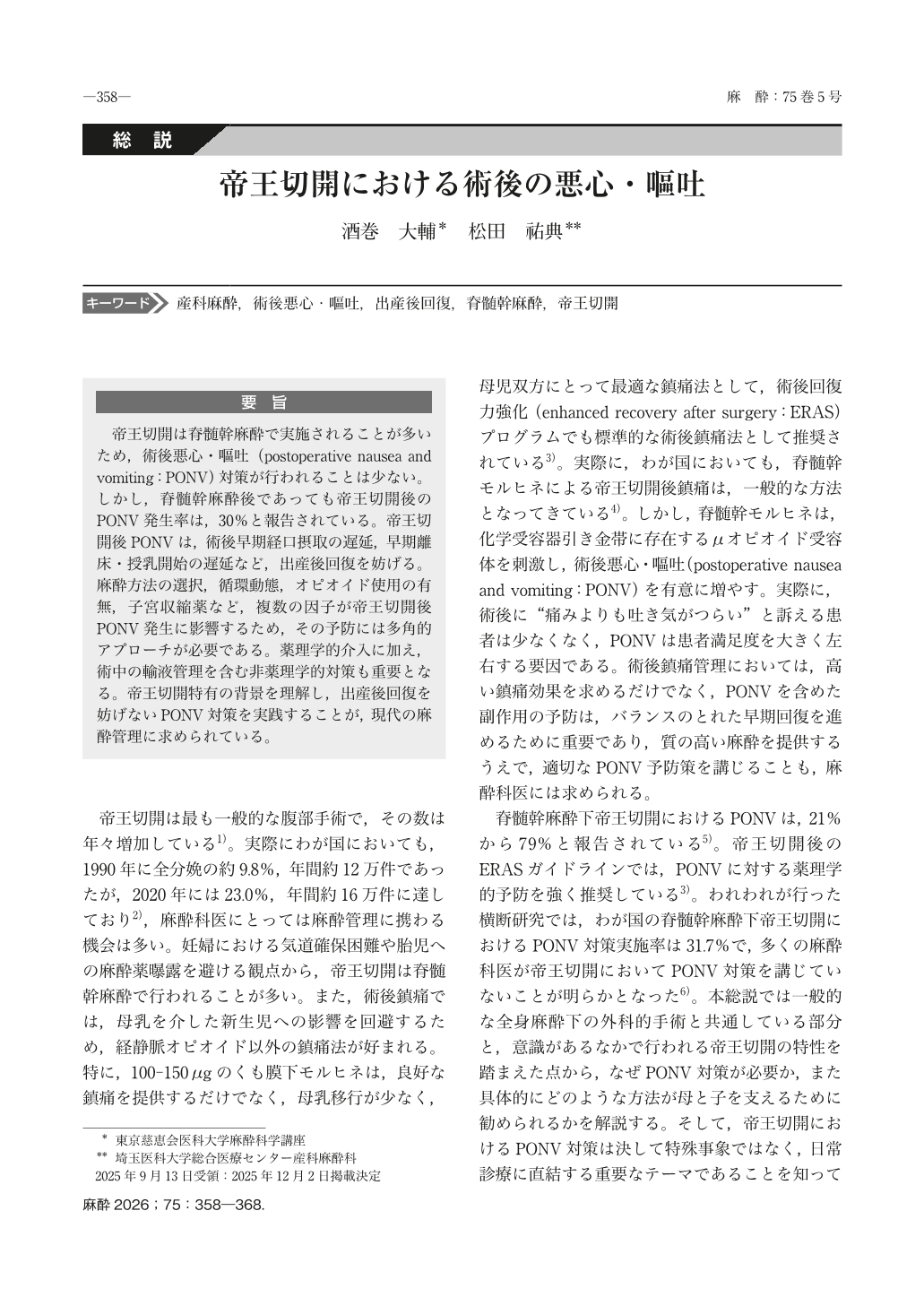
帝王切開は脊髄幹麻酔で実施されることが多いため,術後悪心・嘔吐(postoperative nausea and vomiting:PONV)対策が行われることは少ない。しかし,脊髄幹麻酔後であっても帝王切開後のPONV発生率は,30%と報告されている。帝王切開後PONVは,術後早期経口摂取の遅延,早期離床・授乳開始の遅延など,出産後回復を妨げる。麻酔方法の選択,循環動態,オピオイド使用の有無,子宮収縮薬など,複数の因子が帝王切開後PONV発生に影響するため,その予防には多角的アプローチが必要である。薬理学的介入に加え,術中の輸液管理を含む非薬理学的対策も重要となる。帝王切開特有の背景を理解し,出産後回復を妨げないPONV対策を実践することが,現代の麻酔管理に求められている。
Cesarean delivery is frequently performed with the patient under neuraxial anesthesia, and as a result, the prevention of postoperative nausea and vomiting(PONV)is often overlooked. However, even with neuraxial anesthesia, the incidence of PONV after cesarean delivery has been reported to be as high as 30%. This condition can hinder patients’ postpartum recovery by delaying the initiation of early oral intake, ambulation, and breastfeeding. The occurrence of PONV after a cesarean delivery is influenced by multiple factors, including the type of anesthesia used, the patient’s hemodynamic stability, opioid use, and the types of uterotonic agents applied. A multifaceted approach is thus essential for the effective prevention of PONV after a cesarean delivery with neuraxial anesthesia. Pharmacological interventions can play a significant role in preventing these instances of PONV, as can non-pharmacological strategies such as intraoperative fluid management. Understanding the unique clinical context of cesarean deliveries and implementing PONV prevention measures that do not interfere with the patients’ postpartum recovery are increasingly emphasized in modern anesthetic practice.
Copyright © 2026 KOKUSEIDO CO., LTD. All Rights Reserved.