Japanese
English
- 有料閲覧
PPV購入案内
1,320円 (1,200円+税10%) こちらは、330ページから336ページの文献です。購入には医書.jp本会員登録が必要です。
会員登録完了後に改めて上記「購入サイトへ」を選択してください。
または「購入サイトへ」選択後に「購入ログイン」、「新規会員登録」の順に進んでください。
会員登録について詳しくはをご確認ください。
- Abstract 文献概要
- 1ページ目 Look Inside
- 参考文献 Reference
要旨
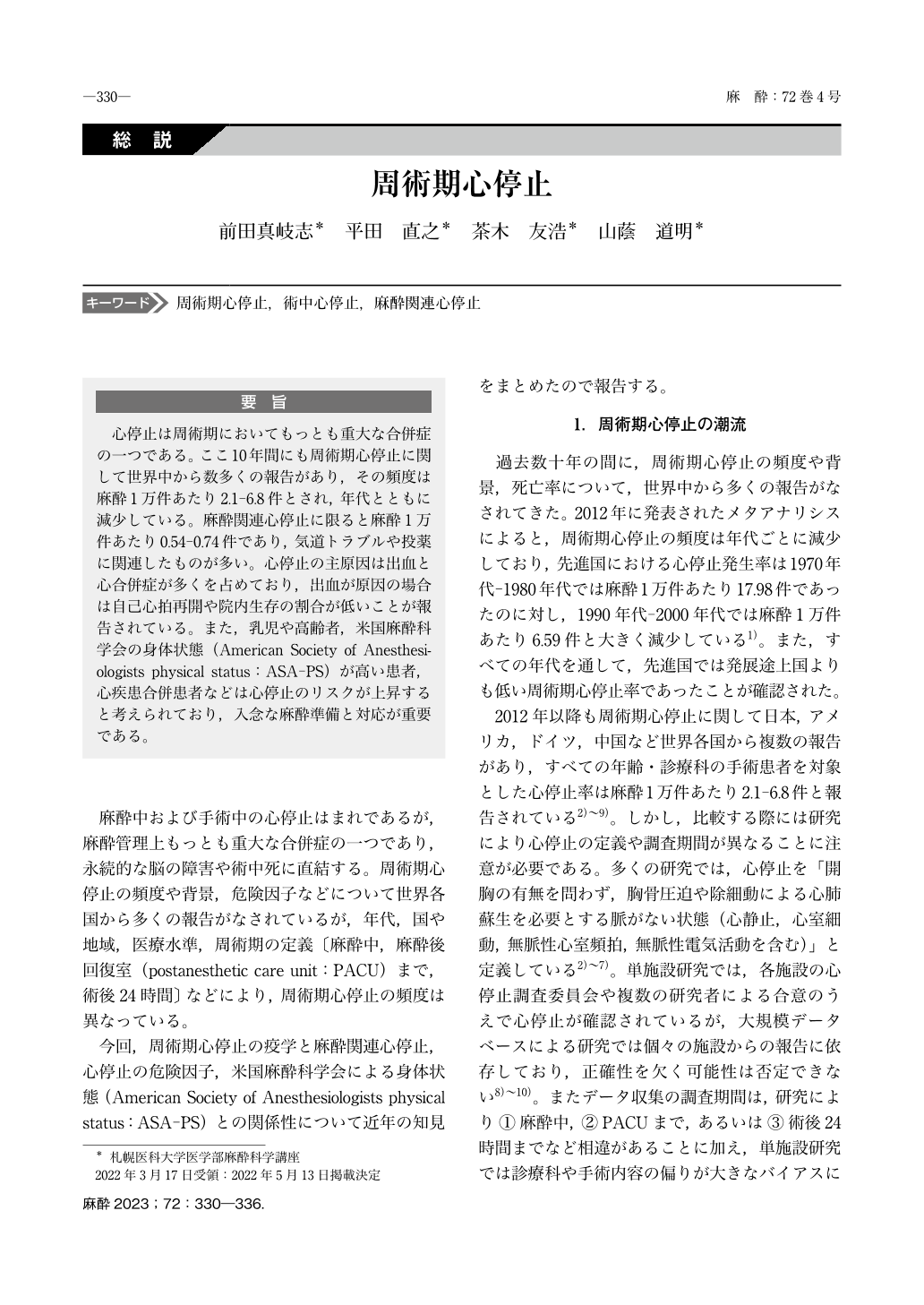
心停止は周術期においてもっとも重大な合併症の一つである。ここ10年間にも周術期心停止に関して世界中から数多くの報告があり,その頻度は麻酔1万件あたり2.1-6.8件とされ,年代とともに減少している。麻酔関連心停止に限ると麻酔1万件あたり0.54-0.74件であり,気道トラブルや投薬に関連したものが多い。心停止の主原因は出血と心合併症が多くを占めており,出血が原因の場合は自己心拍再開や院内生存の割合が低いことが報告されている。また,乳児や高齢者,米国麻酔科学会の身体状態(American Society of Anesthesiologists physical status:ASA-PS)が高い患者,心疾患合併患者などは心停止のリスクが上昇すると考えられており,入念な麻酔準備と対応が重要である。
Cardiac arrest is one of the most serious complications in the perioperative period. In the last decade, there have been numerous reports of perioperative cardiac arrest from all over the world, with a frequency of 2.1 to 6.8 per 10,000 anesthesia cases. The incidence of “anesthesia-related” cardiac arrest is 0.54-0.74 per 10,000 anesthesia cases, especially related to airway problems and medications. Hemorrhage and cardiac complications are the main causes of cardiac arrest. Especially when hemorrhage is the cause, the rates of return of spontaneous circulation and in-hospital survival are reported to be low. Several risk factors for cardiac arrest have been reported. Infants, the elderly, patients with high American Society of Anesthesiologists-physical status(ASA-PS), and patients with cardiac complications are at risk for perioperative cardiac arrest, and careful anesthetic management is important.
Copyright © 2023 KOKUSEIDO CO., LTD. All Rights Reserved.