Japanese
English
- 有料閲覧
PPV購入案内
2,200円 (2,000円+税10%) こちらは、781ページから787ページの文献です。購入には医書.jp本会員登録が必要です。
会員登録完了後に改めて上記「購入サイトへ」を選択してください。
または「購入サイトへ」選択後に「購入ログイン」、「新規会員登録」の順に進んでください。
会員登録について詳しくはをご確認ください。
- Abstract 文献概要
- 1ページ目 Look Inside
- 参考文献 Reference
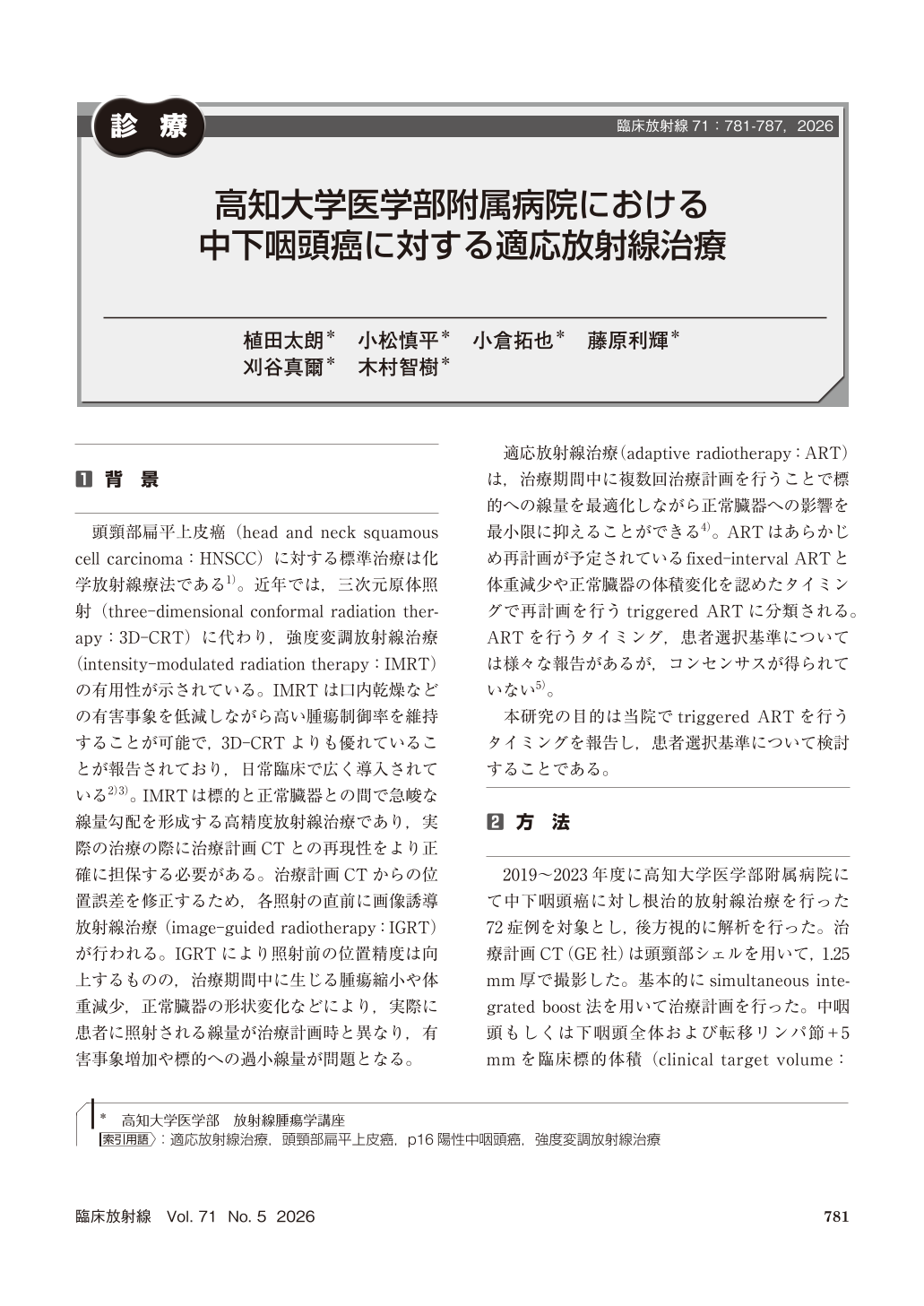
頭頸部扁平上皮癌(head and neck squamous cell carcinoma:HNSCC)に対する標準治療は化学放射線療法である1)。近年では,三次元原体照射(three-dimensional conformal radiation therapy:3D-CRT)に代わり,強度変調放射線治療(intensity-modulated radiation therapy:IMRT)の有用性が示されている。IMRTは口内乾燥などの有害事象を低減しながら高い腫瘍制御率を維持することが可能で,3D-CRTよりも優れていることが報告されており,日常臨床で広く導入されている2)3)。IMRTは標的と正常臓器との間で急峻な線量勾配を形成する高精度放射線治療であり,実際の治療の際に治療計画CTとの再現性をより正確に担保する必要がある。治療計画CTからの位置誤差を修正するため,各照射の直前に画像誘導放射線治療(image-guided radiotherapy:IGRT)が行われる。IGRTにより照射前の位置精度は向上するものの,治療期間中に生じる腫瘍縮小や体重減少,正常臓器の形状変化などにより,実際に患者に照射される線量が治療計画時と異なり,有害事象増加や標的への過小線量が問題となる。
In intensity-modulated radiation therapy(IMRT)for head and neck squamous cell carcinoma, anatomical variations and tumor regression during treatment can alter the delivered dose distribution. Adaptive radiotherapy(ART)compensates for these changes, potentially reducing normal-tissue exposure while sustaining optimal target coverage. We retrospectively analyzed 72 patients with oropharyngeal and hypopharyngeal carcinoma treated with IMRT to identify determinants of replanning. Replanning was significantly more frequent in patients receiving concurrent chemoradiotherapy, those experiencing marked weight loss, and those with large pre-treatment tumor volumes. These factors may therefore serve as practical, clinically relevant selection criteria for ART implementation in routine clinical practice.
Copyright © 2026, KANEHARA SHUPPAN Co.LTD. All rights reserved.