Japanese
English
- 有料閲覧
PPV購入案内
1,650円 (1,500円+税10%) こちらは、455ページから460ページの文献です。購入には医書.jp本会員登録が必要です。
会員登録完了後に改めて上記「購入サイトへ」を選択してください。
または「購入サイトへ」選択後に「購入ログイン」、「新規会員登録」の順に進んでください。
会員登録について詳しくはをご確認ください。
- Abstract 文献概要
- 1ページ目 Look Inside
- 参考文献 Reference
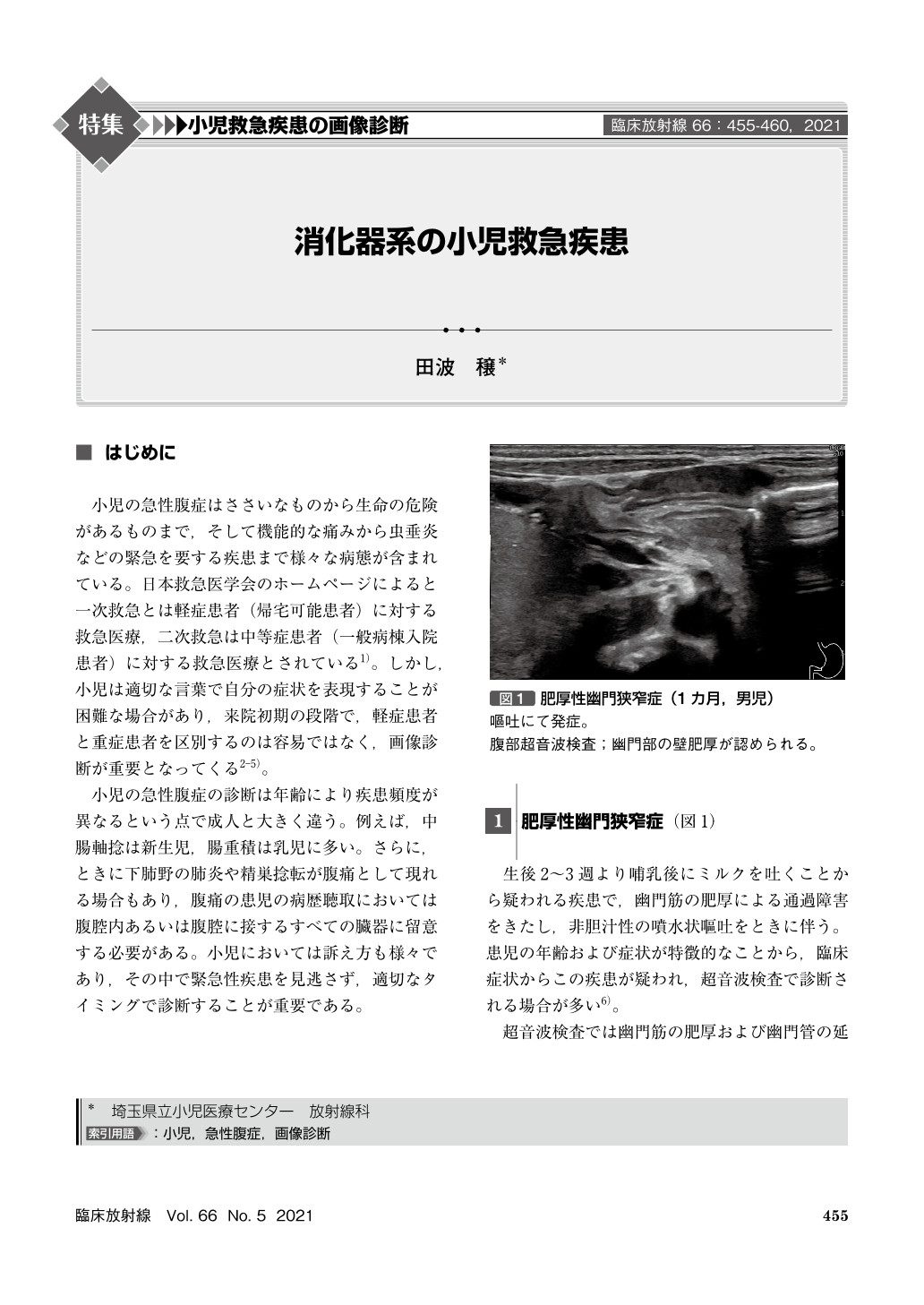
小児の急性腹症はささいなものから生命の危険があるものまで,そして機能的な痛みから虫垂炎などの緊急を要する疾患まで様々な病態が含まれている。日本救急医学会のホームページによると一次救急とは軽症患者(帰宅可能患者)に対する救急医療,二次救急は中等症患者(一般病棟入院患者)に対する救急医療とされている1)。しかし,小児は適切な言葉で自分の症状を表現することが困難な場合があり,来院初期の段階で,軽症患者と重症患者を区別するのは容易ではなく,画像診断が重要となってくる2-5)。
Gastrointestinal disorders are among the most frequent reasons for emergency visits in the pediatric population where radiology plays a crucial role in diagnosis and treatment.
Ultrasonography is an important imaging modality for all patients, but it has an even greater role in the pediatric population for several reasons. It is the primary imaging modality of choice for many pediatric gastrointestinal conditions, with real-time dynamic imaging. Unlike computed tomography, ultrasonography does not subject patients to ionizing radiation. Unlike magnetic resonance imaging, ultrasonography is portable and more readily available. This article describes the clinical and imaging features of common gastrointestinal emergencies.
Copyright © 2021, KANEHARA SHUPPAN Co.LTD. All rights reserved.