Japanese
English
- 有料閲覧
PPV購入案内
1,320円 (1,200円+税10%) こちらは、682ページから685ページの文献です。購入には医書.jp本会員登録が必要です。
会員登録完了後に改めて上記「購入サイトへ」を選択してください。
または「購入サイトへ」選択後に「購入ログイン」、「新規会員登録」の順に進んでください。
会員登録について詳しくはをご確認ください。
- Abstract 文献概要
- 1ページ目 Look Inside
- 参考文献 Reference
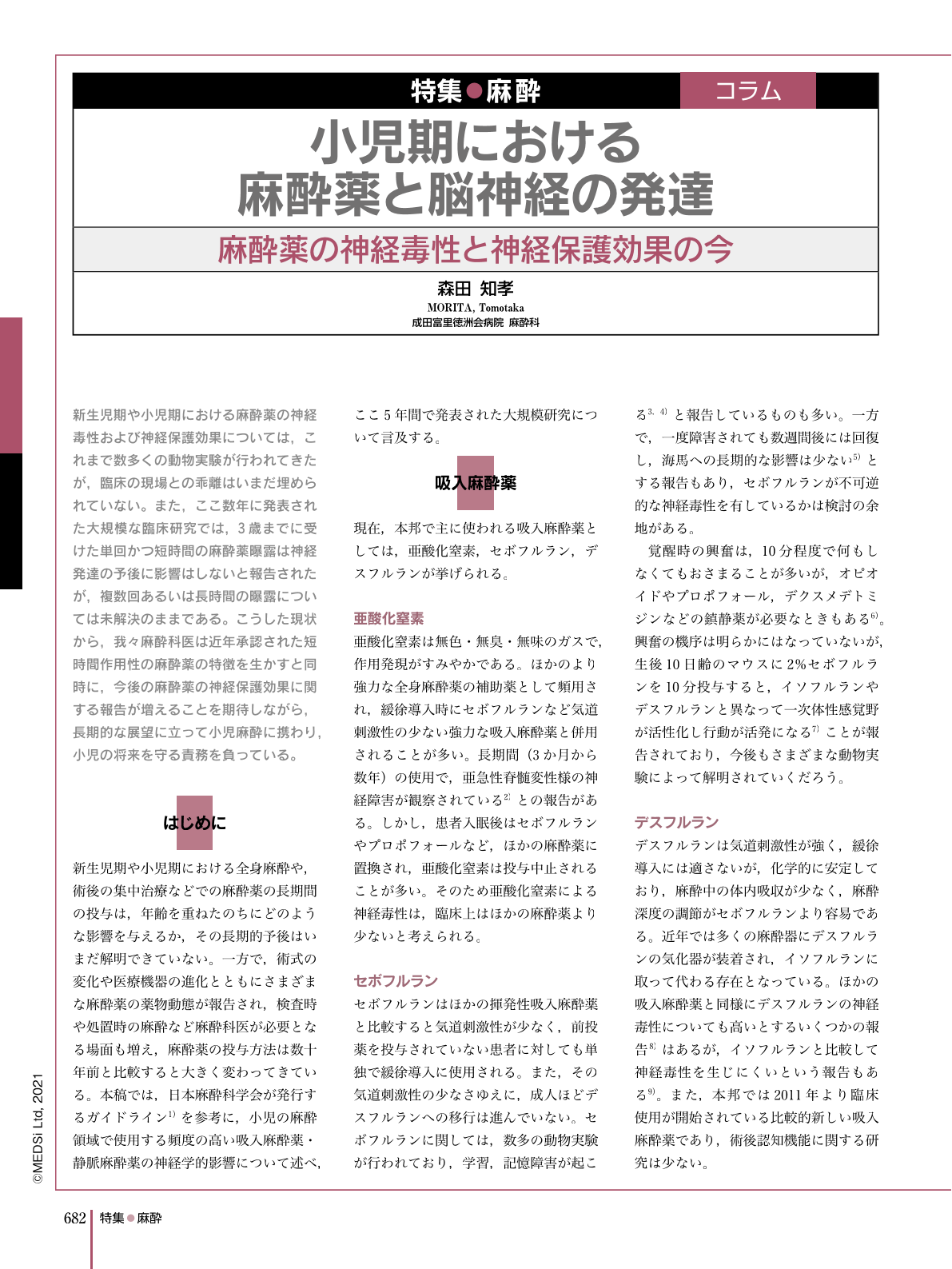
新生児期や小児期における麻酔薬の神経毒性および神経保護効果については,これまで数多くの動物実験が行われてきたが,臨床の現場との乖離はいまだ埋められていない。また,ここ数年に発表された大規模な臨床研究では,3歳までに受けた単回かつ短時間の麻酔薬曝露は神経発達の予後に影響はしないと報告されたが,複数回あるいは長時間の曝露については未解決のままである。こうした現状から,我々麻酔科医は近年承認された短時間作用性の麻酔薬の特徴を生かすと同時に,今後の麻酔薬の神経保護効果に関する報告が増えることを期待しながら,長期的な展望に立って小児麻酔に携わり,小児の将来を守る責務を負っている。
Although several animal studies have investigated the neurotoxic or neuroprotective effects of anesthetics during the neonatal period or infancy, inconsistencies between their findings and clinical outcomes are not fully understood. Recent human clinical trials report no adverse neurodevelopmental outcomes even if children less than 3 years of age were exposed to a single short-term general anesthetic. However, it is unknown how multiple or long exposures affects children. Anesthesiologists have to be engaged in pediatric anesthesia with a long-term perspective for the child's future, while we take advantage of short-acting anesthetics recently approved and expect an increase in the number of reports about the neuroprotective effect of anesthetics on a child's developing brain.
Copyright © 2021, MEDICAL SCIENCES INTERNATIONAL, LTD. All rights reserved.