Japanese
English
- 有料閲覧
PPV購入案内
1,320円 (1,200円+税10%) こちらは、263ページから281ページの文献です。購入には医書.jp本会員登録が必要です。
会員登録完了後に改めて上記「購入サイトへ」を選択してください。
または「購入サイトへ」選択後に「購入ログイン」、「新規会員登録」の順に進んでください。
会員登録について詳しくはをご確認ください。
- Abstract 文献概要
- 1ページ目 Look Inside
- 参考文献 Reference
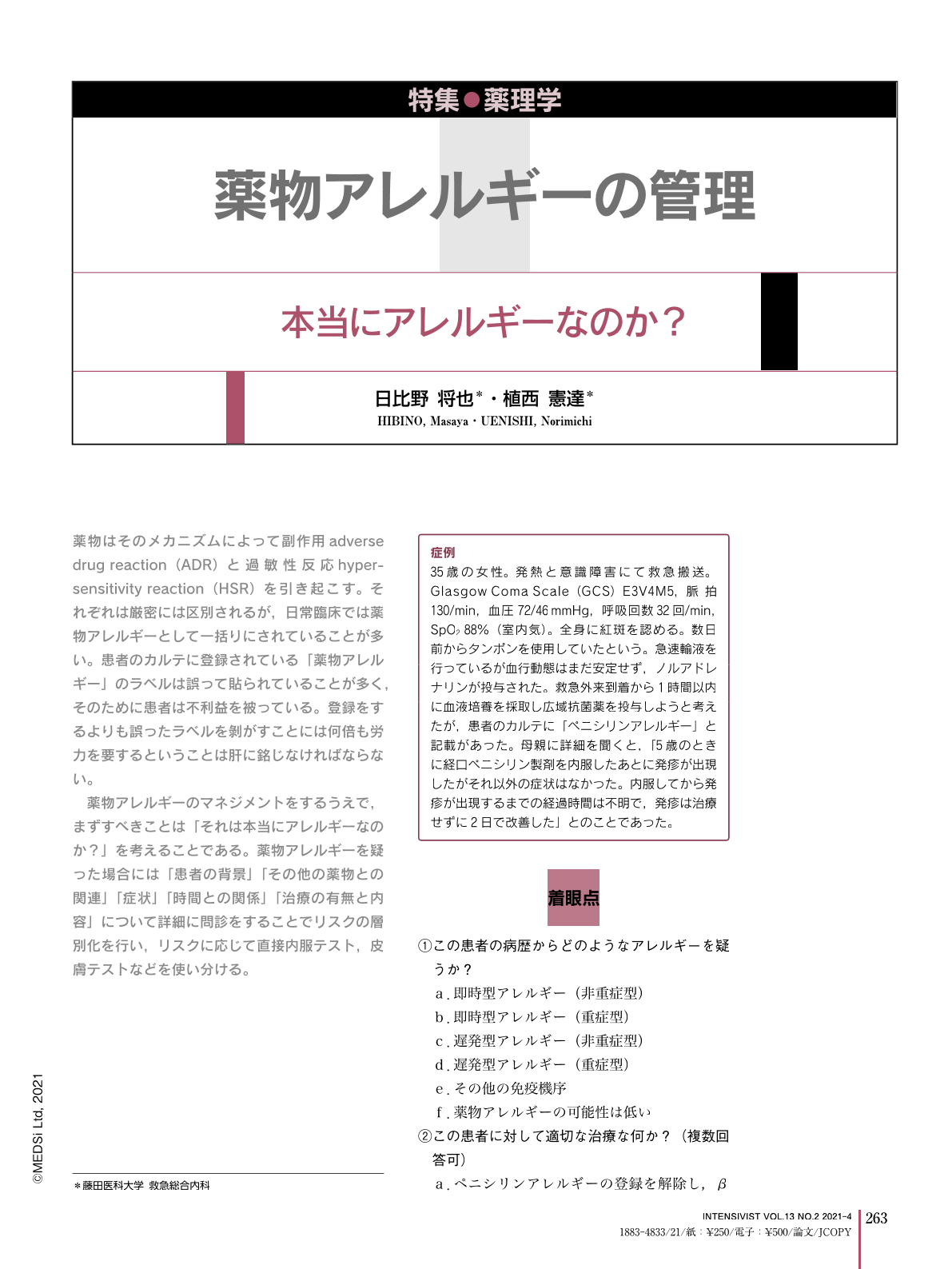
薬物はそのメカニズムによって副作用adverse drug reaction(ADR)と過敏性反応hypersensitivity reaction(HSR)を引き起こす。それぞれは厳密には区別されるが,日常臨床では薬物アレルギーとして一括りにされていることが多い。患者のカルテに登録されている「薬物アレルギー」のラベルは誤って貼られていることが多く,そのために患者は不利益を被っている。登録をするよりも誤ったラベルを剝がすことには何倍も労力を要するということは肝に銘じなければならない。
薬物アレルギーのマネジメントをするうえで,まずすべきことは「それは本当にアレルギーなのか?」を考えることである。薬物アレルギーを疑った場合には「患者の背景」「その他の薬物との関連」「症状」「時間との関係」「治療の有無と内容」について詳細に問診をすることでリスクの層別化を行い,リスクに応じて直接内服テスト,皮膚テストなどを使い分ける。
Drugs can cause adverse drug reactions (ADRs) and hypersensitivity reactions (HSRs) depending on the mechanism. Although these are distinct reactions, they are often grouped together as “drug allergies” in daily practice. “Drug allergies” in a patient's medical record are often misrepresented, to the detriment of the patient. It must be kept in mind that it takes much more effort to remove a mislabeled allergy in the record than it does to register a drug allergy. The first thing to do in evaluating potential drug allergies is to ask, “Is it really an allergy?” If you suspect that the patient is actually allergic to a drug, stratify the risk by asking detailed questions about the patient's background, relationship of the reaction to other drugs, symptoms, relationship with time, and nature and type of treatment. One can then use direct administration, skin tests, or other methods to further evaluate the allergy according to the risk.
Copyright © 2021, MEDICAL SCIENCES INTERNATIONAL, LTD. All rights reserved.