Japanese
English
- 有料閲覧
PPV購入案内
1,320円 (1,200円+税10%) こちらは、763ページから773ページの文献です。購入には医書.jp本会員登録が必要です。
会員登録完了後に改めて上記「購入サイトへ」を選択してください。
または「購入サイトへ」選択後に「購入ログイン」、「新規会員登録」の順に進んでください。
会員登録について詳しくはをご確認ください。
- Abstract 文献概要
- 1ページ目 Look Inside
- 参考文献 Reference
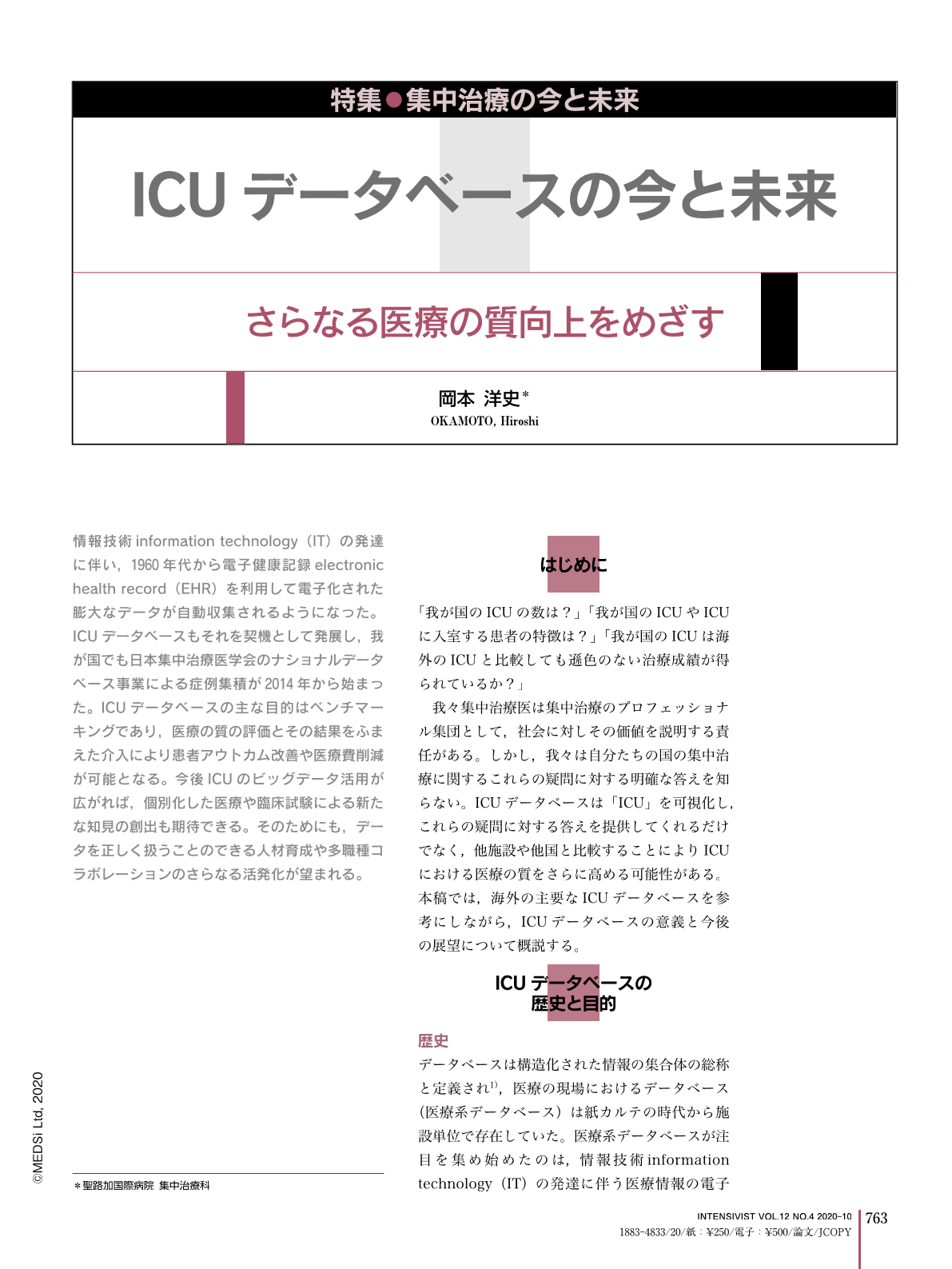
情報技術information technology(IT)の発達に伴い,1960年代から電子健康記録electronic health record(EHR)を利用して電子化された膨大なデータが自動収集されるようになった。ICUデータベースもそれを契機として発展し,我が国でも日本集中治療医学会のナショナルデータベース事業による症例集積が2014年から始まった。ICUデータベースの主な目的はベンチマーキングであり,医療の質の評価とその結果をふまえた介入により患者アウトカム改善や医療費削減が可能となる。今後ICUのビッグデータ活用が広がれば,個別化した医療や臨床試験による新たな知見の創出も期待できる。そのためにも,データを正しく扱うことのできる人材育成や多職種コラボレーションのさらなる活発化が望まれる。
Since the development of information technology (IT) in the 1960s, one can automatically collect a large volume of health care data using the Electronic Health Record (EHR). The intensive care unit (ICU) database developed along with this paradigm shift and the Japanese Society of Intensive Care Medicine started the National Database Project to accumulate the data of ICU patients in 2014. The main purpose of the ICU database is for benchmarking. The assessment of quality of care and interventions based on the results of benchmark data is expected to improve patient outcomes and reduce medical costs. The utilization of “big data” to improve the care of ICU patients is warranted. Big data may lead to new knowledge through clinical trials which can lead to patient-specific precision medicine. For the future, it is necessary to develop resources to handle data correctly and further promote multi-professional collaboration.
Copyright © 2020, MEDICAL SCIENCES INTERNATIONAL, LTD. All rights reserved.