Japanese
English
- 有料閲覧
PPV購入案内
1,320円 (1,200円+税10%) こちらは、539ページから544ページの文献です。購入には医書.jp本会員登録が必要です。
会員登録完了後に改めて上記「購入サイトへ」を選択してください。
または「購入サイトへ」選択後に「購入ログイン」、「新規会員登録」の順に進んでください。
会員登録について詳しくはをご確認ください。
- Abstract 文献概要
- 1ページ目 Look Inside
- 参考文献 Reference
- サイト内被引用 Cited by
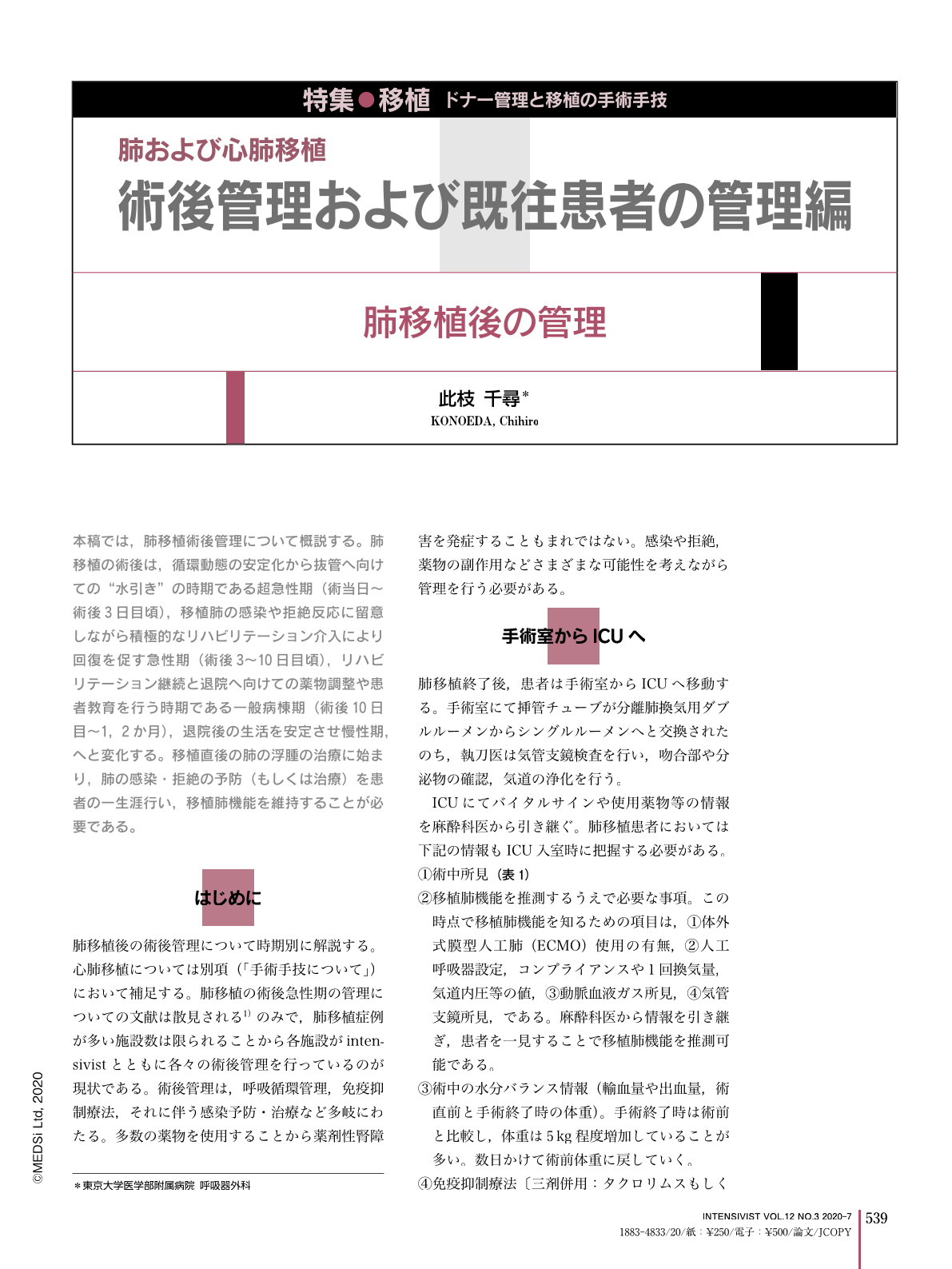
本稿では,肺移植術後管理について概説する。肺移植の術後は,循環動態の安定化から抜管へ向けての“水引き”の時期である超急性期(術当日〜術後3日目頃),移植肺の感染や拒絶反応に留意しながら積極的なリハビリテーション介入により回復を促す急性期(術後3〜10日目頃),リハビリテーション継続と退院へ向けての薬物調整や患者教育を行う時期である一般病棟期(術後10日目〜1,2か月),退院後の生活を安定させ慢性期,へと変化する。移植直後の肺の浮腫の治療に始まり,肺の感染・拒絶の予防(もしくは治療)を患者の一生涯行い,移植肺機能を維持することが必要である。
In this paper, we describe the post-operative management of patients after lung transplantation. Lung transplantation is a dynamic procedure with multiple post-operative phases, the first being from the time of surgery to approximately post-operative day three. During this phase, fluid balance should be optimized. Once the patient is hemodynamically stabilized, diuresis can be started. Transplanted lungs are usually edematous during this phase. Optimal fluid balance can be achieved by restoring the pre-operative weight. The second phase is from post-operative day three to approximately ten, when the patient is extubated and vigorous rehabilitation begun. Physical therapy is very important. Careful attention should be paid to the possibility of infection and rejection, especially in this second phase. In the third phase, patients are stabilized and moved to a general ward. Rehabilitation should be continued and dosages of medications, including immunosuppressive drugs, optimized. Additionally, the patient should be educated about medications and daily life after discharge. The patient is usually discharged 1 to 2 months after surgery. Lifelong outpatient monitoring is needed because these patients are always at risk of developing chronic allograft dysfunction, infection, malignancy, or other complications.
Copyright © 2020, MEDICAL SCIENCES INTERNATIONAL, LTD. All rights reserved.