Japanese
English
- 有料閲覧
PPV購入案内
1,320円 (1,200円+税10%) こちらは、515ページから520ページの文献です。購入には医書.jp本会員登録が必要です。
会員登録完了後に改めて上記「購入サイトへ」を選択してください。
または「購入サイトへ」選択後に「購入ログイン」、「新規会員登録」の順に進んでください。
会員登録について詳しくはをご確認ください。
- Abstract 文献概要
- 1ページ目 Look Inside
- 参考文献 Reference
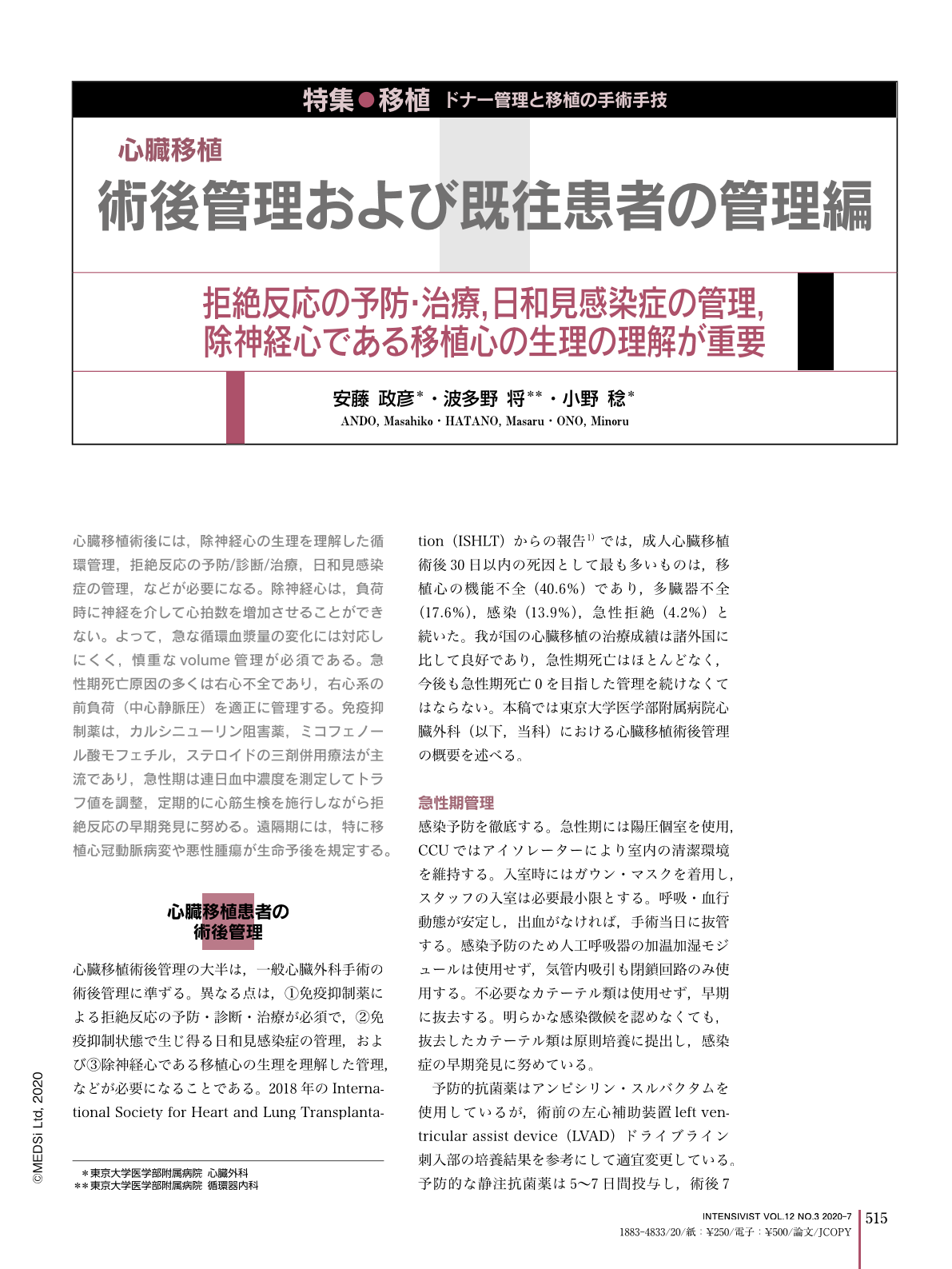
心臓移植術後には,除神経心の生理を理解した循環管理,拒絶反応の予防/診断/治療,日和見感染症の管理,などが必要になる。除神経心は,負荷時に神経を介して心拍数を増加させることができない。よって,急な循環血漿量の変化には対応しにくく,慎重なvolume管理が必須である。急性期死亡原因の多くは右心不全であり,右心系の前負荷(中心静脈圧)を適正に管理する。免疫抑制薬は,カルシニューリン阻害薬,ミコフェノール酸モフェチル,ステロイドの三剤併用療法が主流であり,急性期は連日血中濃度を測定してトラフ値を調整,定期的に心筋生検を施行しながら拒絶反応の早期発見に努める。遠隔期には,特に移植心冠動脈病変や悪性腫瘍が生命予後を規定する。
For successful management immediately after heart transplantation (HTx), it is mandatory to understand the physiology of a transplanted heart. The heart is denervated, so it cannot instantly increase its rate in response to overloading. Considering that the most common cause of early postoperative death is right heart failure, surgeons and intensivists should carefully optimize the preload of the right heart, or central venous pressure, to avoid right heart decompensation with excessive volume. Other tips to improve post-operative outcomes include prevention, early diagnosis, or treatment of graft rejection, and the management of opportunistic infections in these immune-compromised recipients. Today, the three-drug regimen (calcineurin inhibitors, mycophenolate mofetil, and corticosteroids) is the cornerstone of maintenance immunosuppressive therapy. In the acute phase, blood trough levels of calcineurin inhibitors must be frequently monitored to prevent both graft rejection and acute kidney injury. For 4 to 6 weeks after HTx, weekly biopsy should be performed to detect early signs of rejection. During mid to long-term follow-up, cardiologists need to pay attention to cardiac allograft vasculopathy and malignancy, including post-transplant lymphoproliferative disorder, which significantly affect prognosis.
Copyright © 2020, MEDICAL SCIENCES INTERNATIONAL, LTD. All rights reserved.