Japanese
English
- 有料閲覧
PPV購入案内
1,320円 (1,200円+税10%) こちらは、327ページから333ページの文献です。購入には医書.jp本会員登録が必要です。
会員登録完了後に改めて上記「購入サイトへ」を選択してください。
または「購入サイトへ」選択後に「購入ログイン」、「新規会員登録」の順に進んでください。
会員登録について詳しくはをご確認ください。
- Abstract 文献概要
- 1ページ目 Look Inside
- 参考文献 Reference
- サイト内被引用 Cited by
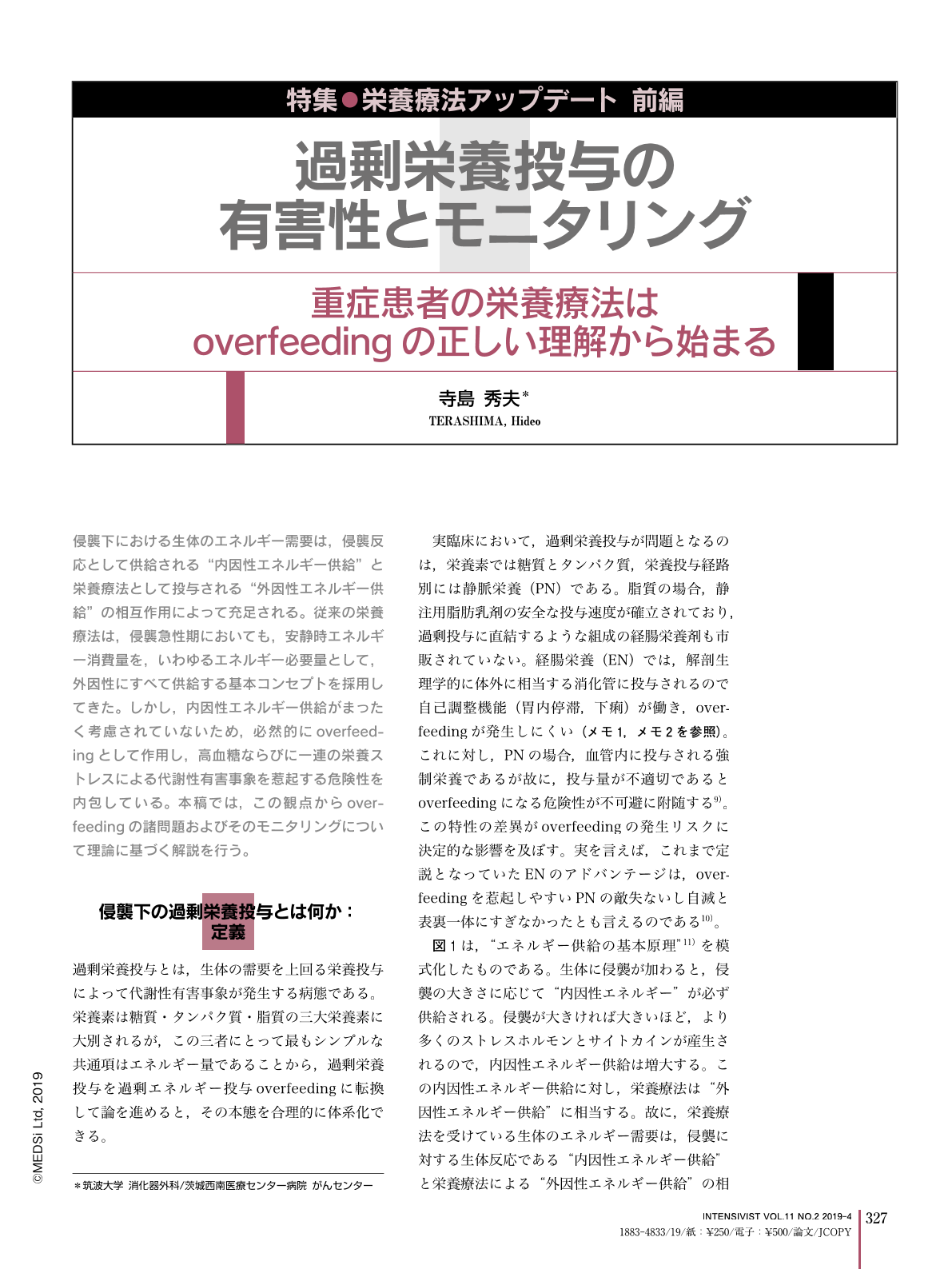
侵襲下における生体のエネルギー需要は,侵襲反応として供給される“内因性エネルギー供給”と栄養療法として投与される“外因性エネルギー供給”の相互作用によって充足される。従来の栄養療法は,侵襲急性期においても,安静時エネルギー消費量を,いわゆるエネルギー必要量として,外因性にすべて供給する基本コンセプトを採用してきた。しかし,内因性エネルギー供給がまったく考慮されていないため,必然的にoverfeedingとして作用し,高血糖ならびに一連の栄養ストレスによる代謝性有害事象を惹起する危険性を内包している。本稿では,この観点からoverfeedingの諸問題およびそのモニタリングについて理論に基づく解説を行う。
During the stress response, the energy demand of the body is met by the interaction of endogenous and exogenous energy supplies. The former provides endogenous energy substrates and is physiologically driven as part of the stress response. The latter provides exogenous energy substrates administered through nutrition support therapy. Even during the acute phase of an illness, conventional nutrition support therapy has adopted the basic concept of exogenously providing all of the so-called “energy requirements” which is equated with the predicted or measured resting energy expenditure. However, there is an intrinsic risk that the sum of the endogenous and exogenous energy substrates exceeds the energy demand of the body when increasing the exogenous energy supply without regard for the endogenous energy supply, inevitably leading to adverse effects associated with overfeeding such as hyperglycemia and nutritional stress. From this perspective, this review article presents theory-based explanations on issues surrounding overfeeding and its monitoring.
Copyright © 2019, MEDICAL SCIENCES INTERNATIONAL, LTD. All rights reserved.