Japanese
English
- 有料閲覧
PPV購入案内
1,320円 (1,200円+税10%) こちらは、65ページから72ページの文献です。購入には医書.jp本会員登録が必要です。
会員登録完了後に改めて上記「購入サイトへ」を選択してください。
または「購入サイトへ」選択後に「購入ログイン」、「新規会員登録」の順に進んでください。
会員登録について詳しくはをご確認ください。
- Abstract 文献概要
- 1ページ目 Look Inside
- 参考文献 Reference
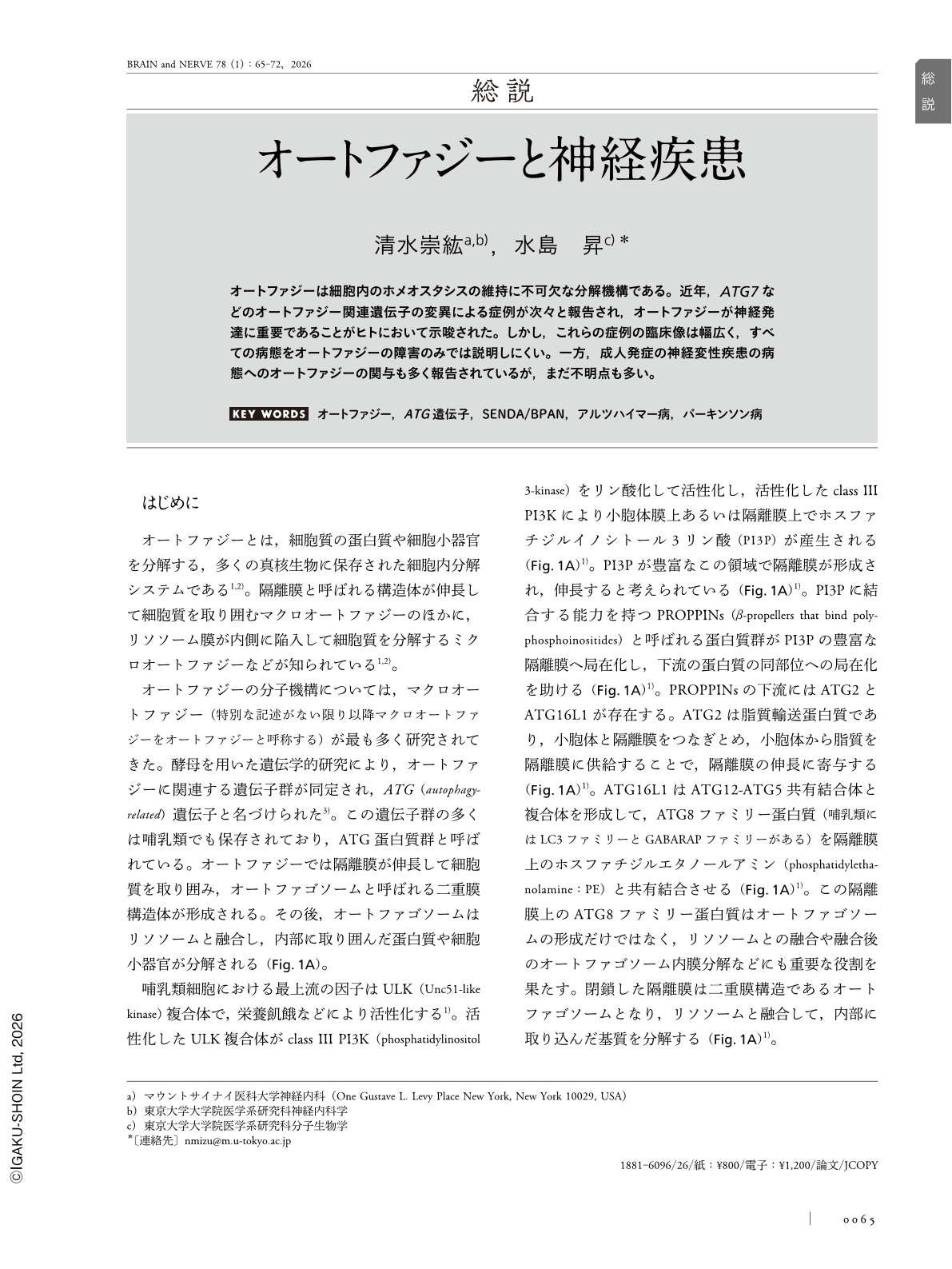
オートファジーは細胞内のホメオスタシスの維持に不可欠な分解機構である。近年,ATG7などのオートファジー関連遺伝子の変異による症例が次々と報告され,オートファジーが神経発達に重要であることがヒトにおいて示唆された。しかし,これらの症例の臨床像は幅広く,すべての病態をオートファジーの障害のみでは説明しにくい。一方,成人発症の神経変性疾患の病態へのオートファジーの関与も多く報告されているが,まだ不明点も多い。
Abstract
Autophagy is an essential degradation mechanism that maintains intracellular homeostasis. In recent years, an increasing number of cases with mutations in autophagy-related genes, such as ATG7, have been reported. These findings highlight the crucial role of autophagy in human neurodevelopment. However, the severity of clinical symptoms does not always correlate with the degree of autophagy impairment observed in patient-derived cells, and phenotypic manifestations can vary widely. These findings indicate that autophagy dysfunction alone does not fully explain disease mechanisms, even in neurological disorders directly associated with mutations in autophagy-related genes. Currently, no established methods exist to quantitatively assess autophagy activity in vivo, making it challenging to determine whether autophagy dysfunction serves as a primary driver of disease pathogenesis in adult-onset neurodegenerative diseases, such as Alzheimer's and Parkinson's disease. Although several lines of indirect evidence indicate impaired autophagy in these conditions, it remains uncertain whether such changes are causative or secondary to the disease process. Further research is warranted to elucidate the precise role of autophagy in both developmental and degenerative neurological disorders and to determine whether targeting autophagy holds promise as a therapeutic strategy.
Copyright © 2026, Igaku-Shoin Ltd. All rights reserved.