Japanese
English
- 有料閲覧
- Abstract 文献概要
- 1ページ目 Look Inside
- 参考文献 Reference
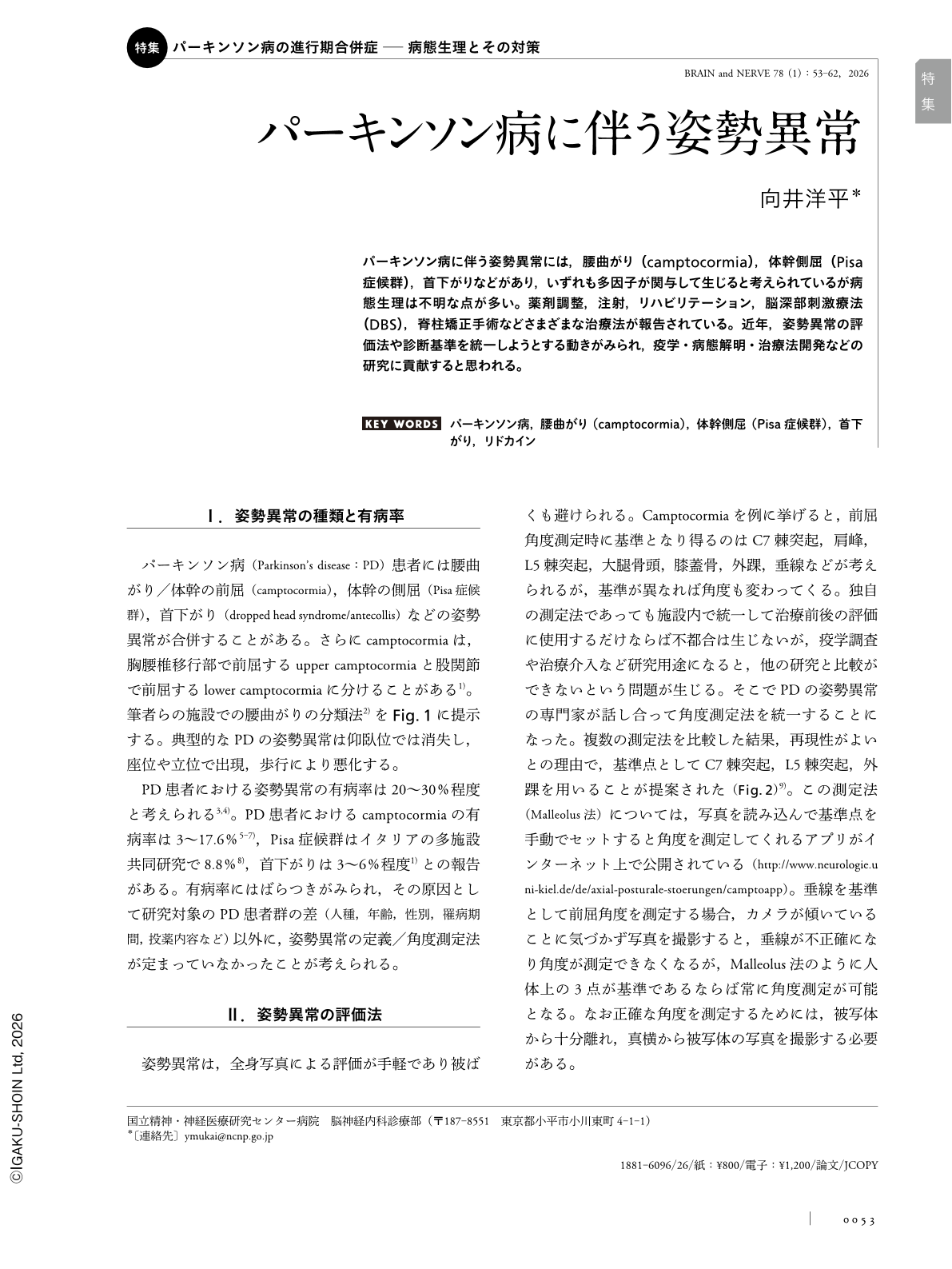
パーキンソン病に伴う姿勢異常には,腰曲がり(camptocormia),体幹側屈(Pisa症候群),首下がりなどがあり,いずれも多因子が関与して生じると考えられているが病態生理は不明な点が多い。薬剤調整,注射,リハビリテーション,脳深部刺激療法(DBS),脊柱矯正手術などさまざまな治療法が報告されている。近年,姿勢異常の評価法や診断基準を統一しようとする動きがみられ,疫学・病態解明・治療法開発などの研究に貢献すると思われる。
Abstract
Postural abnormalities are relatively common in Parkinson's disease (PD), affecting roughly 20-30% of patients. These abnormalities include camptocormia, Pisa syndrome, and dropped head syndrome, but the mechanisms of these abnormalities remain poorly understood and are likely multifactorial. The reported risk factors for postural abnormalities in PD include long disease duration, older age, medication exposure, and musculoskeletal comorbidities, though causality is unclear. Diagnosis is complicated by variations in definitions and measurement techniques, although standardized angle-based methods have increased consistency. Central factors, such as dystonia, sensory integration deficits, and altered postural perception, as well as peripheral factors, such as paraspinal muscle changes, are thought to contribute to Postural abnormalities. Treatments involve medication adjustments, local injections of botulinum toxin or lidocaine, targeted rehabilitation strategies, and surgical approaches such as deep brain stimulation or spinal correction, but the results are unpredictable and often temporary. Large-scale research using consistent diagnostic methods and neurophysiological assessments is needed to further understand these postural disorders and develop more effective, evidence-based interventions.
Copyright © 2026, Igaku-Shoin Ltd. All rights reserved.