Japanese
English
- 有料閲覧
PPV購入案内
1,320円 (1,200円+税10%) こちらは、402ページから410ページの文献です。購入には医書.jp本会員登録が必要です。
会員登録完了後に改めて上記「購入サイトへ」を選択してください。
または「購入サイトへ」選択後に「購入ログイン」、「新規会員登録」の順に進んでください。
会員登録について詳しくはをご確認ください。
- Abstract 文献概要
- 1ページ目 Look Inside
- 参考文献 Reference
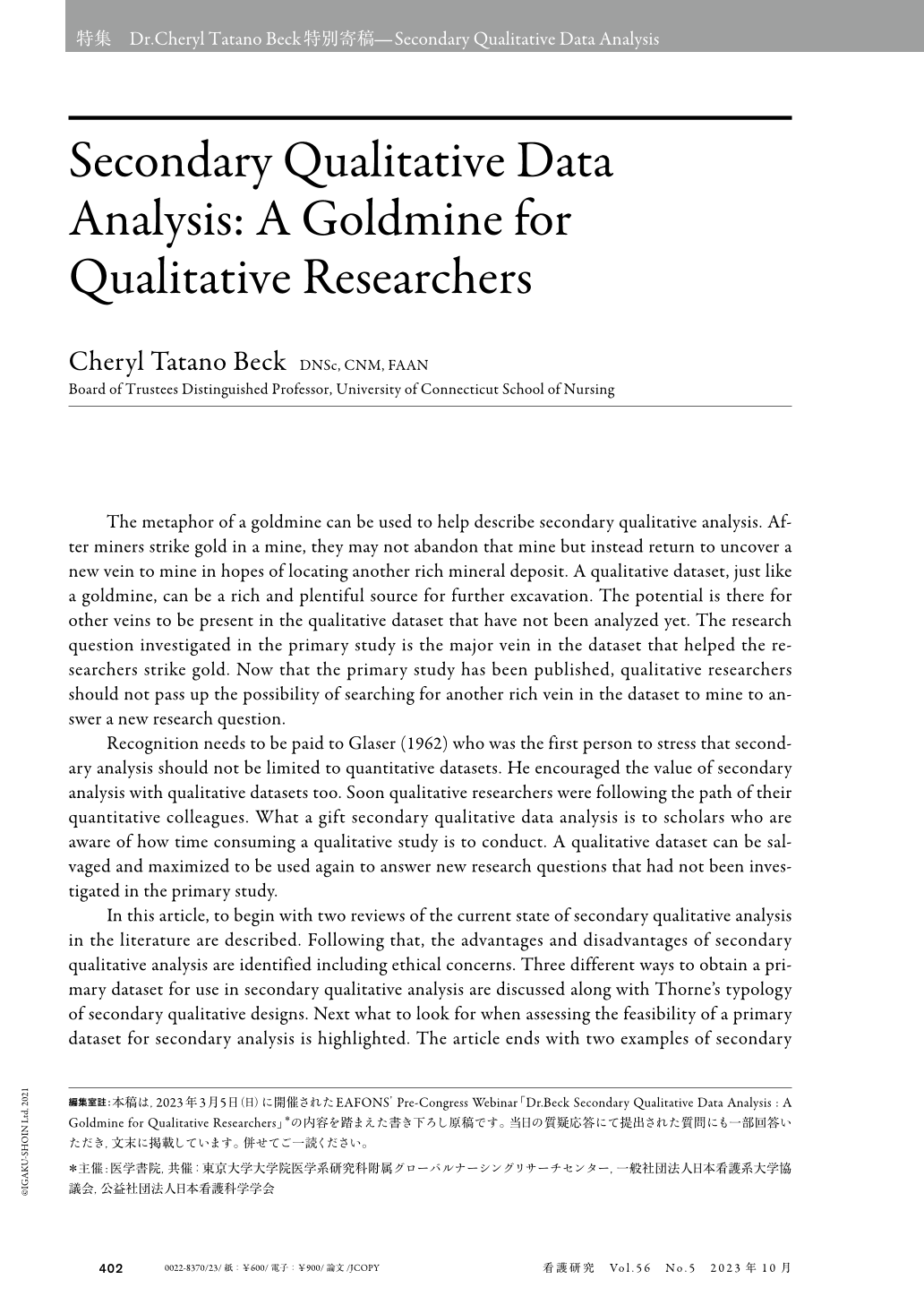
The metaphor of a goldmine can be used to help describe secondary qualitative analysis. After miners strike gold in a mine, they may not abandon that mine but instead return to uncover a new vein to mine in hopes of locating another rich mineral deposit. A qualitative dataset, just like a goldmine, can be a rich and plentiful source for further excavation. The potential is there for other veins to be present in the qualitative dataset that have not been analyzed yet. The research question investigated in the primary study is the major vein in the dataset that helped the researchers strike gold. Now that the primary study has been published, qualitative researchers should not pass up the possibility of searching for another rich vein in the dataset to mine to answer a new research question.
Recognition needs to be paid to Glaser (1962) who was the first person to stress that secondary analysis should not be limited to quantitative datasets. He encouraged the value of secondary analysis with qualitative datasets too. Soon qualitative researchers were following the path of their quantitative colleagues. What a gift secondary qualitative data analysis is to scholars who are aware of how time consuming a qualitative study is to conduct. A qualitative dataset can be salvaged and maximized to be used again to answer new research questions that had not been investigated in the primary study.
The metaphor of a goldmine can be used to help describe secondary qualitative analysis. After miners strike gold in a mine, they may not abandon that mine but instead return to uncover a new vein to mine in hopes of locating another rich mineral deposit. A qualitative dataset, just like a goldmine, can be a rich and plentiful source for further excavation. The potential is there for other veins to be present in the qualitative dataset that have not been analyzed yet. The research question investigated in the primary study is the major vein in the dataset that helped the researchers strike gold. Now that the primary study has been published, qualitative researchers should not pass up the possibility of searching for another rich vein in the dataset to mine to answer a new research question.
Recognition needs to be paid to Glaser (1962) who was the first person to stress that secondary analysis should not be limited to quantitative datasets. He encouraged the value of secondary analysis with qualitative datasets too. Soon qualitative researchers were following the path of their quantitative colleagues. What a gift secondary qualitative data analysis is to scholars who are aware of how time consuming a qualitative study is to conduct. A qualitative dataset can be salvaged and maximized to be used again to answer new research questions that had not been investigated in the primary study.
Copyright © 2023, Igaku-Shoin Ltd. All rights reserved.