Japanese
English
- 有料閲覧
PPV購入案内
1,320円 (1,200円+税10%) こちらは、225ページから236ページの文献です。購入には医書.jp本会員登録が必要です。
会員登録完了後に改めて上記「購入サイトへ」を選択してください。
または「購入サイトへ」選択後に「購入ログイン」、「新規会員登録」の順に進んでください。
会員登録について詳しくはをご確認ください。
- Abstract 文献概要
- 1ページ目 Look Inside
- サイト内被引用 Cited by
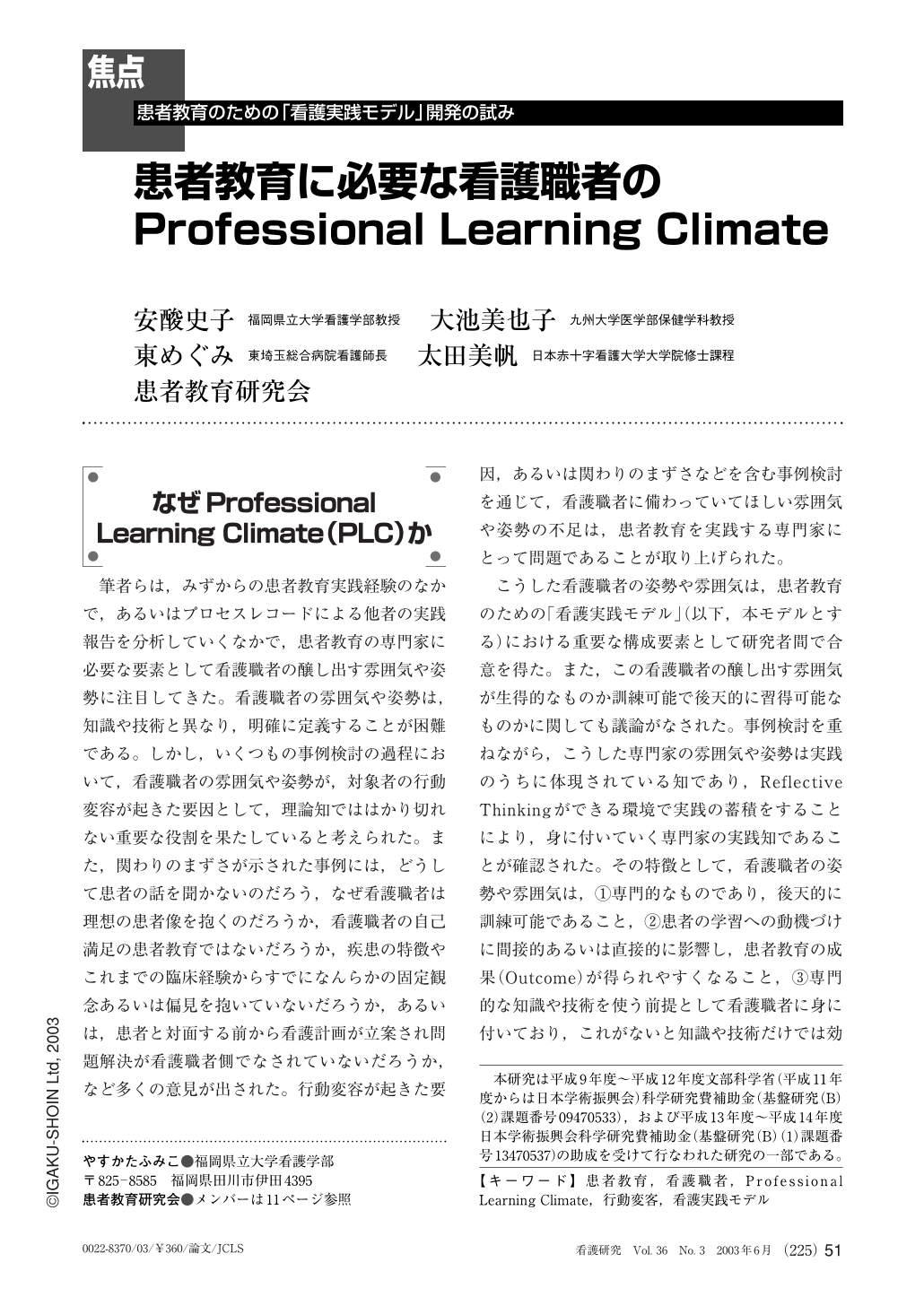
なぜProfessional Learning Climate(PLC)か
筆者らは,みずからの患者教育実践経験のなかで,あるいはプロセスレコードによる他者の実践報告を分析していくなかで,患者教育の専門家に必要な要素として看護職者の醸し出す雰囲気や姿勢に注目してきた。看護職者の雰囲気や姿勢は,知識や技術と異なり,明確に定義することが困難である。しかし,いくつもの事例検討の過程において,看護職者の雰囲気や姿勢が,対象者の行動変容が起きた要因として,理論知でははかり切れない重要な役割を果たしていると考えられた。また,関わりのまずさが示された事例には,どうして患者の話を聞かないのだろう,なぜ看護職者は理想の患者像を抱くのだろうか,看護職者の自己満足の患者教育ではないだろうか,疾患の特徴やこれまでの臨床経験からすでになんらかの固定観念あるいは偏見を抱いていないだろうか,あるいは,患者と対面する前から看護計画が立案され問題解決が看護職者側でなされていないだろうか,など多くの意見が出された。行動変容が起きた要因,あるいは関わりのまずさなどを含む事例検討を通じて,看護職者に備わっていてほしい雰囲気や姿勢の不足は,患者教育を実践する専門家にとって問題であることが取り上げられた。
こうした看護職者の姿勢や雰囲気は,患者教育のための「看護実践モデル」(以下,本モデルとする)における重要な構成要素として研究者間で合意を得た。また,この看護職者の醸し出す雰囲気が生得的なものか訓練可能で後天的に習得可能なものかに関しても議論がなされた。事例検討を重ねながら,こうした専門家の雰囲気や姿勢は実践のうちに体現されている知であり,Reflective Thinkingができる環境で実践の蓄積をすることにより,身に付いていく専門家の実践知であることが確認された。その特徴として,看護職者の姿勢や雰囲気は,①専門的なものであり,後天的に訓練可能であること,②患者の学習への動機づけに間接的あるいは直接的に影響し,患者教育の成果(Outcome)が得られやすくなること,③専門的な知識や技術を使う前提として看護職者に身に付いており,これがないと知識や技術だけでは効果的な患者教育にはなりにくいこと,などである。以上の議論ののちに,こうした専門家に備わっている雰囲気をProfessional Learning Climate(以下,PLCと略す)と命名した。
This article gives a descriptive account of 10 elements of Professional Learning Climate (PLC) as defined below and verifies the appropriateness of each element to patient education.
We examined case examples of patient education which included instances of both successful and unsuccessful patient behavioral modification, and we concluded a lack of certain attitude towards patients as a problem for nurses as health care professionals engaged in patient education.
We designated such attitude as “Professional Learning Climate (PLC)” and defined it as follows : PLC is a manner or attitude that a professional possesses. It is supported by professional knowledge and experience and has contributing influence on effective patient education. We extracted the following 10 elements of PLC from the data: “show concern”, “respect”, “believe”, “be modest” “create a relaxing ambiance”, “be willing to listen”, “share personal feelings and thoughts with the patient”, “show an attitude of moving ahead together”, “show enthusiasm”, and “be humorous and witty”. This kind of attitude that professionals possess stems from experiential knowledge developed through practice in an environment conducive to reflective thinking.
Copyright © 2003, Igaku-Shoin Ltd. All rights reserved.