Japanese
English
- 有料閲覧
PPV購入案内
1,320円 (1,200円+税10%) こちらは、319ページから332ページの文献です。購入には医書.jp本会員登録が必要です。
会員登録完了後に改めて上記「購入サイトへ」を選択してください。
または「購入サイトへ」選択後に「購入ログイン」、「新規会員登録」の順に進んでください。
会員登録について詳しくはをご確認ください。
- Abstract 文献概要
- 1ページ目 Look Inside
はじめに
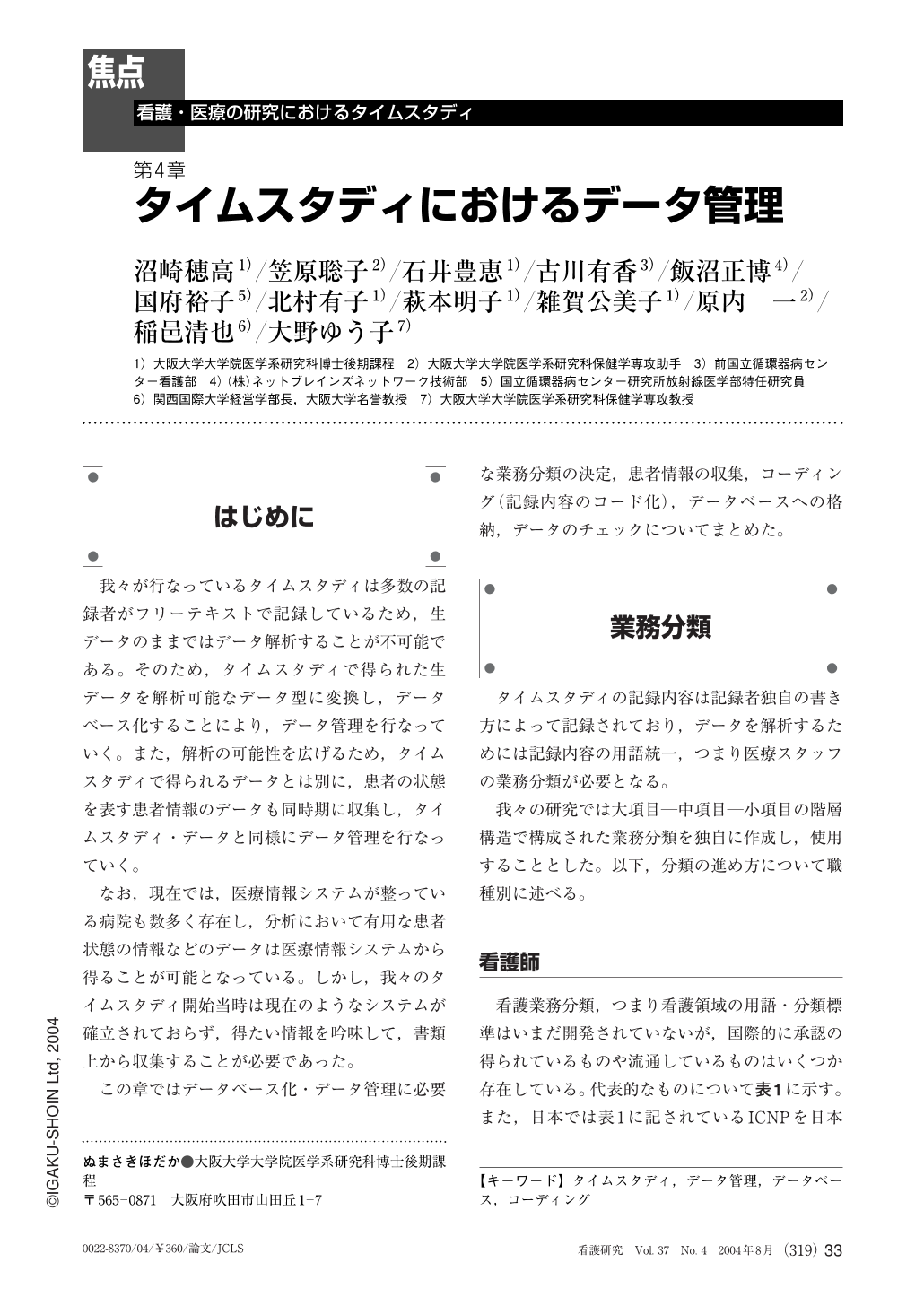
我々が行なっているタイムスタディは多数の記録者がフリーテキストで記録しているため,生データのままではデータ解析することが不可能である。そのため,タイムスタディで得られた生データを解析可能なデータ型に変換し,データベース化することにより,データ管理を行なっていく。また,解析の可能性を広げるため,タイムスタディで得られるデータとは別に,患者の状態を表す患者情報のデータも同時期に収集し,タイムスタディ・データと同様にデータ管理を行なっていく。
なお,現在では,医療情報システムが整っている病院も数多く存在し,分析において有用な患者状態の情報などのデータは医療情報システムから得ることが可能となっている。しかし,我々のタイムスタディ開始当時は現在のようなシステムが確立されておらず,得たい情報を吟味して,書類上から収集することが必要であった。
この章ではデータベース化・データ管理に必要な業務分類の決定,患者情報の収集,コーディング(記録内容のコード化),データベースへの格納,データのチェックについてまとめた。
Raw data obtained through time and motion study cannot be managed effectively unless it is transformed into the analyzable data type for a database.
In addition, in order to extend the scope of analysis, the data describing the patient condition must also be collected, which in turn should be linked to and managed together with the time and motion study data.
There are a lot of hospitals equipped with the medical information system now, which provides us the basic patient information. At the time of our study, however, there was none in the hospital where we did our observation. So we had to look through the patient charts and records by ourselves in order to collect the necessary information.
This chapter describes the development of the job classification of the healthcare personnel, collection of the patient information, coding of the recorded contents in time and motion study, storage of data into a database, and cleaning of data for data management.
Copyright © 2004, Igaku-Shoin Ltd. All rights reserved.