Japanese
English
- 有料閲覧
PPV購入案内
1,320円 (1,200円+税10%) こちらは、1065ページから1069ページの文献です。購入には医書.jp本会員登録が必要です。
会員登録完了後に改めて上記「購入サイトへ」を選択してください。
または「購入サイトへ」選択後に「購入ログイン」、「新規会員登録」の順に進んでください。
会員登録について詳しくはをご確認ください。
- Abstract 文献概要
- 1ページ目 Look Inside
I.はじめに
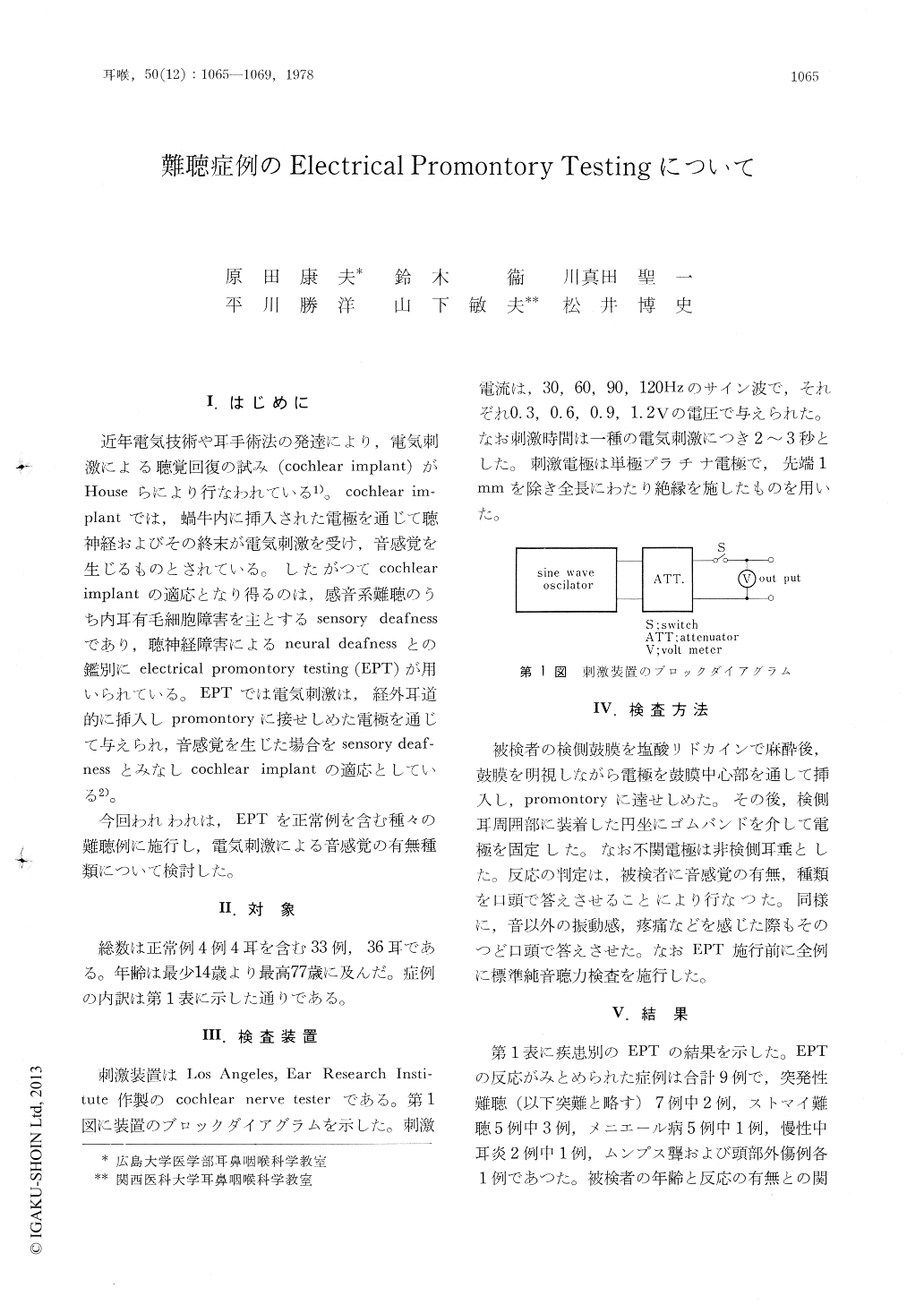
近年電気技術や耳手術法の発達により,電気刺激による聴覚回復の試み(cochlear implant)がHouseらにより行なわれている1)。 cochlear implantでは,蝸牛内に挿入された電極を通じて聴神経およびその終末が電気刺激を受け,音感覚を生じるものとされている。したがつてcochlearimplantの適応となり得るのは,感音系難聴のうち内耳有毛細胞障害を主とするsensory deafnessであり,聴神経障害によるneural dcafnessとの鑑別にelectrical promontory testing(EPT)が用いられている。EPTでは電気刺激は,経外耳道的に挿入しpromontoryに接せしめた電極を通じて与えられ,音感覚を生じた場合をsensory deafnessとみなしcochlear implantの適応としている2)。
今回われわれは,EPTを正常例を含む種々の難聴例に施行し,電気刺激による音感覚の有無種類について検討した。
Electrical Promontory Testing (EPT) was clinically applied to 33 cases, including 4 subjects with normal hearing. Sound sensation was subjectively obtained in 9 cases with severe hearing loss, of which the diagnoses were sudden deafness in 2, streptomycin induced deafness in 3, otitis media chronica in 1, Ménière's disease in 1, mumps deafness in 1 and head injury in 1. The subjects with normal hearing or conductive deafness revealed no response to EPT. The acoustic response to electrical stimulation is discussed in reference to the etiology of the deafness.
Copyright © 1978, Igaku-Shoin Ltd. All rights reserved.