Japanese
English
- 有料閲覧
PPV購入案内
1,320円 (1,200円+税10%) こちらは、737ページから740ページの文献です。購入には医書.jp本会員登録が必要です。
会員登録完了後に改めて上記「購入サイトへ」を選択してください。
または「購入サイトへ」選択後に「購入ログイン」、「新規会員登録」の順に進んでください。
会員登録について詳しくはをご確認ください。
- Abstract 文献概要
- 1ページ目 Look Inside
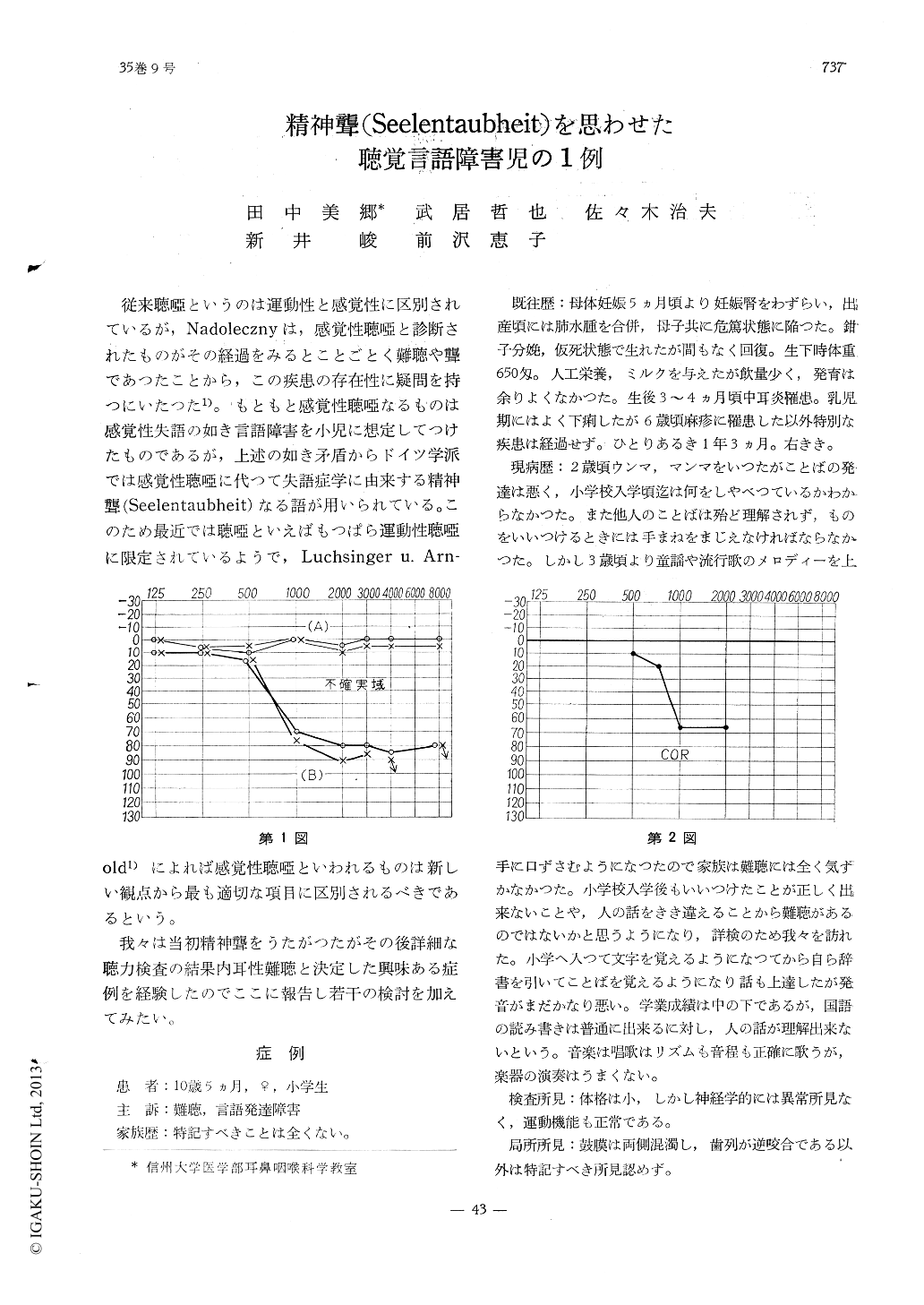
従来聴唖というのは運動性と感覚性に区別されているが,Nadolecznyは,感覚性聴唖と診断されたものがその経過をみるとことごとく難聴や聾であつたことから,この疾患の存在性に疑問を持つにいたつた1)。もともと感覚性聴唖なるものは感覚性失語の如き言語障害を小児に想定してつけたものであるが,上述の如き矛盾からドイツ学派では感覚性聴唖に代つて失語症学に由来する精神聾(Seelentaubheit)なる語が用いられている。このため最近では聴唖といえばもつぱら運動性聴唖に限定されているようで,Luchsinger u. Arnold1)によれば感覚性聴唖といわれるものは新しい観点から最も適切な項目に区別されるべきであるという。
我々は当初精神聾をうたがつたがその後詳細な聴力検査の結果内耳性難聴と決定した興味ある症例を経験したのでここに報告し若干の検討を加えてみたい。
A case of disturbed speech due to hard of hearing that suggested psychic deafness is reported. A girl, aged 10, was brought to our attention with complaints of speech disorder by her parents. The latter were unaware of the child's hearing difficulty because she was capable of singing from her very early age. Our initial examination of the patient failed to reveal evidence of loss of hearing. However, that it might be a case of psychic deafness was suspected because the child failed to understand the meaning of the words spoken to; she also showed failure in differentiating tones between instrumental and conversational. Repeated hearing tests revealed a loss of hearing in the higher tonal level.
Copyright © 1963, Igaku-Shoin Ltd. All rights reserved.