Japanese
English
- 有料閲覧
PPV購入案内
1,320円 (1,200円+税10%) こちらは、839ページから845ページの文献です。購入には医書.jp本会員登録が必要です。
会員登録完了後に改めて上記「購入サイトへ」を選択してください。
または「購入サイトへ」選択後に「購入ログイン」、「新規会員登録」の順に進んでください。
会員登録について詳しくはをご確認ください。
- Abstract 文献概要
- 1ページ目 Look Inside
- 参考文献 Reference
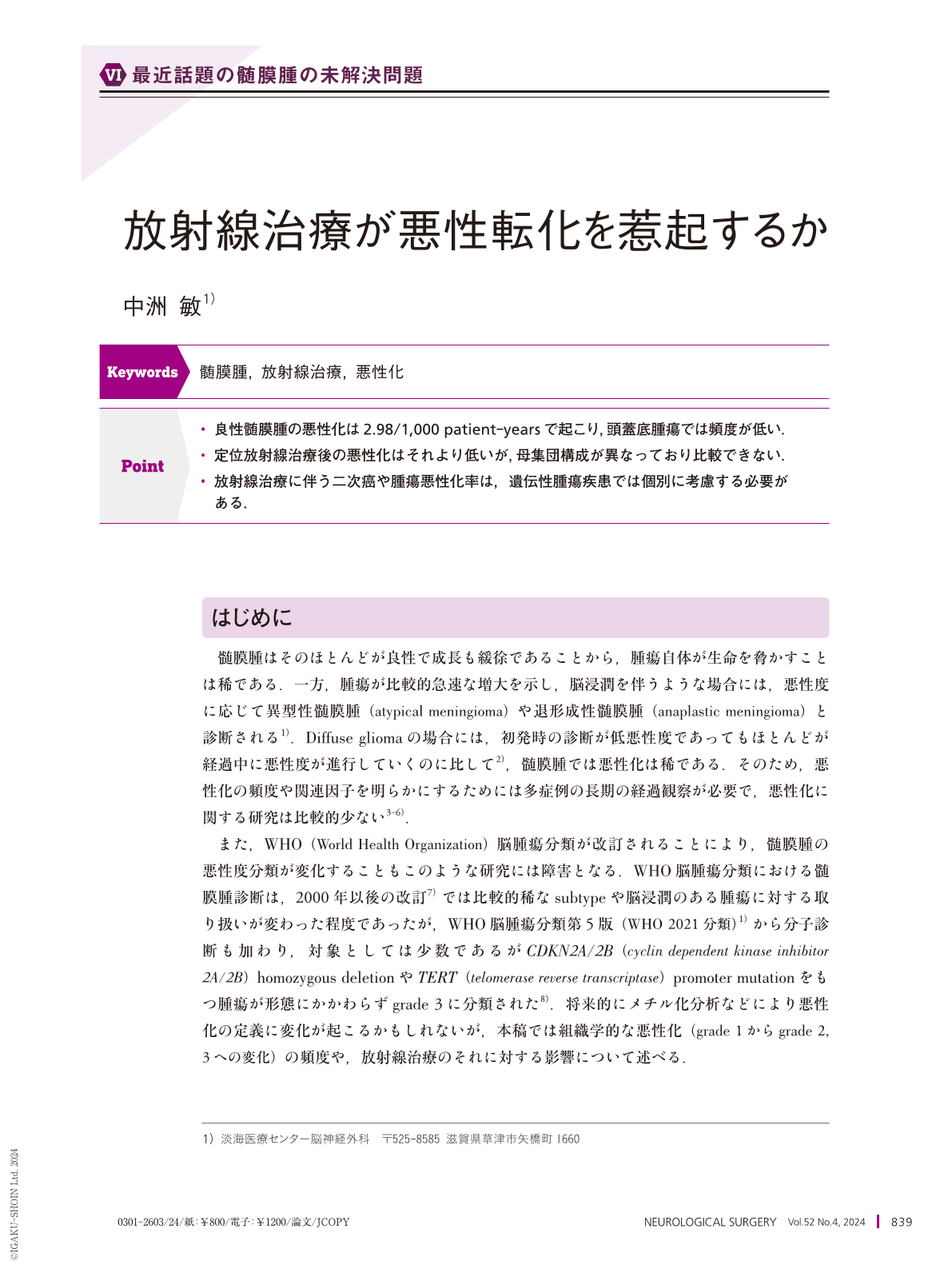
Point
・良性髄膜腫の悪性化は2.98/1,000 patient-yearsで起こり,頭蓋底腫瘍では頻度が低い.
・定位放射線治療後の悪性化はそれより低いが,母集団構成が異なっており比較できない.
・放射線治療に伴う二次癌や腫瘍悪性化率は,遺伝性腫瘍疾患では個別に考慮する必要がある.
Most meningiomas are benign, slow growing tumors, which rarely progress to a higher grade. The incidence rate of malignant progression is estimated to be 2.98/1000 patient-year. However, non-skull base location is a significant risk factor for progression. The median time to malignant progression is 4.3 years; however, the cumulative rate of progression approaches a plateau after 10 years. Although radiosurgery does not appear to increase the incidence rate(0.5/1000 patient-year), exact comparisons have been difficult because of differences in study populations. The median time to progression is 7.0 years from initial diagnosis and 5.0 years from radiosurgery. The cumulative rate appears to increase even after 10 years. The risk of malignant transformation after radiotherapy may increase in patients with tumor-prone syndromes, with some controversies regarding patients with neurofibromatosis type 2. Although short term follow-up in patients with meningioma suggests that radiosurgery is safe, there is uncertainty regarding its use in pediatric patients, and those with tumor-prone syndromes.
Copyright © 2024, Igaku-Shoin Ltd. All rights reserved.