Japanese
English
- 有料閲覧
PPV購入案内
1,320円 (1,200円+税10%) こちらは、958ページから967ページの文献です。購入には医書.jp本会員登録が必要です。
会員登録完了後に改めて上記「購入サイトへ」を選択してください。
または「購入サイトへ」選択後に「購入ログイン」、「新規会員登録」の順に進んでください。
会員登録について詳しくはをご確認ください。
- Abstract 文献概要
- 1ページ目 Look Inside
- 参考文献 Reference
Point
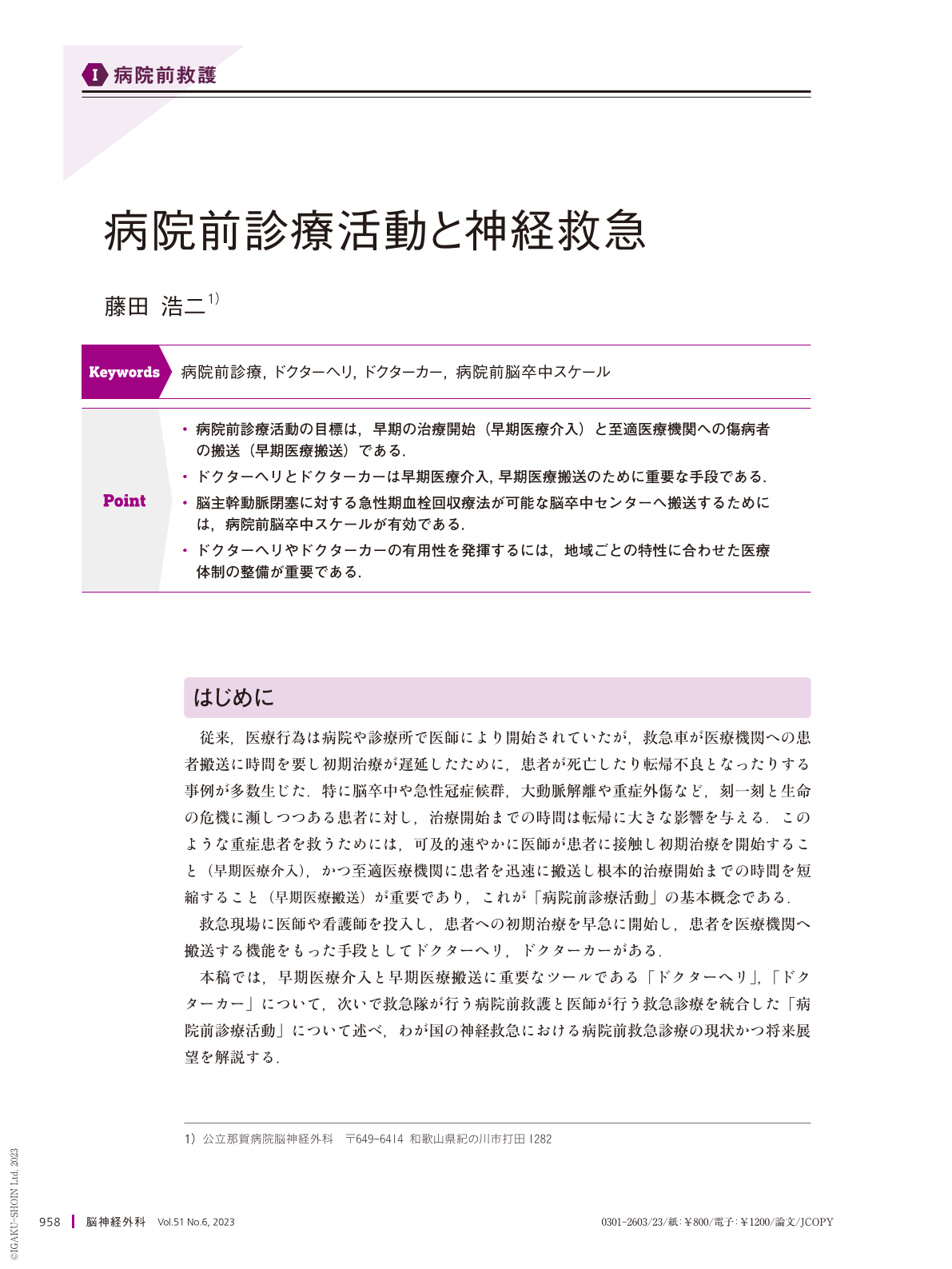
・病院前診療活動の目標は,早期の治療開始(早期医療介入)と至適医療機関への傷病者の搬送(早期医療搬送)である.
・ドクターヘリとドクターカーは早期医療介入,早期医療搬送のために重要な手段である.
・脳主幹動脈閉塞に対する急性期血栓回収療法が可能な脳卒中センターへ搬送するためには,病院前脳卒中スケールが有効である.
・ドクターヘリやドクターカーの有用性を発揮するには,地域ごとの特性に合わせた医療体制の整備が重要である.
To save the life of patients with critical illness, immediate medical intervention and rapid emergency medical evacuation are important; this is the basic concept of “prehospital emergency medical care.” Doctor cars are designated as emergency vehicles, and helicopter emergency medical services(HEMS)send doctors and nurses to emergency situations to quickly start the initial treatment and transport patients to medical institutions. In Japan, 56 medical helicopters have been deployed nationwide across 47 prefectures. According to a registry report in Japan, HEMS transport for cerebral ischemic stroke resulted in a higher rate of interventional treatment compared to that provided by ambulance transport and significantly affected favorable outcomes 1 month later. A questionnaire survey assessing doctor cars in Japan revealed disparities in the operation of doctor cars across facilities. The prehospital stroke scale effectively transports patients to stroke centers for endovascular thrombectomy for large-vessel occlusion. To demonstrate the usefulness of doctor cars and HEMS, the medical system should be tailored to the characteristics of the region of operation.
Copyright © 2023, Igaku-Shoin Ltd. All rights reserved.