Japanese
English
- 有料閲覧
PPV購入案内
1,320円 (1,200円+税10%) こちらは、164ページから169ページの文献です。購入には医書.jp本会員登録が必要です。
会員登録完了後に改めて上記「購入サイトへ」を選択してください。
または「購入サイトへ」選択後に「購入ログイン」、「新規会員登録」の順に進んでください。
会員登録について詳しくはをご確認ください。
- Abstract 文献概要
- 1ページ目 Look Inside
- 参考文献 Reference
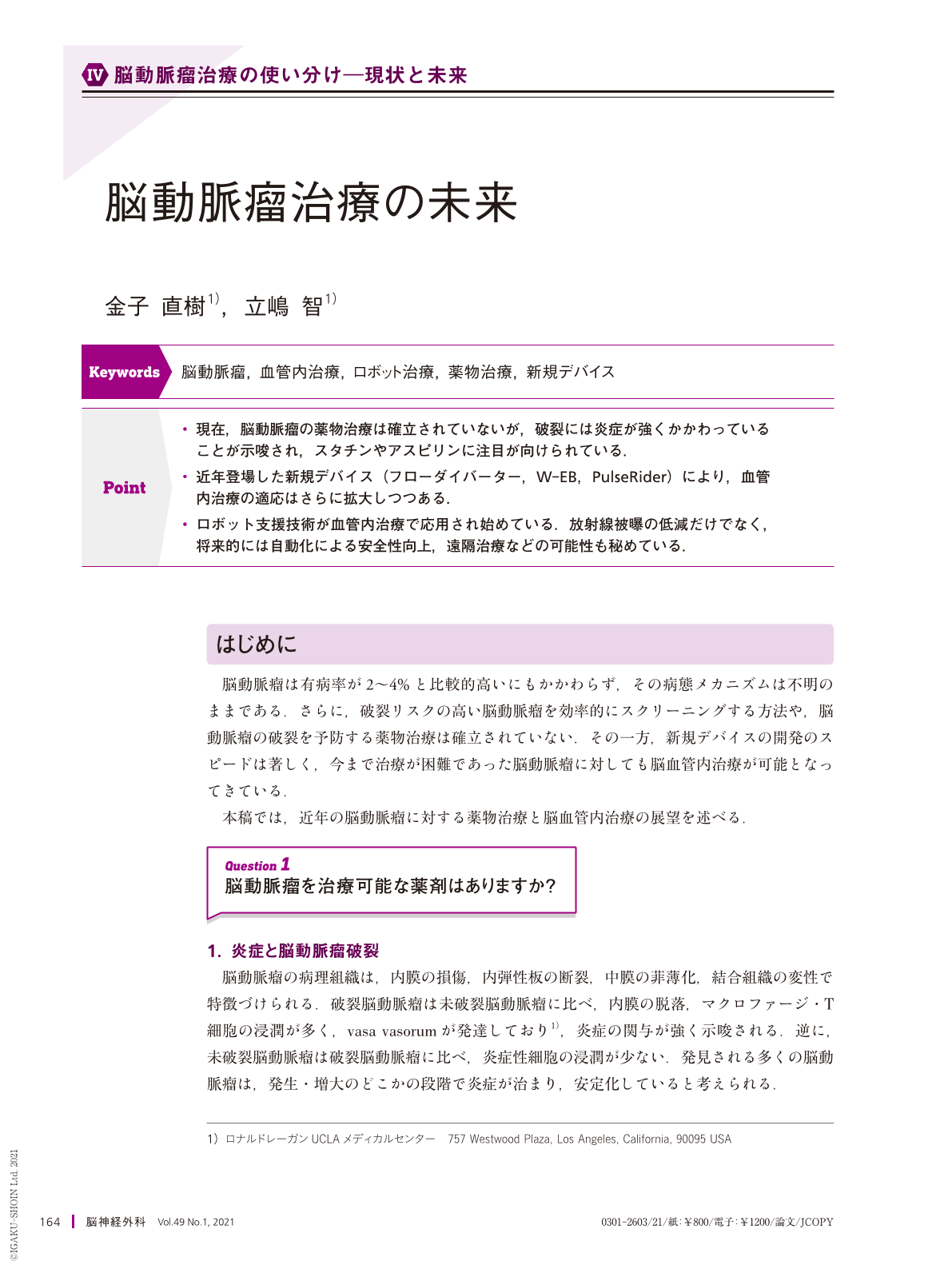
Point
・現在,脳動脈瘤の薬物治療は確立されていないが,破裂には炎症が強くかかわっていることが示唆され,スタチンやアスピリンに注目が向けられている.
・近年登場した新規デバイス(フローダイバーター,W-EB,PulseRider)により,血管内治療の適応はさらに拡大しつつある.
・ロボット支援技術が血管内治療で応用され始めている.放射線被曝の低減だけでなく,将来的には自動化による安全性向上,遠隔治療などの可能性も秘めている.
There has been an increasing role in the low invasive endovascular treatment of intracranial aneurysms. In addition to the detachable coils, the development of intracranial stents that are capable of repairing the parent artery itself has induced a significant treatment paradigm shift from open surgical to endovascular intervention. Recent evidence suggests that chronic inflammation plays a critical role in the process of intracranial aneurysm formation and rupture. It is, therefore, a natural evolution to seek drug treatments for intracranial aneurysms for growth or rupture prevention rather than any mechanical intervention. The authors review the current preclinical efforts on aneurysm drug treatments and prospective. Also covered is an emerging technology such as robotic endovascular treatment. The robotic system is capable of performing a subset of endovascular procedures such as stent-assisted aneurysm coiling. Although a lot of work needs to be done, remote health care is no longer science fiction.
Copyright © 2021, Igaku-Shoin Ltd. All rights reserved.