Japanese
English
- 有料閲覧
PPV購入案内
1,320円 (1,200円+税10%) こちらは、457ページから463ページの文献です。購入には医書.jp本会員登録が必要です。
会員登録完了後に改めて上記「購入サイトへ」を選択してください。
または「購入サイトへ」選択後に「購入ログイン」、「新規会員登録」の順に進んでください。
会員登録について詳しくはをご確認ください。
- Abstract 文献概要
- 1ページ目 Look Inside
- 参考文献 Reference
Ⅰ.はじめに
脳出血発症時に画像上,同時多発性出血を来す例は比較的稀である11,12,21).原因としてはアミロイドアンギオパチー,静脈洞血栓症,凝固異常,血管炎,出血性脳梗塞,多発性脳血管奇形,脳腫瘍,医原性が挙げられているが11),詳細な機序やリスクファクターについては明確となっていない.
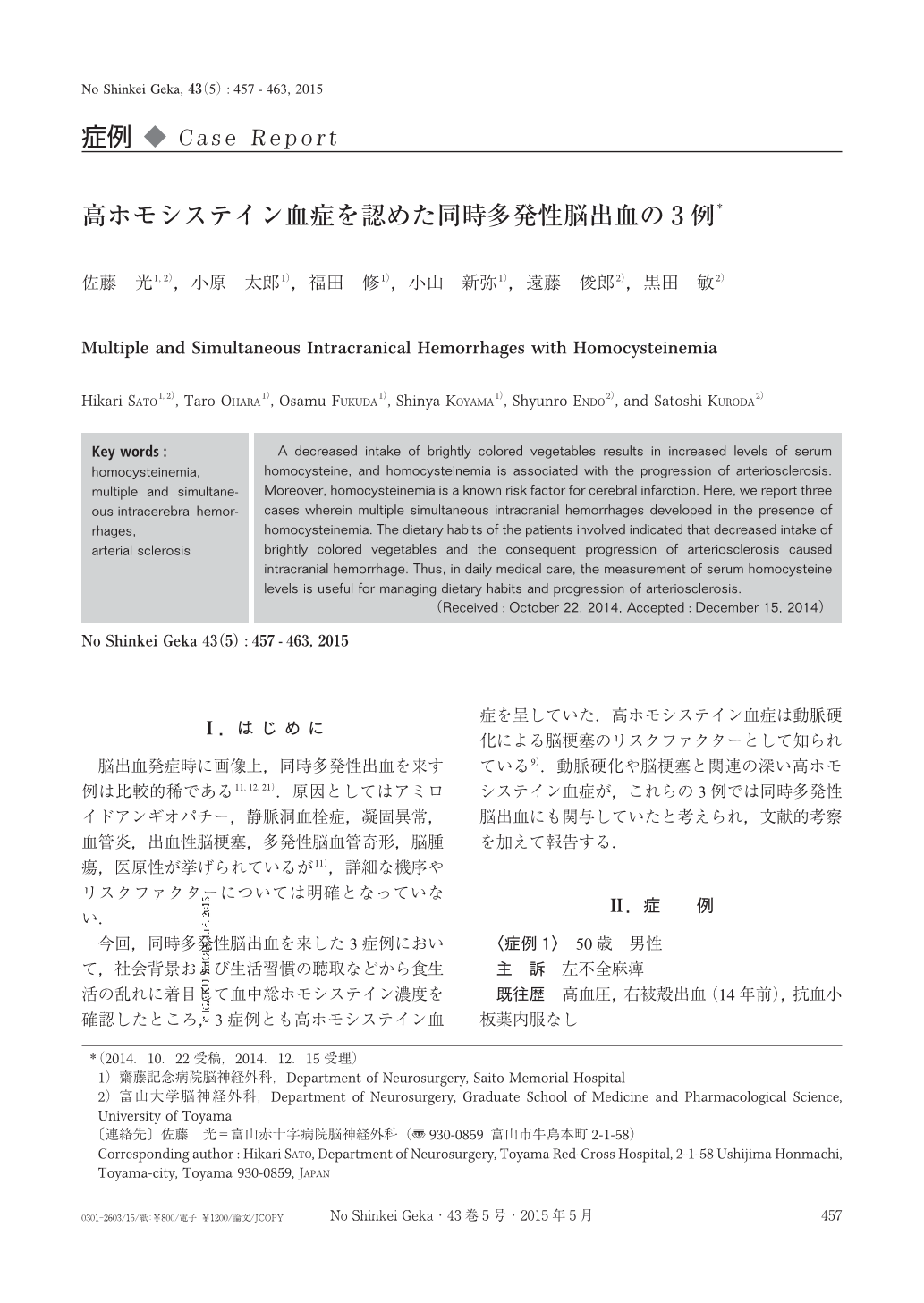
今回,同時多発性脳出血を来した3症例において,社会背景および生活習慣の聴取などから食生活の乱れに着目して血中総ホモシステイン濃度を確認したところ,3症例とも高ホモシステイン血症を呈していた.高ホモシステイン血症は動脈硬化による脳梗塞のリスクファクターとして知られている9).動脈硬化や脳梗塞と関連の深い高ホモシステイン血症が,これらの3例では同時多発性脳出血にも関与していたと考えられ,文献的考察を加えて報告する.
A decreased intake of brightly colored vegetables results in increased levels of serum homocysteine, and homocysteinemia is associated with the progression of arteriosclerosis. Moreover, homocysteinemia is a known risk factor for cerebral infarction. Here, we report three cases wherein multiple simultaneous intracranial hemorrhages developed in the presence of homocysteinemia. The dietary habits of the patients involved indicated that decreased intake of brightly colored vegetables and the consequent progression of arteriosclerosis caused intracranial hemorrhage. Thus, in daily medical care, the measurement of serum homocysteine levels is useful for managing dietary habits and progression of arteriosclerosis.
Copyright © 2015, Igaku-Shoin Ltd. All rights reserved.