Japanese
English
- 有料閲覧
PPV購入案内
1,320円 (1,200円+税10%) こちらは、279ページから289ページの文献です。購入には医書.jp本会員登録が必要です。
会員登録完了後に改めて上記「購入サイトへ」を選択してください。
または「購入サイトへ」選択後に「購入ログイン」、「新規会員登録」の順に進んでください。
会員登録について詳しくはをご確認ください。
- Abstract 文献概要
- 1ページ目 Look Inside
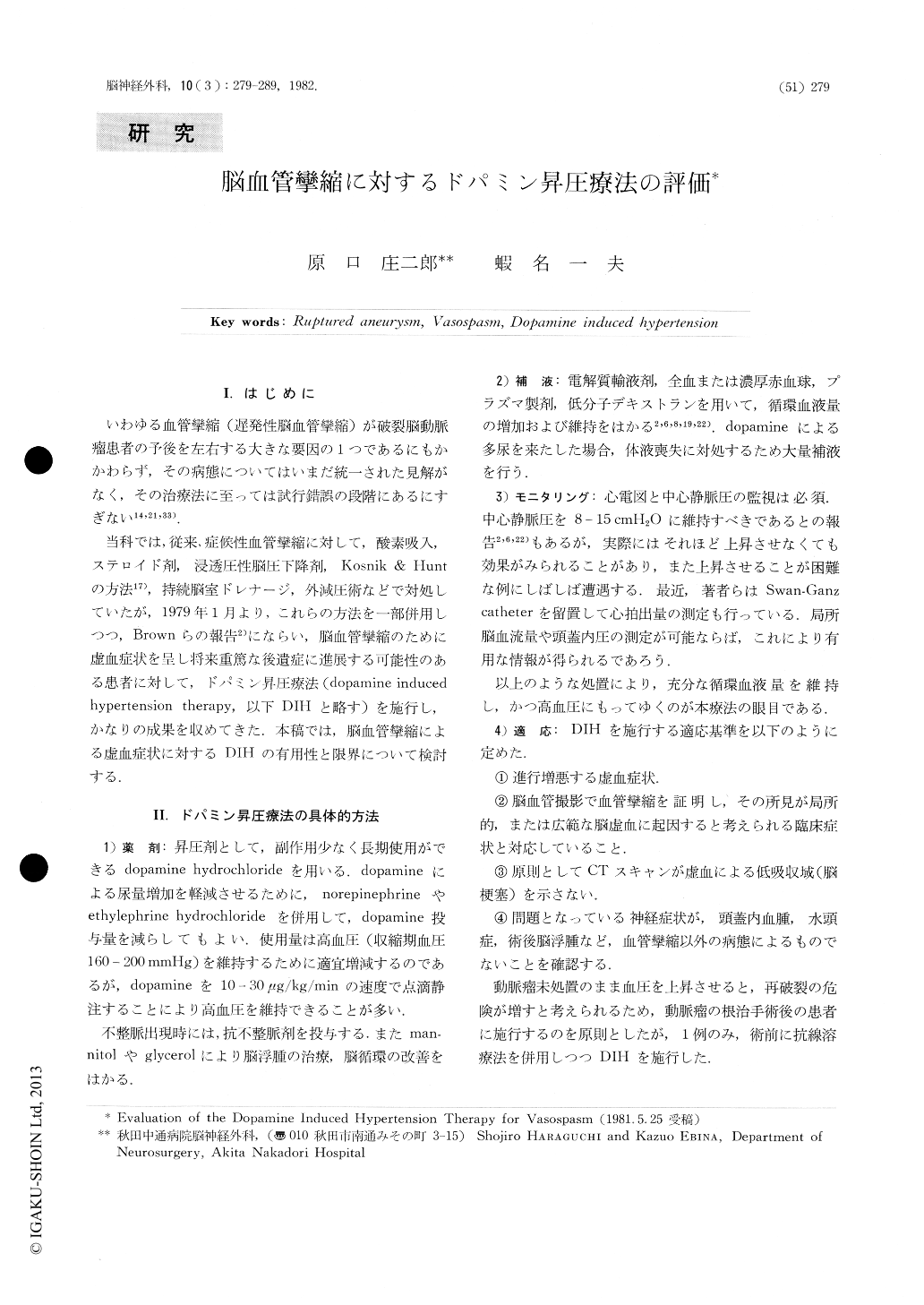
I.はじめに
いわゆる血管攣縮(遅発性脳血管攣縮)が破裂脳動脈瘤患者の予後を左右する大きな要因の1つであるにもかかわらず,その病態についてはいまだ統一された見解がなく,その治療法に至っては試行錯誤の段階にあるにすぎない14,21,33).
当科では,従来,症候性血管攣縮に対して,酸素吸入,ステロイド剤,浸透圧性脳圧下降剤,Kosnik & Huntの方法17),持続脳室ドレナージ,外減圧術などで対処していたが,1979年1月より,これらの方法を一部併用しつつ,Brownらの報告2)にならい,脳血管攣縮のために虚血症状を呈し将来重篤な後遺症に進展する可能性のある患者に対して,ドパミン昇圧療法(dopamine inducedhypertension therapy,以下DIHと略す)を施行し,かなりの成果を収めてきた.本稿では,脳血管攣縮による虚血症状に対するDIHの有用性と限界について検討する.
The purpose of this study is to clarify the usefulness andthe limitations of the dopamine induced hypertension therapy(DIH) in the treatment of symptomatic vasospasm secondaryto aneurysmal rupture.
Twelve patients suffering from ischemic complications ofvasospasm were treated with DIH and large quantities ofintravascular fluids. All underwent cerebral angiographyand CT scan in order to ascertain if their neurologicaldeteriorations were due to vasospasm. In 9 cases, thelevels of consciousness and neurological state were improvedwithin a few hours after DIH started.
Copyright © 1982, Igaku-Shoin Ltd. All rights reserved.