Japanese
English
- 有料閲覧
PPV購入案内
1,320円 (1,200円+税10%) こちらは、735ページから742ページの文献です。購入には医書.jp本会員登録が必要です。
会員登録完了後に改めて上記「購入サイトへ」を選択してください。
または「購入サイトへ」選択後に「購入ログイン」、「新規会員登録」の順に進んでください。
会員登録について詳しくはをご確認ください。
- Abstract 文献概要
- 1ページ目 Look Inside
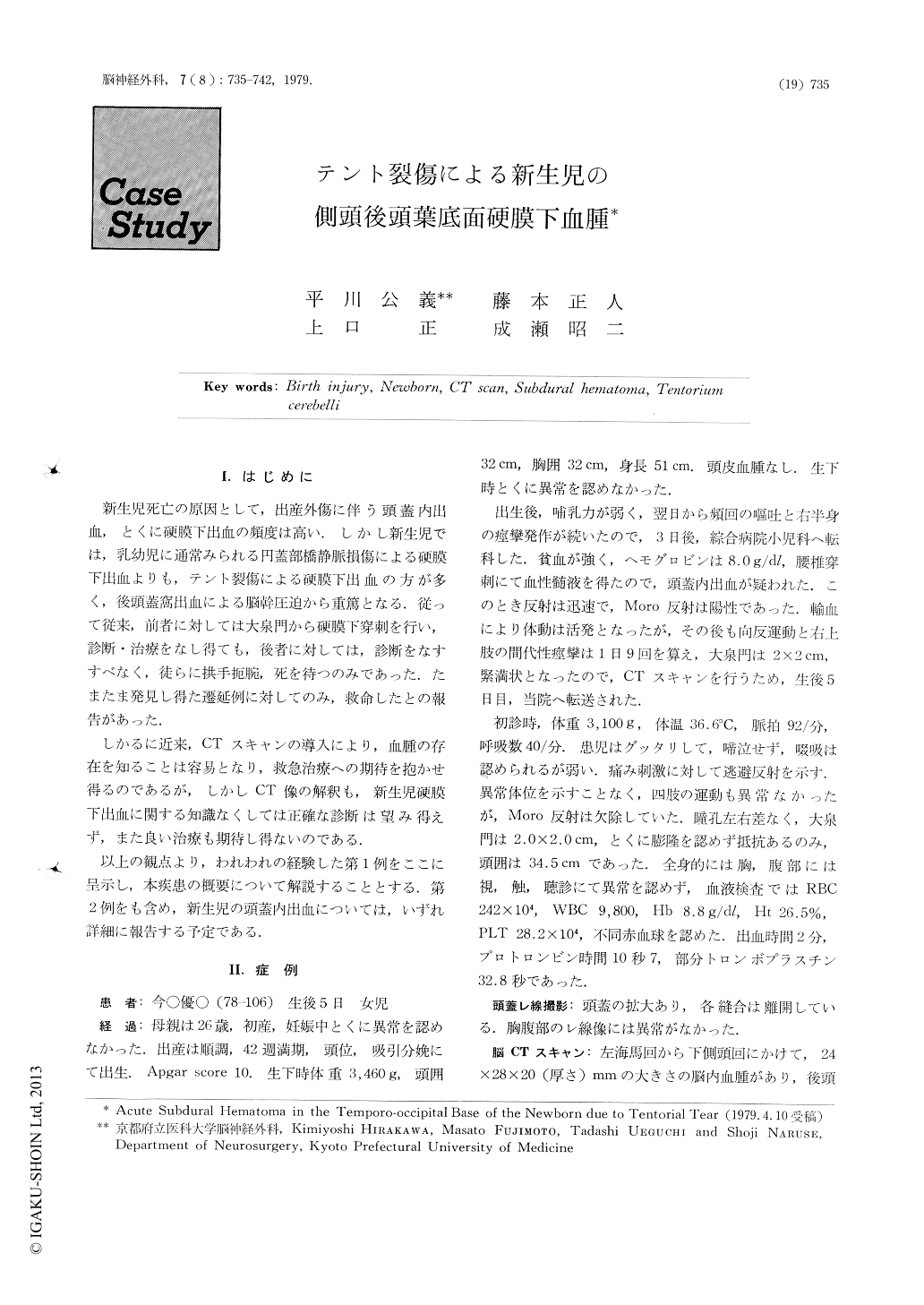
Ⅰ.はじめに
新生児死亡の原因として,出産外傷に伴う頭蓋内出血,とくに硬膜下出血の頻度は高い.しかし新生児では,乳幼児に通常みられる円蓋部橋静脈損傷による硬膜下出血よりも,テント裂傷による硬膜下出血の方が多く,後頭蓋窩出血による脳幹圧迫から重篤となる.従って従来,前者に対しては大泉門から硬膜下穿刺を行い,診断・治療をなし得ても,後者に対しては,診断をなすすべなく,徒らに拱手扼腕,死を待つのみであった.たまたま発見し得た遷延例に対してのみ,救命したとの報告があった.
しかるに近来,CTスキャンの導入により,血腫の存在を知ることは容易となり,救急治療への期待を抱かせ得るのであるが,しかしCT像の解釈も,新生児硬膜下出血に関する知識なくしては正確な診断は望み得えず,また良い治療も期待し得ないのである.
Although subdural hemorrhage is the most frequent cause in the neonatal deaths, it is rather rare in the neurosurgical practice. This is simply because accurate diagnosis for early operation was difficult and pediatricians were usually conservative. This problem was solved after the introduction of CT scan. However, to make precise diagnosis about the location of the hematoma by CT scan, mandatory is the fundamental knowledge on the pathomechanism of birth trauma. Usually subdural hemorrhage in the neonate comes from the rupture of parasagittal bridging vein and the tear of cerebellar tentorium with resulting bleeding from Galenic system.
Copyright © 1979, Igaku-Shoin Ltd. All rights reserved.