Japanese
English
- 有料閲覧
PPV購入案内
1,320円 (1,200円+税10%) こちらは、566ページから582ページの文献です。購入には医書.jp本会員登録が必要です。
会員登録完了後に改めて上記「購入サイトへ」を選択してください。
または「購入サイトへ」選択後に「購入ログイン」、「新規会員登録」の順に進んでください。
会員登録について詳しくはをご確認ください。
- Abstract 文献概要
- 1ページ目 Look Inside
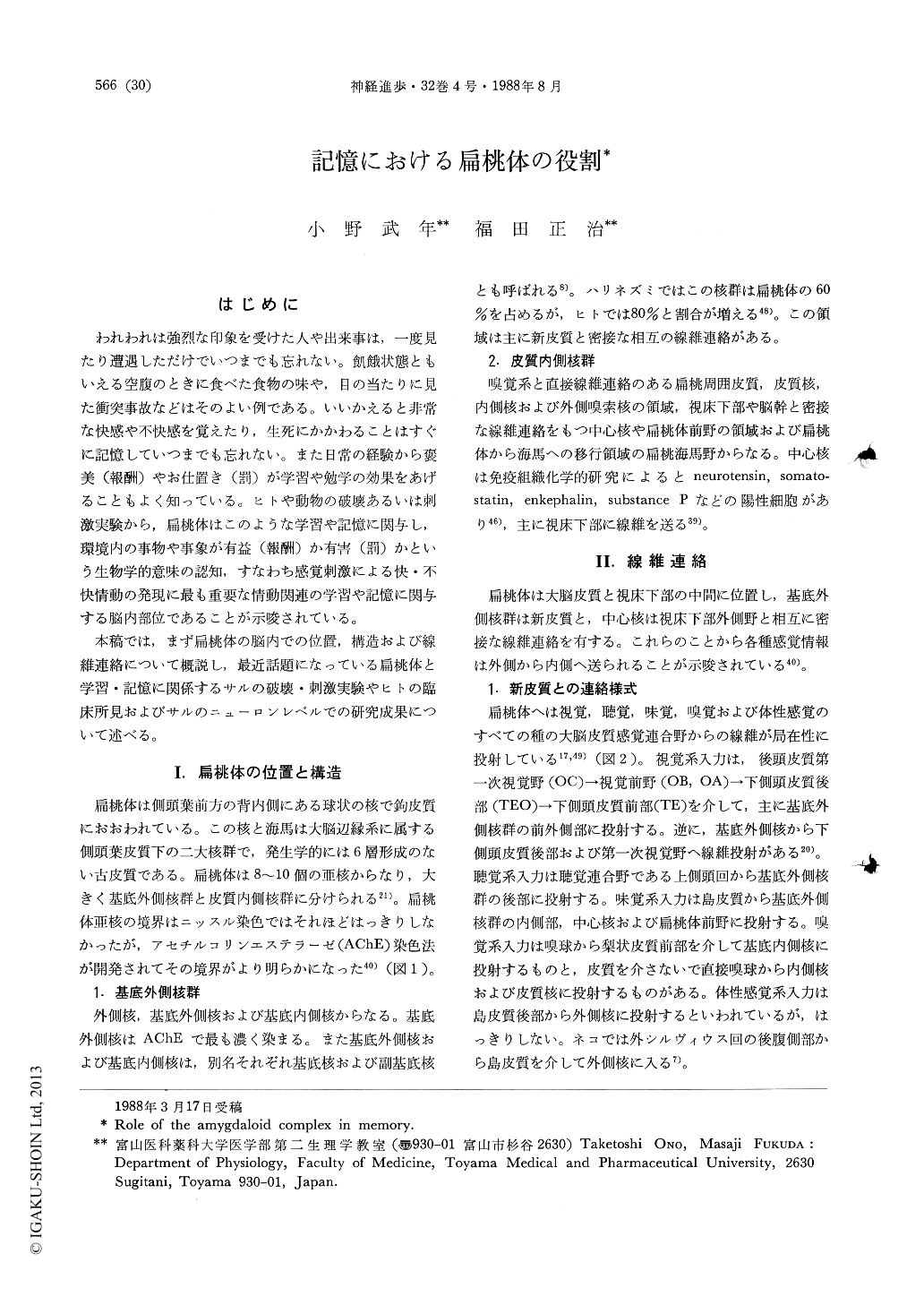
はじめに
われわれは強烈な印象を受けた人や出来事は,一度見たり遭遇しただけでいつまでも忘れない。飢餓状態ともいえる空腹のときに食べた食物の味や,目の当たりに見た衝突事故などはそのよい例である。いいかえると非常な快感や不快感を覚えたり,生死にかかわることはすぐに記憶していつまでも忘れない。また日常の経験から褒美(報酬)やお仕置き(罰)が学習や勉学の効果をあげることもよく知っている。ヒトや動物の破壊あるいは刺激実験から,扁桃体はこのような学習や記憶に関与し,環境内の事物や事象が有益(報酬)か有害(罰)かという生物学的意味の認知,すなわち感覚刺激による快・不快情動の発現に最も重要な情動関連の学習や記憶に関与する脳内部位であることが示唆されている。
本稿では,まず扁桃体の脳内での位置,構造および線維連絡について概説し,最近話題になっている扁桃体と学習・記憶に関係するサルの破壊・刺激実験やヒトの臨床所見およびサルのニューロンレベルでの研究成果について述べる。
The recent anatomical and electrical stimula-tion evidence indicates that the amygdala (AM) receives highly processed information from all sensory modalities via association cortex. This has led some investigators to speculate that sen-sory effects on emotional processes may depend upon relays through the AM. In addition to a role in emotional processes, the AM had been implicated in a variety of mnemonic processes. In monkey and human, bilateral damage to medial temporal lobes, which include the AM, results in global amnesia. It is possible that disconnecting specific sensory input to the medial temporal lobe might result in modality specific memory deficits. In addition, recent lesion studies suggest that the AM is important in cross-modal association. All this evidence suggests that sensory processing in the AM contributes to both emo-tional and mnemonic processes.
Copyright © 1988, Igaku-Shoin Ltd. All rights reserved.