Japanese
English
- 有料閲覧
PPV購入案内
1,320円 (1,200円+税10%) こちらは、543ページから552ページの文献です。購入には医書.jp本会員登録が必要です。
会員登録完了後に改めて上記「購入サイトへ」を選択してください。
または「購入サイトへ」選択後に「購入ログイン」、「新規会員登録」の順に進んでください。
会員登録について詳しくはをご確認ください。
- Abstract 文献概要
- 1ページ目 Look Inside
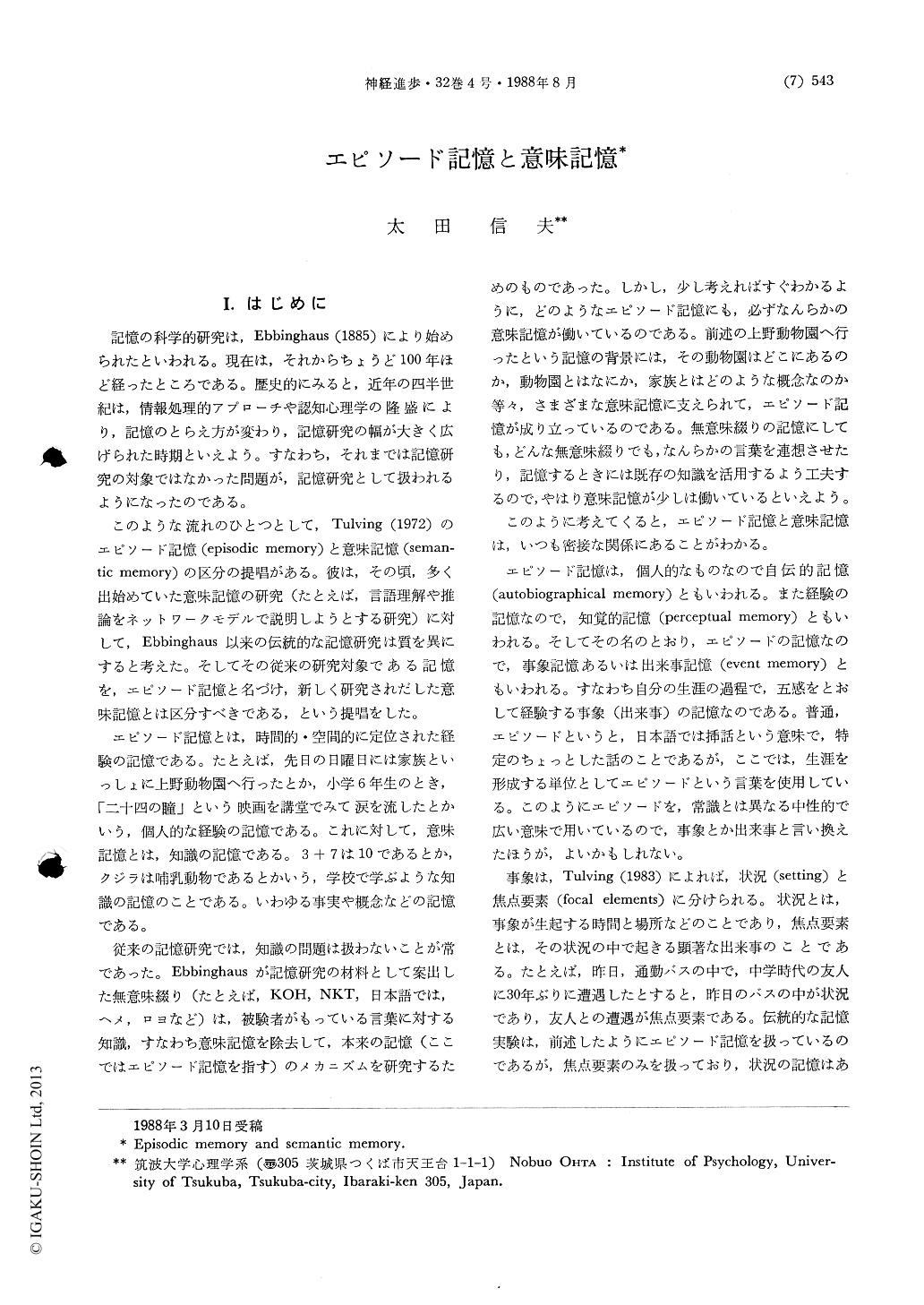
I.はじめに
記憶の科学的研究は,Ebbinghaus(1885)により始められたといわれる。現在は,それからちょうど100年ほど経ったところである。歴史的にみると,近年の四半世紀は,情報処理的アプローチや認知心理学の隆盛により,記憶のとらえ方が変わり,記憶研究の幅が大きく広げられた時期といえよう。すなわち,それまでは記憶研究の対象ではなかった問題が,記憶研究として扱われるようになったのである。
このような流れのひとつとして,Tulving(1972)のエピソード記憶(episodic memory)と意味記憶(semantic memory)の区分の提唱がある。彼は,その頃,多く出始めていた意味記憶の研究(たとえば,言語理解や推論をネットワークモデルで説明しようとする研究)に対して,Ebbinghaus以来の伝統的な記憶研究は質を異にすると考えた。そしてその従来の研究対象である記憶を,エピソード記憶と名づけ,新しく研究されだした意味記憶とは区分すべきである,という提唱をした。
Episodic memory refers to memory for past events in an individual's life. Semantic memory refers to knowledge of the world. Endel Tulving (1972) advocated distinction between episodic and semantic memory, however there are many problems concerning the distinction. Some researchers object to his advocation and support the unitary memory. Some researchers agree with his general idea but point out the ambiguousness of the distinction.
Tulving (1983) discussed more about the episodic-semantic distinction and showed the table of differences between the two memory systems. The table is divided into three parts : information, operations, and applications as diagnostic features. In this paper I commented on the information and operations. Some of my comments are as follows.
Copyright © 1988, Igaku-Shoin Ltd. All rights reserved.