Japanese
English
- 有料閲覧
PPV購入案内
1,320円 (1,200円+税10%) こちらは、630ページから638ページの文献です。購入には医書.jp本会員登録が必要です。
会員登録完了後に改めて上記「購入サイトへ」を選択してください。
または「購入サイトへ」選択後に「購入ログイン」、「新規会員登録」の順に進んでください。
会員登録について詳しくはをご確認ください。
- Abstract 文献概要
- 1ページ目 Look Inside
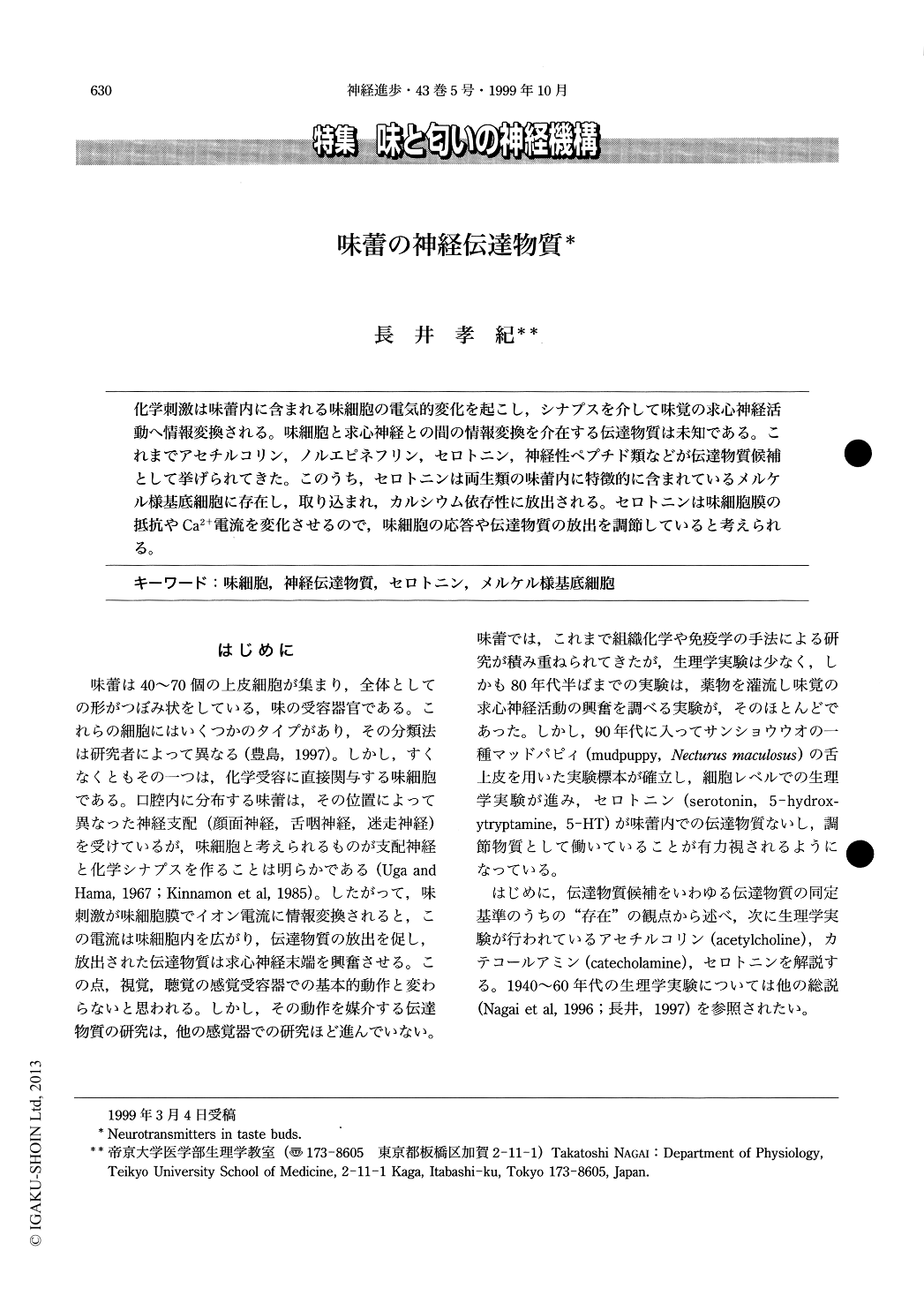
化学刺激は味蕾内に含まれる味細胞の電気的変化を起こし,シナプスを介して味覚の求心神経活動へ情報変換される。味細胞と求心神経との間の情報変換を介在する伝達物質は未知である。これまでアセチルコリン,ノルエピネフリン,セロトニン,神経性ペプチド類などが伝達物質候補として挙げられてきた。このうち,セロトニンは両生類の味蕾内に特徴的に含まれているメルケル様基底細胞に存在し,取り込まれ,カルシウム依存性に放出される。セロトニンは味細胞膜の抵抗やCa2+電流を変化させるので,味細胞の応答や伝達物質の放出を調節していると考えられる。
Chemical stimuli are transduced to electrical signal in the taste cell of the taste bud. The electrical signal is transformed through a synapse to neural activities in the gustatory afferents. Neurotransmitters mediating synaptic transfer between taste cells and the afferent nerve fiber are unknown. To date, acetylcholine, norepinephrine, serotonin and neuropeptides have been postulated as candidates. In the amphibian taste bud Merkel-like basal cells contain serotonin and selectively accumulate serotonin applied to incubating medium.Accumulated serotonin is released in aCa2+ dependent manner to change input resistance orCa2+ currents in the taste cell membrane. Thus, serotonin is likely to modulate the function of taste cells.
Copyright © 1999, Igaku-Shoin Ltd. All rights reserved.