Japanese
English
- 有料閲覧
PPV購入案内
1,320円 (1,200円+税10%) こちらは、674ページから682ページの文献です。購入には医書.jp本会員登録が必要です。
会員登録完了後に改めて上記「購入サイトへ」を選択してください。
または「購入サイトへ」選択後に「購入ログイン」、「新規会員登録」の順に進んでください。
会員登録について詳しくはをご確認ください。
- Abstract 文献概要
- 1ページ目 Look Inside
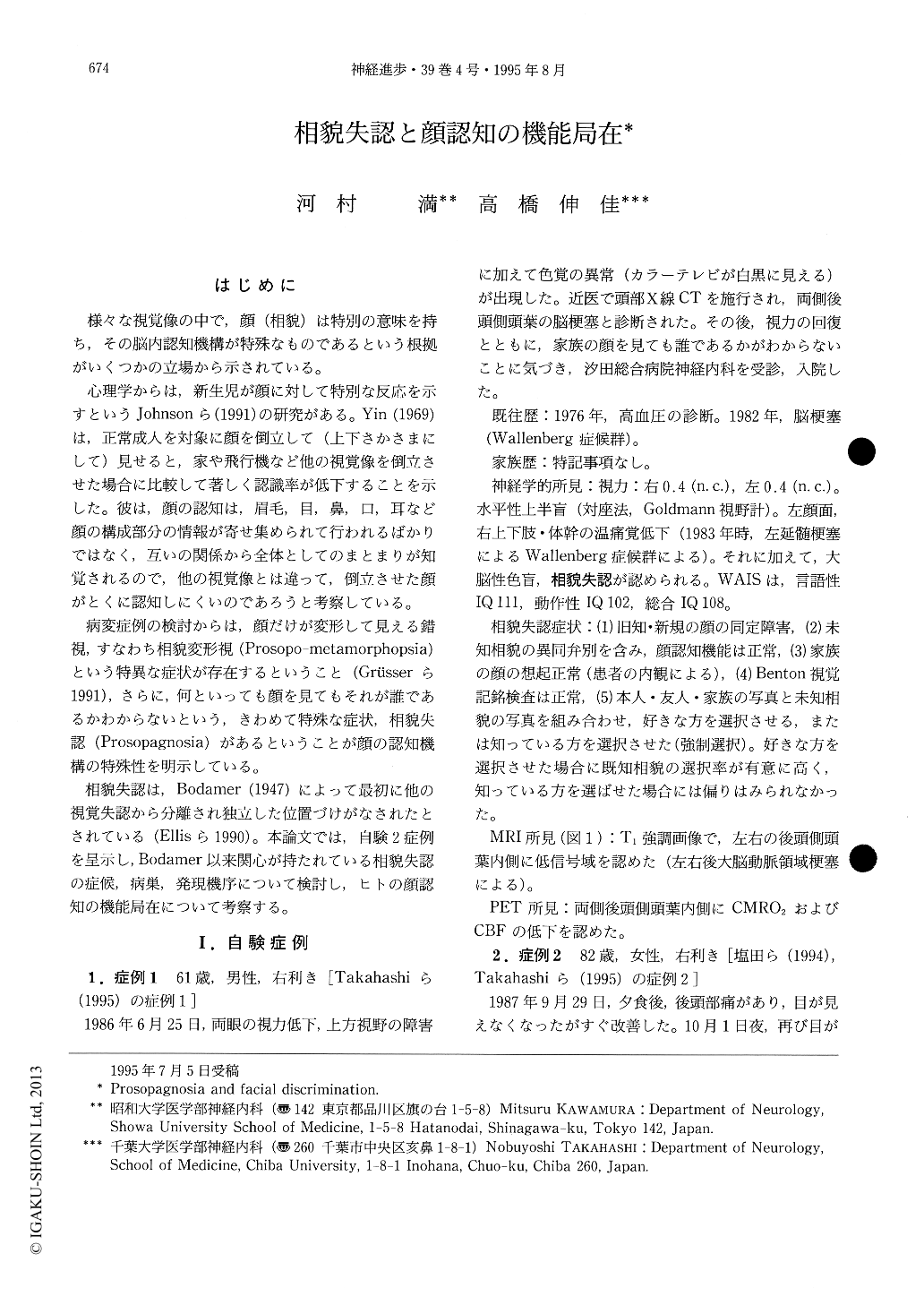
はじめに
様々な視覚像の中で,顔(相貌)は特別の意味を持ち,その脳内認知機構が特殊なものであるという根拠がいくつかの立場から示されている。
心理学からは,新生児が顔に対して特別な反応を示すというJohnsonら(1991)の研究がある。Yin(1969)は,正常成人を対象に顔を倒立して(上下さかさまにして)見せると,家や飛行機など他の視覚像を倒立させた場合に比較して著しく認識率が低下することを示した。彼は,顔の認知は,眉毛,目,鼻,口,耳など顔の構成部分の情報が寄せ集められて行われるばかりではなく,互いの関係から全体としてのまとまりが知覚されるので,他の視覚像とは違って,倒立させた顔がとくに認知しにくいのであろうと考察している。
Prosopagnosia is a unique syndrome in which the faces of familiar persons are not identified. Since Bodamer (1947) classified prosopagnosia separately from other visual agnosias, there has been much interest in the mechanisms and the locus of lesion which can produce such a symptom. While Bodamer considered prosopagnosia as a type of visual agnosia, more recently it has been viewed as a deficit of memory for faces (Warrington et al., 1967) or disconnection between perceived faces and faces stored in memory (Pallis et al., 1955).
Copyright © 1995, Igaku-Shoin Ltd. All rights reserved.