Japanese
English
- 有料閲覧
PPV購入案内
1,320円 (1,200円+税10%) こちらは、565ページから570ページの文献です。購入には医書.jp本会員登録が必要です。
会員登録完了後に改めて上記「購入サイトへ」を選択してください。
または「購入サイトへ」選択後に「購入ログイン」、「新規会員登録」の順に進んでください。
会員登録について詳しくはをご確認ください。
- Abstract 文献概要
- 1ページ目 Look Inside
- 参考文献 Reference
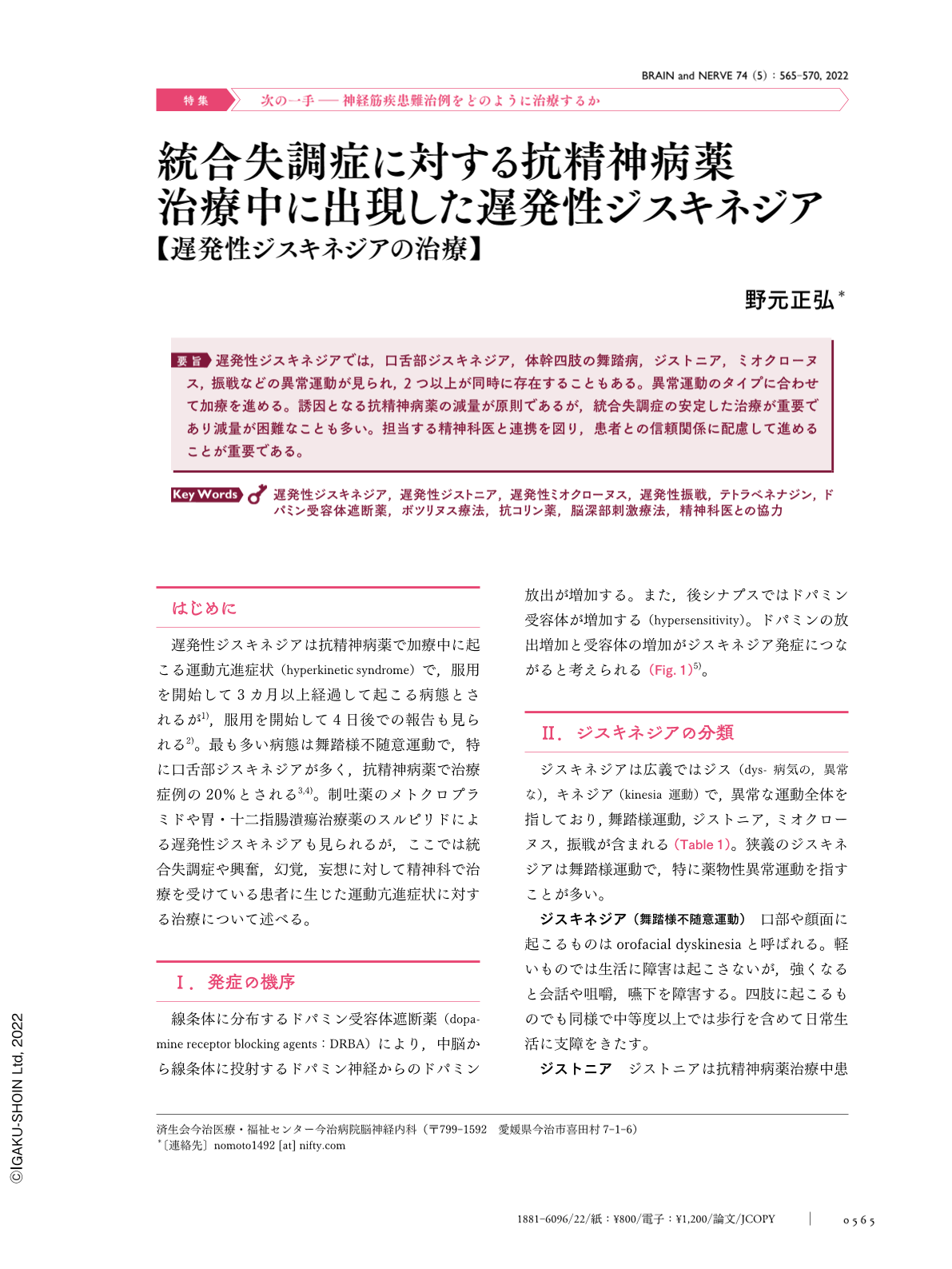
遅発性ジスキネジアでは,口舌部ジスキネジア,体幹四肢の舞踏病,ジストニア,ミオクローヌス,振戦などの異常運動が見られ,2つ以上が同時に存在することもある。異常運動のタイプに合わせて加療を進める。誘因となる抗精神病薬の減量が原則であるが,統合失調症の安定した治療が重要であり減量が困難なことも多い。担当する精神科医と連携を図り,患者との信頼関係に配慮して進めることが重要である。
Abstract
Tardive dyskinesia is recognized as buccolingual dyskinesia, but also includes various involuntary movements, such as chorea, dystonia, myoclonus, and tremor. Tardive dyskinesia can be treated depending on the type of movement disorder present. Antipsychotics causing tardive dyskinesia should be reduced in dosage or should be discontinued. However, the treatment of schizophrenia is important, and neurologists must treat tardive dyskinesia in collaboration with psychiatrists taking care of patients with tardive dystonia. Various treatments, such as VMAT-2 inhibitors or tetrabenazine, reserpine, dopamine receptor antagonists, botulinum toxin therapy, anticholinergic agents, or deep brain stimulation, are trialed, depending on the type of movement disorder and the degree of severity of the disorder.
Copyright © 2022, Igaku-Shoin Ltd. All rights reserved.