Japanese
English
- 有料閲覧
PPV購入案内
1,320円 (1,200円+税10%) こちらは、181ページから188ページの文献です。購入には医書.jp本会員登録が必要です。
会員登録完了後に改めて上記「購入サイトへ」を選択してください。
または「購入サイトへ」選択後に「購入ログイン」、「新規会員登録」の順に進んでください。
会員登録について詳しくはをご確認ください。
- Abstract 文献概要
- 1ページ目 Look Inside
- 参考文献 Reference
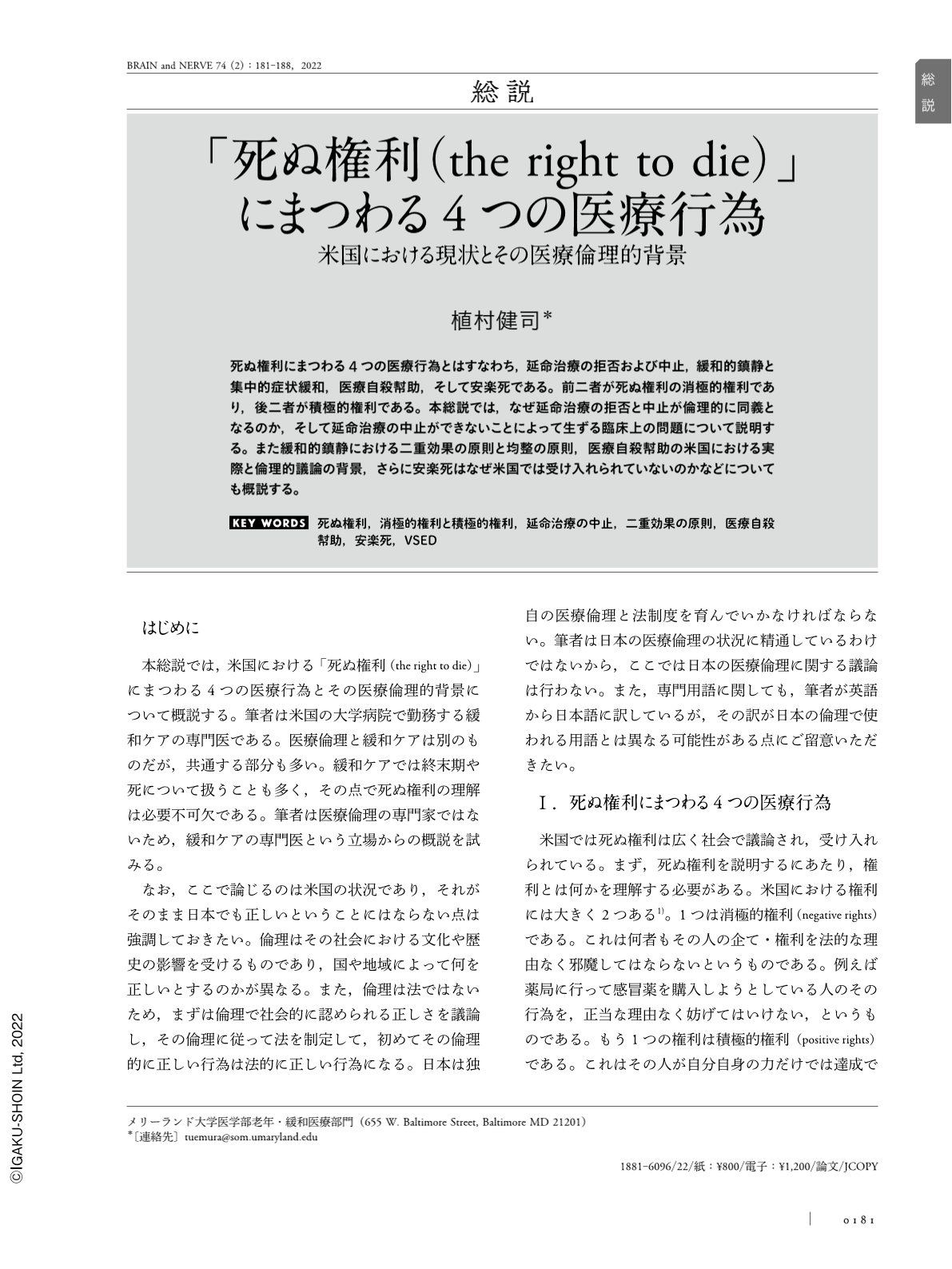
死ぬ権利にまつわる4つの医療行為とはすなわち,延命治療の拒否および中止,緩和的鎮静と集中的症状緩和,医療自殺幇助,そして安楽死である。前二者が死ぬ権利の消極的権利であり,後二者が積極的権利である。本総説では,なぜ延命治療の拒否と中止が倫理的に同義となるのか,そして延命治療の中止ができないことによって生ずる臨床上の問題について説明する。また緩和的鎮静における二重効果の原則と均整の原則,医療自殺幇助の米国における実際と倫理的議論の背景,さらに安楽死はなぜ米国では受け入れられていないのかなどについても概説する。
Abstract
This review article is intended to introduce clinicians in Japan to the four types of medical procedures associated with the right to die in the United States and their ethical background. The four types of procedures are as follows: forgoing life-sustaining medical treatment, palliative sedation and intensive symptom management, physician-assisted suicide, and euthanasia. This article discusses the difference between negative and positive rights and how they apply to these four procedures. In addition, it discusses the reason why withdrawing ventilation is considered ethically equal to its withholding. Other topics that are covered include the principle of double effect and proportionality in palliative sedation, the practice of physician-assisted suicide in the US, and controversies regarding euthanasia. Additionally, this article mentions the voluntary stopping of eating and drinking (VSED) as another category of the right to die. Ethics and laws are specific to the region and the culture. The author encourages Japan, where the withdrawal of life-sustaining treatments is still not part of usual practice, to advance ethical discussions among its population so that more options for the right to die will be available to the patients in its society.
Copyright © 2022, Igaku-Shoin Ltd. All rights reserved.