Japanese
English
- 有料閲覧
PPV購入案内
1,320円 (1,200円+税10%) こちらは、1169ページから1181ページの文献です。購入には医書.jp本会員登録が必要です。
会員登録完了後に改めて上記「購入サイトへ」を選択してください。
または「購入サイトへ」選択後に「購入ログイン」、「新規会員登録」の順に進んでください。
会員登録について詳しくはをご確認ください。
- Abstract 文献概要
- 1ページ目 Look Inside
- 参考文献 Reference
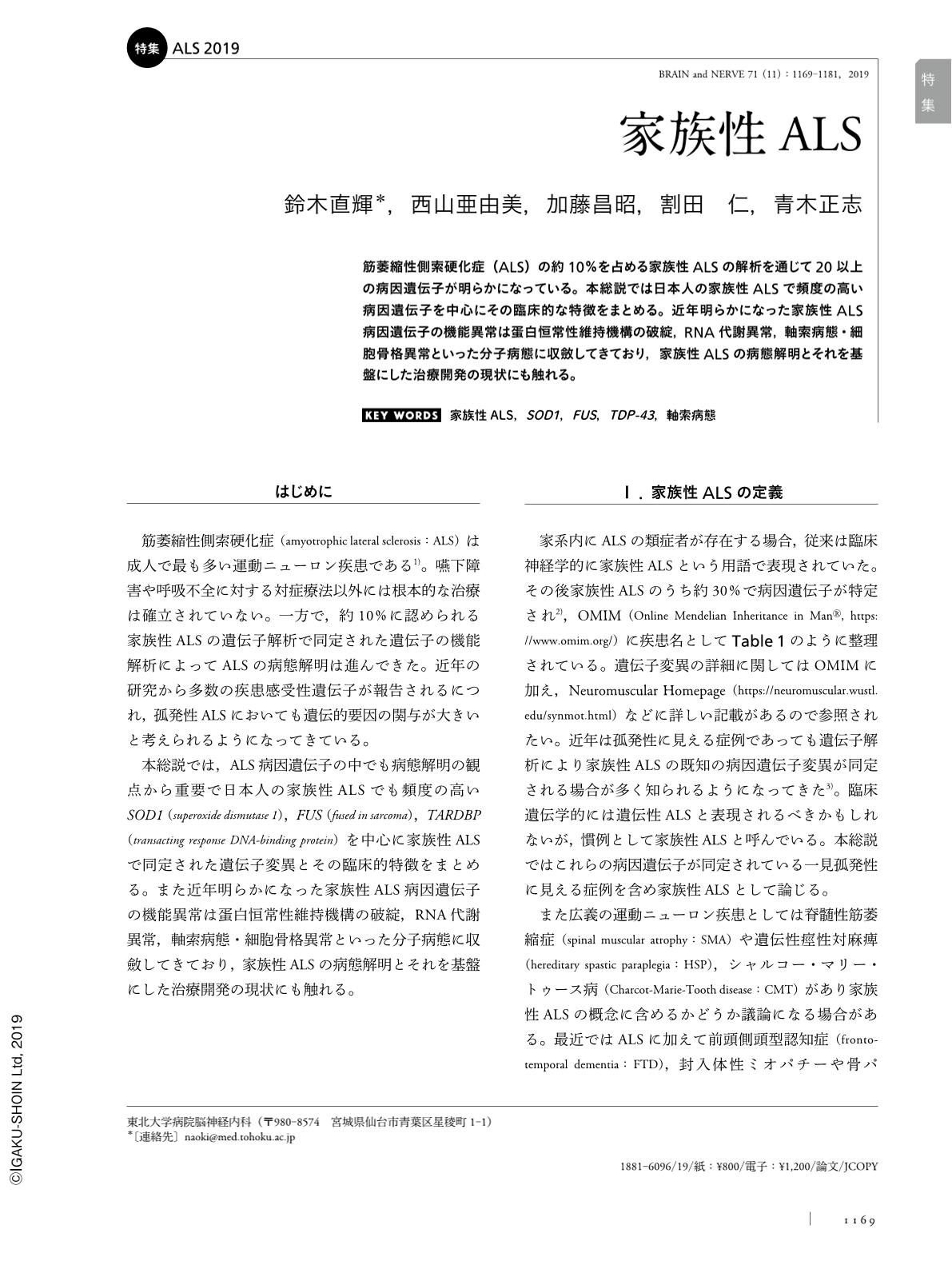
筋萎縮性側索硬化症(ALS)の約10%を占める家族性ALSの解析を通じて20以上の病因遺伝子が明らかになっている。本総説では日本人の家族性ALSで頻度の高い病因遺伝子を中心にその臨床的な特徴をまとめる。近年明らかになった家族性ALS病因遺伝子の機能異常は蛋白恒常性維持機構の破綻,RNA代謝異常,軸索病態・細胞骨格異常といった分子病態に収斂してきており,家族性ALSの病態解明とそれを基盤にした治療開発の現状にも触れる。
Abstract
Amyotrophic lateral sclerosis (ALS) is the most rapidly progressive motor neuron disease (MND) in adults, characterized by the selective death of motor neurons in the motor cortex, brainstem, and spinal cord. Riluzole and edaravone are the only approved drugs available in Japan to date. Approximately 10% of ALS cases are familial in rature, defined as the existence of disease-causing mutation. SOD1 is the most frequent causative gene for ALS among Japanese individuals, while C9orf72 mutation is more prevalent in Western countries. Genotype-phenotype correlation described in the literature of familial ALS enables to establish models of the disease. This review article describes the clinical characteristics of familial ALS based on each disease-causing mutation. The pathomechanism of ALS including proteostasis, RNA metabolism, and axonal pathology are discussed in detail. We also reviewed the status of development of therapeutic strategies for familial ALS based on analysis of animal models and induced pluripotent stem cells.
Copyright © 2019, Igaku-Shoin Ltd. All rights reserved.