Japanese
English
- 有料閲覧
PPV購入案内
1,320円 (1,200円+税10%) こちらは、907ページから916ページの文献です。購入には医書.jp本会員登録が必要です。
会員登録完了後に改めて上記「購入サイトへ」を選択してください。
または「購入サイトへ」選択後に「購入ログイン」、「新規会員登録」の順に進んでください。
会員登録について詳しくはをご確認ください。
- Abstract 文献概要
- 1ページ目 Look Inside
- 参考文献 Reference
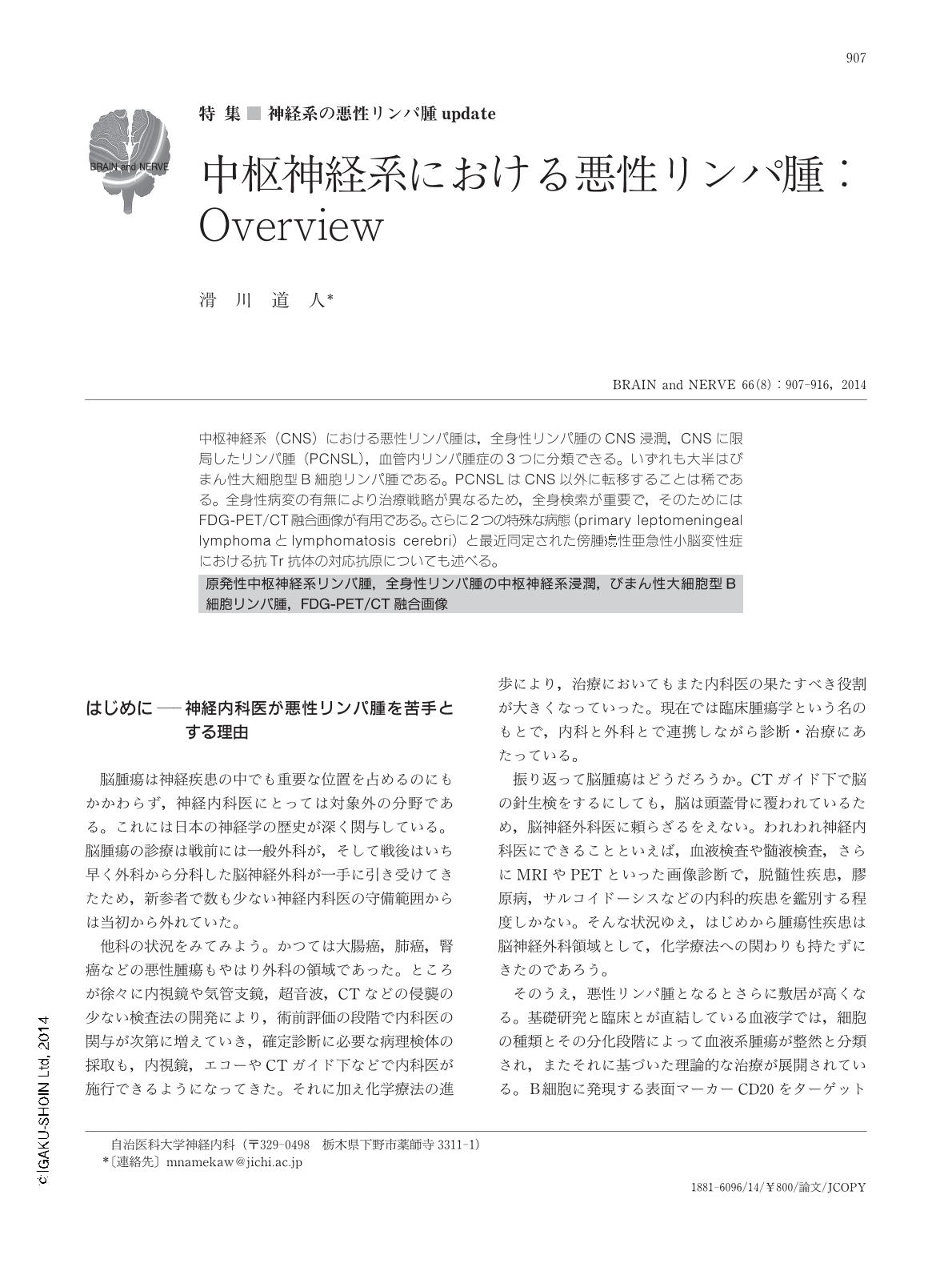
中枢神経系(CNS)における悪性リンパ腫は,全身性リンパ腫のCNS浸潤,CNSに限局したリンパ腫(PCNSL),血管内リンパ腫症の3つに分類できる。いずれも大半はびまん性大細胞型B細胞リンパ腫である。PCNSLはCNS以外に転移することは稀である。全身性病変の有無により治療戦略が異なるため,全身検索が重要で,そのためにはFDG-PET/CT融合画像が有用である。さらに2つの特殊な病態(primary leptomeningeal lymphomaとlymphomatosis cerebri)と最近同定された傍腫性亜急性小脳変性症における抗Tr抗体の対応抗原についても述べる。
Abstract
Malignant lymphoma can affect the central nervous system (CNS) in three different ways: as a consequence (relapse or invasion) of systemic lymphoma, as a primary CNS lymphoma (PCNSL) without systemic involvement, and through intravascular lymphomatosis (IVL).
It is essential to distinguish PCNSL from the others, since the therapeutic strategy for treating this disease differs. FDG-PET/CT fusion imagery is a powerful tool for detecting systemic lesions. If a marked elevation of lactate dehydrogenase and the soluble IL-2 receptor suggests IVL, a random skin biopsy can permit a differential diagnosis.
It is not certain why PCNSL occurs solely in the CNS, where there is no lymphatic system. The special environment, so-called "sanctuary site", where is free from attack of the immune system and penetration of chemotherapeutic agents by blood-brain barrier is deeply related to malignant transformation.
The prognoses for patients with CNS invasion of systemic lymphoma and those with PCNSL remain bleak in the post-rituximab era. Over half of the patients who received high-dose methotrexate will subsequently relapse. Therefore, novel therapeutic strategies are earnestly sought.
Copyright © 2014, Igaku-Shoin Ltd. All rights reserved.