Japanese
English
- 有料閲覧
PPV購入案内
1,320円 (1,200円+税10%) こちらは、739ページから746ページの文献です。購入には医書.jp本会員登録が必要です。
会員登録完了後に改めて上記「購入サイトへ」を選択してください。
または「購入サイトへ」選択後に「購入ログイン」、「新規会員登録」の順に進んでください。
会員登録について詳しくはをご確認ください。
- Abstract 文献概要
- 1ページ目 Look Inside
- 参考文献 Reference
はじめに
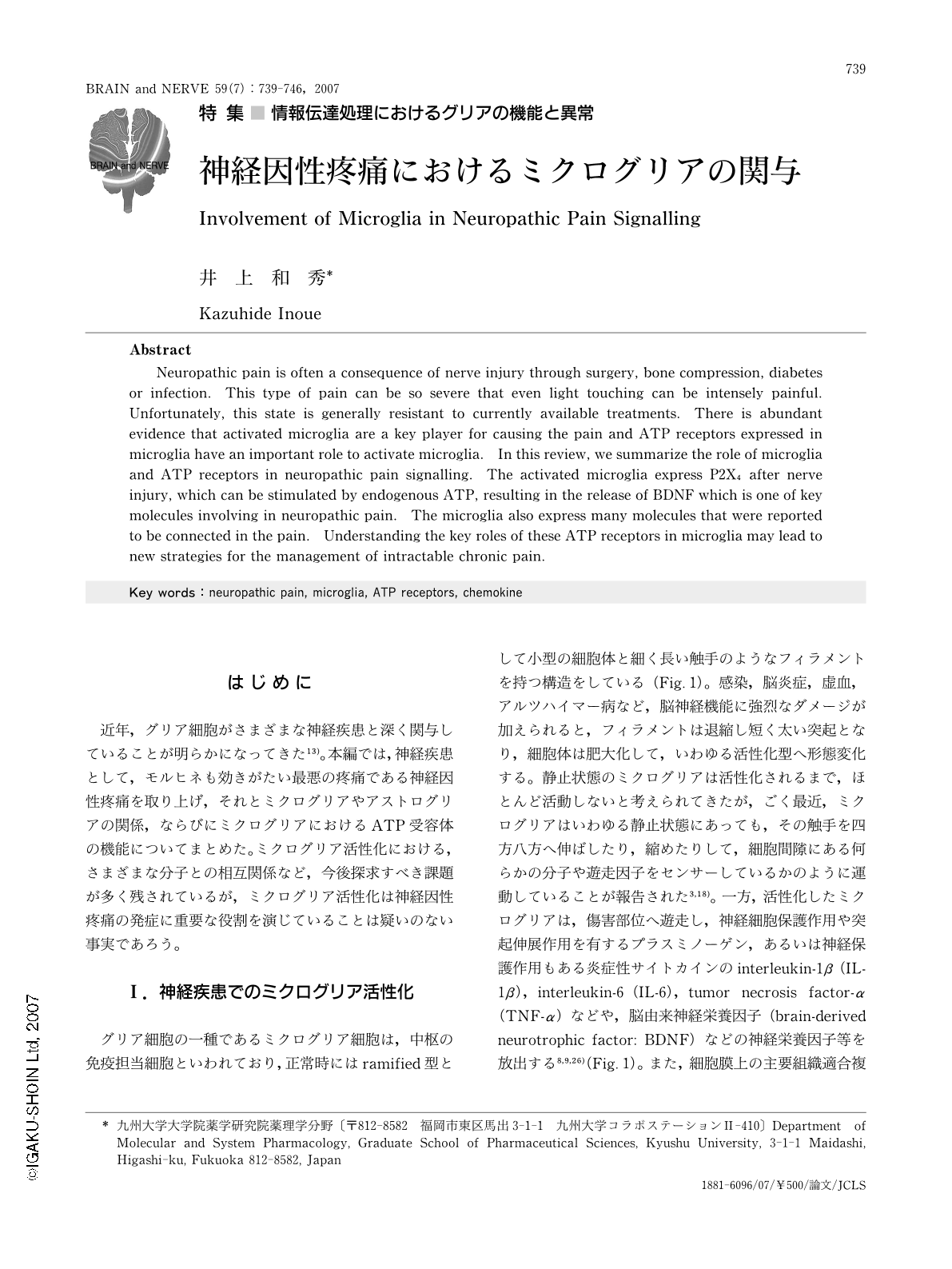
近年,グリア細胞がさまざまな神経疾患と深く関与していることが明らかになってきた13)。本編では,神経疾患として,モルヒネも効きがたい最悪の疼痛である神経因性疼痛を取り上げ,それとミクログリアやアストログリアの関係,ならびにミクログリアにおけるATP受容体の機能についてまとめた。ミクログリア活性化における,さまざまな分子との相互関係など,今後探求すべき課題が多く残されているが,ミクログリア活性化は神経因性疼痛の発症に重要な役割を演じていることは疑いのない事実であろう。
Abstract
Neuropathic pain is often a consequence of nerve injury through surgery, bone compression, diabetes or infection. This type of pain can be so severe that even light touching can be intensely painful. Unfortunately, this state is generally resistant to currently available treatments. There is abundant evidence that activated microglia are a key player for causing the pain and ATP receptors expressed in microglia have an important role to activate microglia. In this review, we summarize the role of microglia and ATP receptors in neuropathic pain signalling. The activated microglia express P2X4 after nerve injury, which can be stimulated by endogenous ATP, resulting in the release of BDNF which is one of key molecules involving in neuropathic pain. The microglia also express many molecules that were reported to be connected in the pain. Understanding the key roles of these ATP receptors in microglia may lead to new strategies for the management of intractable chronic pain.
Copyright © 2007, Igaku-Shoin Ltd. All rights reserved.