Japanese
English
- 有料閲覧
PPV購入案内
1,320円 (1,200円+税10%) こちらは、893ページから898ページの文献です。購入には医書.jp本会員登録が必要です。
会員登録完了後に改めて上記「購入サイトへ」を選択してください。
または「購入サイトへ」選択後に「購入ログイン」、「新規会員登録」の順に進んでください。
会員登録について詳しくはをご確認ください。
- Abstract 文献概要
- 1ページ目 Look Inside
- 参考文献 Reference
- サイト内被引用 Cited by
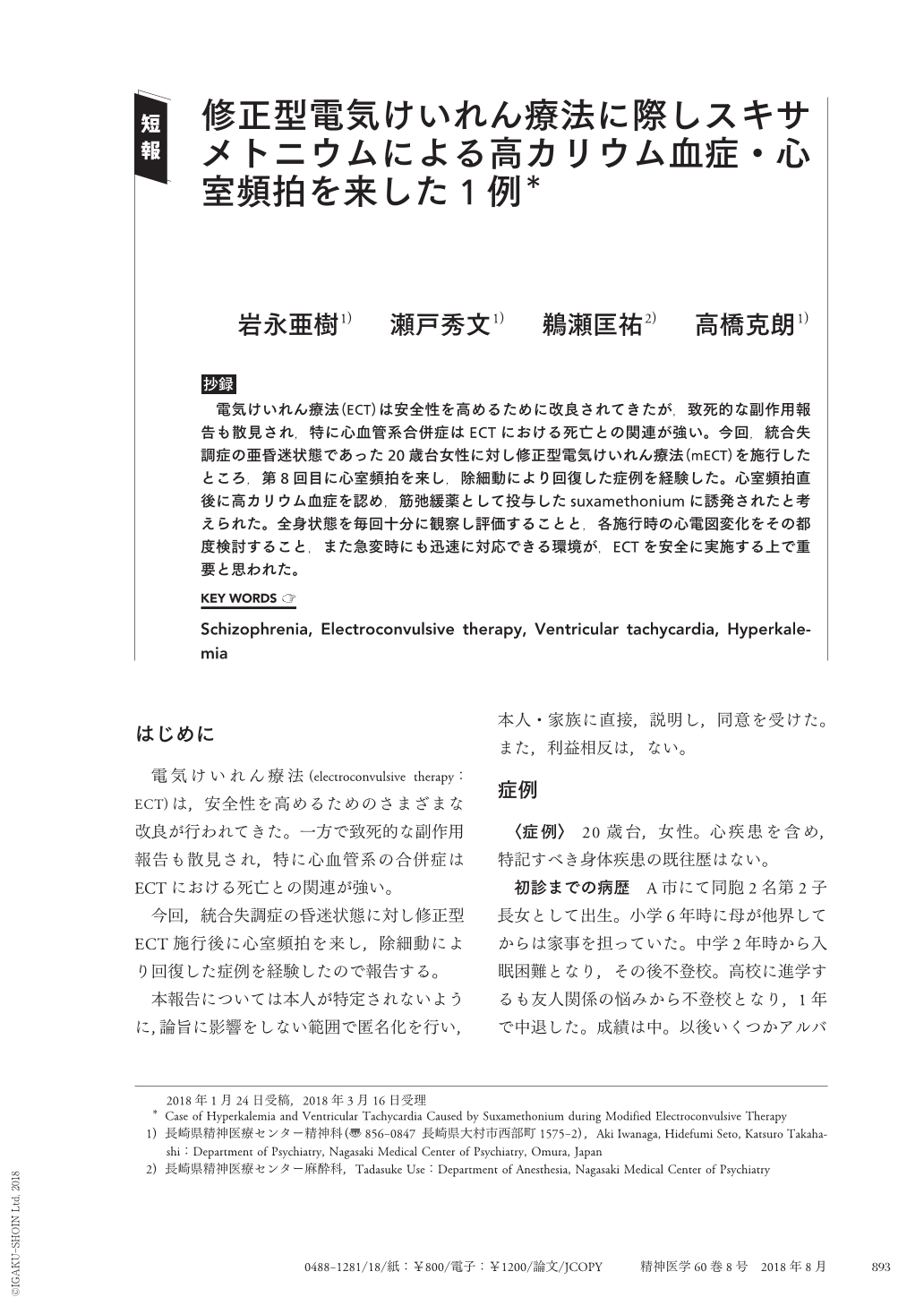
抄録 電気けいれん療法(ECT)は安全性を高めるために改良されてきたが,致死的な副作用報告も散見され,特に心血管系合併症はECTにおける死亡との関連が強い。今回,統合失調症の亜昏迷状態であった20歳台女性に対し修正型電気けいれん療法(mECT)を施行したところ,第8回目に心室頻拍を来し,除細動により回復した症例を経験した。心室頻拍直後に高カリウム血症を認め,筋弛緩薬として投与したsuxamethoniumに誘発されたと考えられた。全身状態を毎回十分に観察し評価することと,各施行時の心電図変化をその都度検討すること,また急変時にも迅速に対応できる環境が,ECTを安全に実施する上で重要と思われた。
Electroconvulsive therapy(ECT) has been improved to increase its safety. However, lethal side effects are still reported occasionally, and these are especially associated with cardiovascular complications. We provide details of a cardiovascular complication in the ECT case of a female patient in her 20s in a catatonic state with schizophrenia. After the eighth ECT session, an electrocardiogram showed ventricular tachycardia(VT). She recovered after electrical defibrillation. We observed hyperkalemia immediately after the VT, and we suspected the VT had been induced by hyperkalemia after suxamethonium administration. Our case emphasizes the importance of observing physical status and changes in electrocardiograms and preparing for critical events to ensure ECT safety.
Copyright © 2018, Igaku-Shoin Ltd. All rights reserved.