Japanese
English
- 有料閲覧
PPV購入案内
1,320円 (1,200円+税10%) こちらは、921ページから929ページの文献です。購入には医書.jp本会員登録が必要です。
会員登録完了後に改めて上記「購入サイトへ」を選択してください。
または「購入サイトへ」選択後に「購入ログイン」、「新規会員登録」の順に進んでください。
会員登録について詳しくはをご確認ください。
- Abstract 文献概要
- 1ページ目 Look Inside
- 参考文献 Reference
はじめに
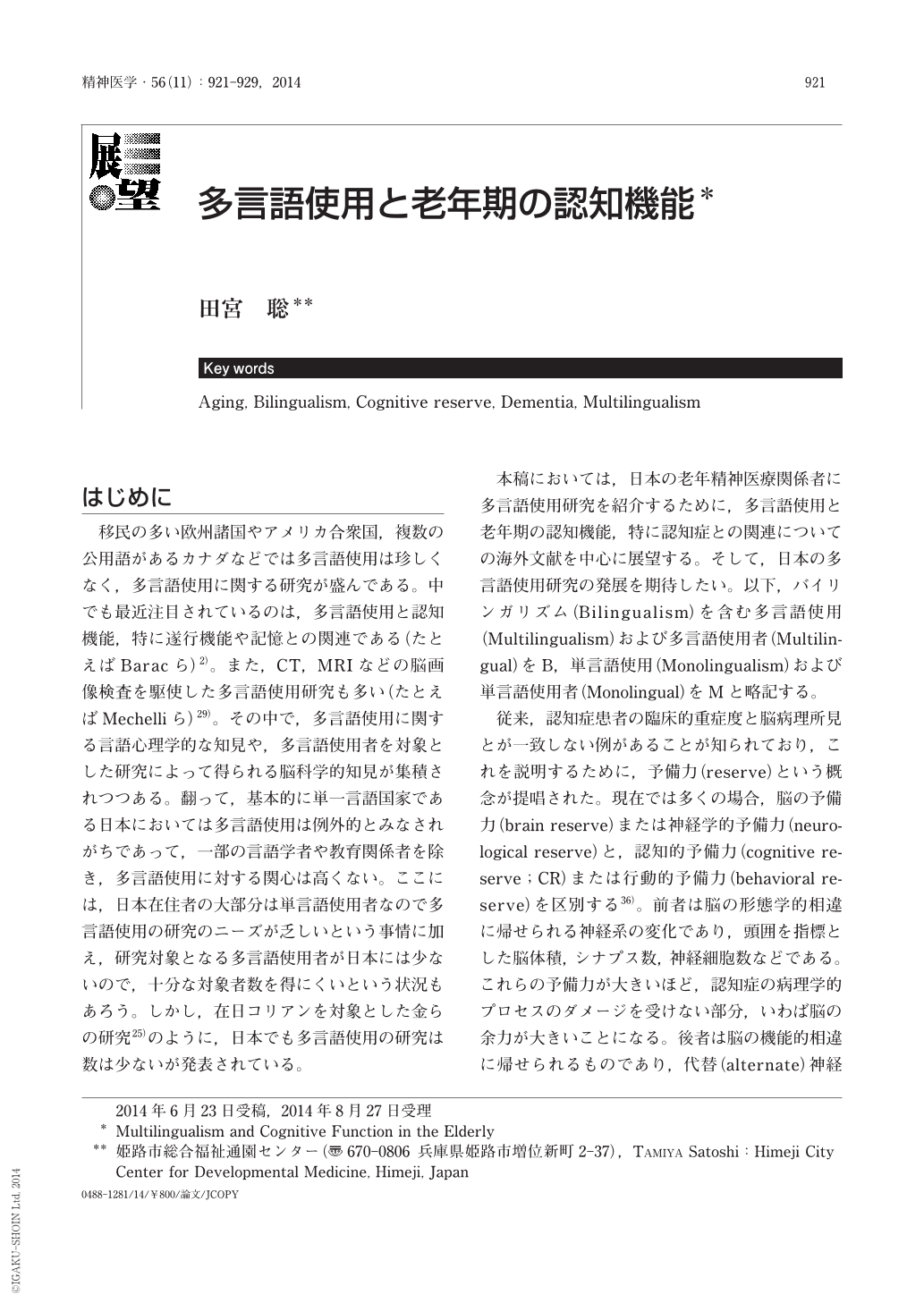
移民の多い欧州諸国やアメリカ合衆国,複数の公用語があるカナダなどでは多言語使用は珍しくなく,多言語使用に関する研究が盛んである。中でも最近注目されているのは,多言語使用と認知機能,特に遂行機能や記憶との関連である(たとえばBaracら)2)。また,CT,MRIなどの脳画像検査を駆使した多言語使用研究も多い(たとえばMechelliら)29)。その中で,多言語使用に関する言語心理学的な知見や,多言語使用者を対象とした研究によって得られる脳科学的知見が集積されつつある。翻って,基本的に単一言語国家である日本においては多言語使用は例外的とみなされがちであって,一部の言語学者や教育関係者を除き,多言語使用に対する関心は高くない。ここには,日本在住者の大部分は単言語使用者なので多言語使用の研究のニーズが乏しいという事情に加え,研究対象となる多言語使用者が日本には少ないので,十分な対象者数を得にくいという状況もあろう。しかし,在日コリアンを対象とした金らの研究25)のように,日本でも多言語使用の研究は数は少ないが発表されている。
本稿においては,日本の老年精神医療関係者に多言語使用研究を紹介するために,多言語使用と老年期の認知機能,特に認知症との関連についての海外文献を中心に展望する。そして,日本の多言語使用研究の発展を期待したい。以下,バイリンガリズム(Bilingualism)を含む多言語使用(Multilingualism)および多言語使用者(Multilingual)をB,単言語使用(Monolingualism)および単言語使用者(Monolingual)をMと略記する。
従来,認知症患者の臨床的重症度と脳病理所見とが一致しない例があることが知られており,これを説明するために,予備力(reserve)という概念が提唱された。現在では多くの場合,脳の予備力(brain reserve)または神経学的予備力(neurological reserve)と,認知的予備力(cognitive reserve;CR)または行動的予備力(behavioral reserve)を区別する36)。前者は脳の形態学的相違に帰せられる神経系の変化であり,頭囲を指標とした脳体積,シナプス数,神経細胞数などである。これらの予備力が大きいほど,認知症の病理学的プロセスのダメージを受けない部分,いわば脳の余力が大きいことになる。後者は脳の機能的相違に帰せられるものであり,代替(alternate)神経回路による補償(compensation)や,従来の神経回路の効率(efficiency)上昇などにより,病理学的過程で失われた機能をカバーすることになる。最近のこの分野の研究は主に後者の機能的変化について行われているので,本稿においては予備力=CRとして論を進める。CRに寄与する要因として,社会的要因,精神的要因,身体的要因が検討されてきている。具体的には,学歴や職歴に加え,読書,楽器演奏,身体的運動などの生活スタイルが挙げられている17,33)。生活上経験する刺激が豊富であるほどCRは高まるとされ,認知症のリスクが低下するとされる17)。このうちの精神的要因の1つとしてBが注目されている。後に紹介するBialystokらの報告6)によると,多言語使用の認知症保護作用は,刺激的な精神活動全般の保護作用と同等であるという。社会の高齢化に伴って認知症研究の重要性が高まる中,認知症の発症に関わる要因を理解することはきわめて重要である。そしてその要因が操作可能なものであれば,予防手段ともなる。もし多言語使用がそういう要因の1つであるならば,認知症予防につながる方策として注目すべきものであろう。
Bと認知機能との関連についての研究は,特に1990年代から欧米を中心に盛んに発表されている。小児や若年成人を対象としたものが多く,概して,BはMに比して遂行機能検査の成績が優れているという報告が多い(たとえばCarlsonら)10)。これは,Bは1つの言語を使用している間は他の言語の活性化を抑制する必要があり,日常的にそういった経験をするために,不必要または無関係な情報や刺激に対する反応を抑制する能力全般が発達すると説明されている22)。また,ある言語と他言語を切り替えて使用するいわゆるコードスイッチングのような言語行動は,これも遂行機能を高めるとされる。脳の遂行機能は一般に,課題の切り替えに対する適応の良否をもとに測定されるからである。そしてこうして高められた遂行機能は,CRに寄与すると考えられる。たとえば,脳の抑制的制御は加齢とともに衰えることが知られている23)が,Bの経験がこれを補うのである。さらに最近では,抑制的制御をはじめとする遂行機能のみならず,記憶(たとえばSchroederら)34)やモニタリング機能(たとえばBialystok)3)などの認知機能に関してもBの優位性が示されている。これが,Bと老年期の認知機能との関連が研究対象となる背景である4)。
The concept of cognitive reserve has been studied in relation to the onset of dementia in the field of geriatrics. It is generally accepted that an intellectually stimulating life contributes to the development of a cognitive reserve, which, in turn, is protective against the onset of dementia. Similarly, lifelong multilingualism has been shown to be advantageous for executive functioning in the brain. This, too, may contribute to the cognitive reserve as a kind of intellectual stimulation, and it has been reported that the time of dementia onset in multilingual individuals tends to be later than that in monolinguals. Studies related to this issue were reviewed, which were mostly conducted outside Japan. Studies by Ellen Bialystok's group in Canada were reviewed first, and then those of other research groups. Methodological issues such as controlling for confounding factors were challenging. In the final section, the possibility of multilingualism research to advance brain research in general is emphasized, along with the issues to be solved.
Copyright © 2014, Igaku-Shoin Ltd. All rights reserved.