Japanese
English
- 有料閲覧
PPV購入案内
1,320円 (1,200円+税10%) こちらは、104ページから113ページの文献です。購入には医書.jp本会員登録が必要です。
会員登録完了後に改めて上記「購入サイトへ」を選択してください。
または「購入サイトへ」選択後に「購入ログイン」、「新規会員登録」の順に進んでください。
会員登録について詳しくはをご確認ください。
- Abstract 文献概要
- 1ページ目 Look Inside
- 参考文献 Reference
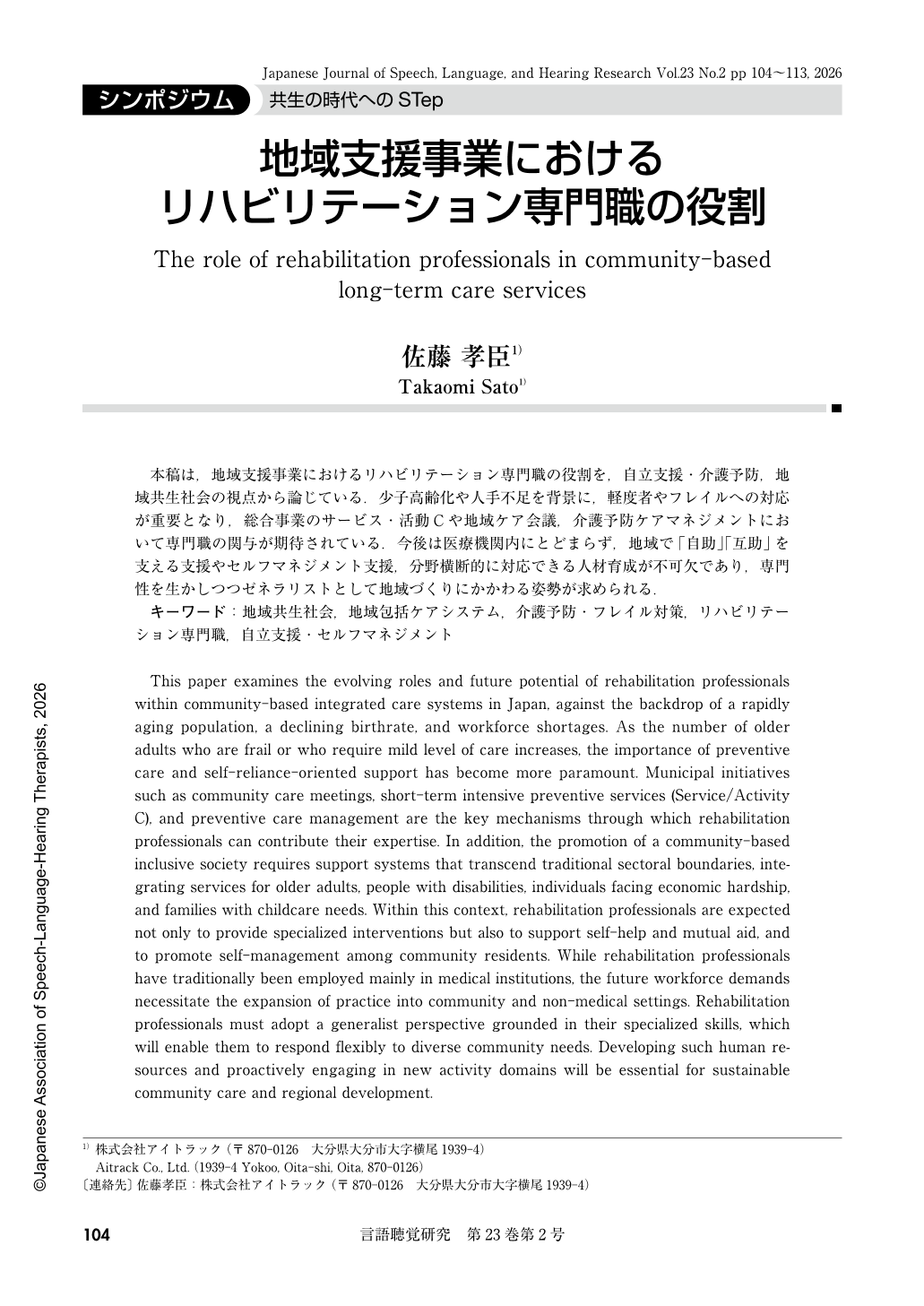
本稿は,地域支援事業におけるリハビリテーション専門職の役割を,自立支援・介護予防,地域共生社会の視点から論じている.少子高齢化や人手不足を背景に,軽度者やフレイルへの対応が重要となり,総合事業のサービス・活動Cや地域ケア会議,介護予防ケアマネジメントにおいて専門職の関与が期待されている.今後は医療機関内にとどまらず,地域で「自助」「互助」を支える支援やセルフマネジメント支援,分野横断的に対応できる人材育成が不可欠であり,専門性を生かしつつゼネラリストとして地域づくりにかかわる姿勢が求められる.
This paper examines the evolving roles and future potential of rehabilitation professionals within community-based integrated care systems in Japan, against the backdrop of a rapidly aging population, a declining birthrate, and workforce shortages. As the number of older adults who are frail or who require mild level of care increases, the importance of preventive care and self-reliance-oriented support has become more paramount. Municipal initiatives such as community care meetings, short-term intensive preventive services (Service/Activity C), and preventive care management are the key mechanisms through which rehabilitation professionals can contribute their expertise. In addition, the promotion of a community-based inclusive society requires support systems that transcend traditional sectoral boundaries, integrating services for older adults, people with disabilities, individuals facing economic hardship, and families with childcare needs. Within this context, rehabilitation professionals are expected not only to provide specialized interventions but also to support self-help and mutual aid, and to promote self-management among community residents. While rehabilitation professionals have traditionally been employed mainly in medical institutions, the future workforce demands necessitate the expansion of practice into community and non-medical settings. Rehabilitation professionals must adopt a generalist perspective grounded in their specialized skills, which will enable them to respond flexibly to diverse community needs. Developing such human resources and proactively engaging in new activity domains will be essential for sustainable community care and regional development.
Copyright © 2026, Japanese Association of Speech-Language-Hearing Therapists. All rights reserved.