Japanese
English
- 有料閲覧
PPV購入案内
2,200円 (2,000円+税10%) こちらは、1077ページから1083ページの文献です。購入には医書.jp本会員登録が必要です。
会員登録完了後に改めて上記「購入サイトへ」を選択してください。
または「購入サイトへ」選択後に「購入ログイン」、「新規会員登録」の順に進んでください。
会員登録について詳しくはをご確認ください。
- Abstract 文献概要
- 1ページ目 Look Inside
- 参考文献 Reference
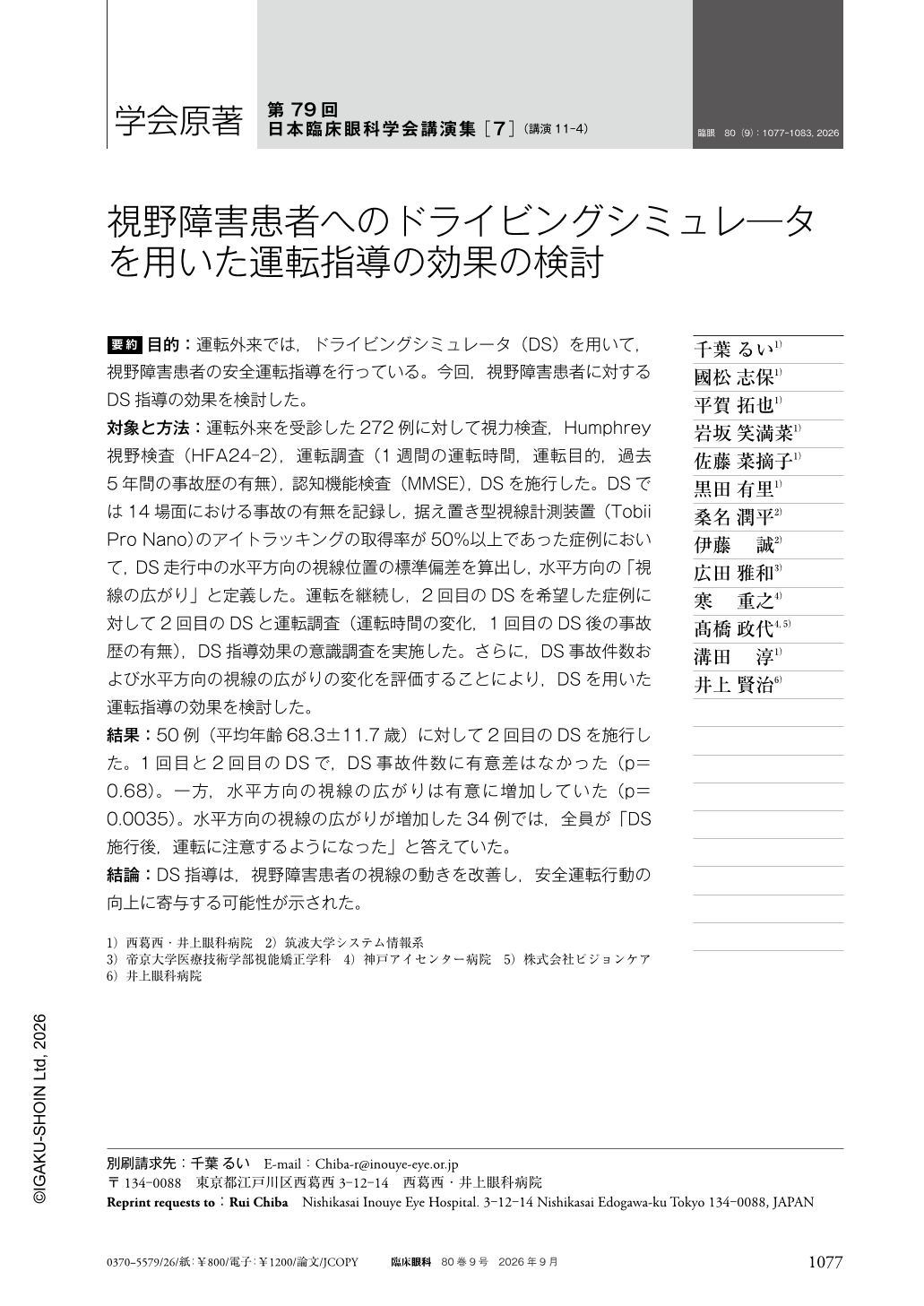
要約 目的:運転外来では,ドライビングシミュレータ(DS)を用いて,視野障害患者の安全運転指導を行っている。今回,視野障害患者に対するDS指導の効果を検討した。
対象と方法:運転外来を受診した272例に対して視力検査,Humphrey視野検査(HFA24-2),運転調査(1週間の運転時間,運転目的,過去5年間の事故歴の有無),認知機能検査(MMSE),DSを施行した。DSでは14場面における事故の有無を記録し,据え置き型視線計測装置(Tobii Pro Nano)のアイトラッキングの取得率が50%以上であった症例において,DS走行中の水平方向の視線位置の標準偏差を算出し,水平方向の「視線の広がり」と定義した。運転を継続し,2回目のDSを希望した症例に対して2回目のDSと運転調査(運転時間の変化,1回目のDS後の事故歴の有無),DS指導効果の意識調査を実施した。さらに,DS事故件数および水平方向の視線の広がりの変化を評価することにより,DSを用いた運転指導の効果を検討した。
結果:50例(平均年齢68.3±11.7歳)に対して2回目のDSを施行した。1回目と2回目のDSで,DS事故件数に有意差はなかった(p=0.68)。一方,水平方向の視線の広がりは有意に増加していた(p=0.0035)。水平方向の視線の広がりが増加した34例では,全員が「DS施行後,運転に注意するようになった」と答えていた。
結論:DS指導は,視野障害患者の視線の動きを改善し,安全運転行動の向上に寄与する可能性が示された。
Abstract Purpose:At a driving assessment clinic, we provide safe driving instructions to patients with visual field impairment using a driving simulator(DS). This study evaluated the effectiveness of DS-based instructions for these patients.
Methods:A total of 272 patients were tested using a driving simulator(DS)(Honda Motor Co.) and the Humphrey Field Analyzer 24-2 SITA-Standard(HFA 24-2) program at a driving assessment clinic. The DS records accident occurrences across 14 scenarios. Eye movements during the 5-minute DS test were measured with eye tracking(Tobii Pro Nano) and the standard deviation of x- and y-coordinates was used to assess the horizontal spread of visual search, for cases in which the reliability of gaze analysis was ≥50%. For the 50 patients(mean age, 68.3±11.7 years) eligible for a second DS session, we conducted a second DS session and administered a driving questionnaire. We evaluated the effect of DS instruction effect by comparing the number of DS collisions with the increase in the horizontal spread of visual search.
Results:In the second DS session, compared to the first, there was no significant difference in the number of DS collisions(p=0.68), but the horizontal spread of visual search significantly increased(p=0.0035). Among the 34 patients with an increased horizontal spread of visual search, all reported increased caution while driving after DS instruction.
Conclusion:Driving simulator-based assessment and instruction may improve gaze behavior in patients with visual field impairment, potentially leading to safer driving.
Copyright © 2026, Igaku-Shoin Ltd. All rights reserved.