Japanese
English
- 有料閲覧
PPV購入案内
1,320円 (1,200円+税10%) こちらは、46ページから53ページの文献です。購入には医書.jp本会員登録が必要です。
会員登録完了後に改めて上記「購入サイトへ」を選択してください。
または「購入サイトへ」選択後に「購入ログイン」、「新規会員登録」の順に進んでください。
会員登録について詳しくはをご確認ください。
- Abstract 文献概要
- 1ページ目 Look Inside
- 参考文献 Reference
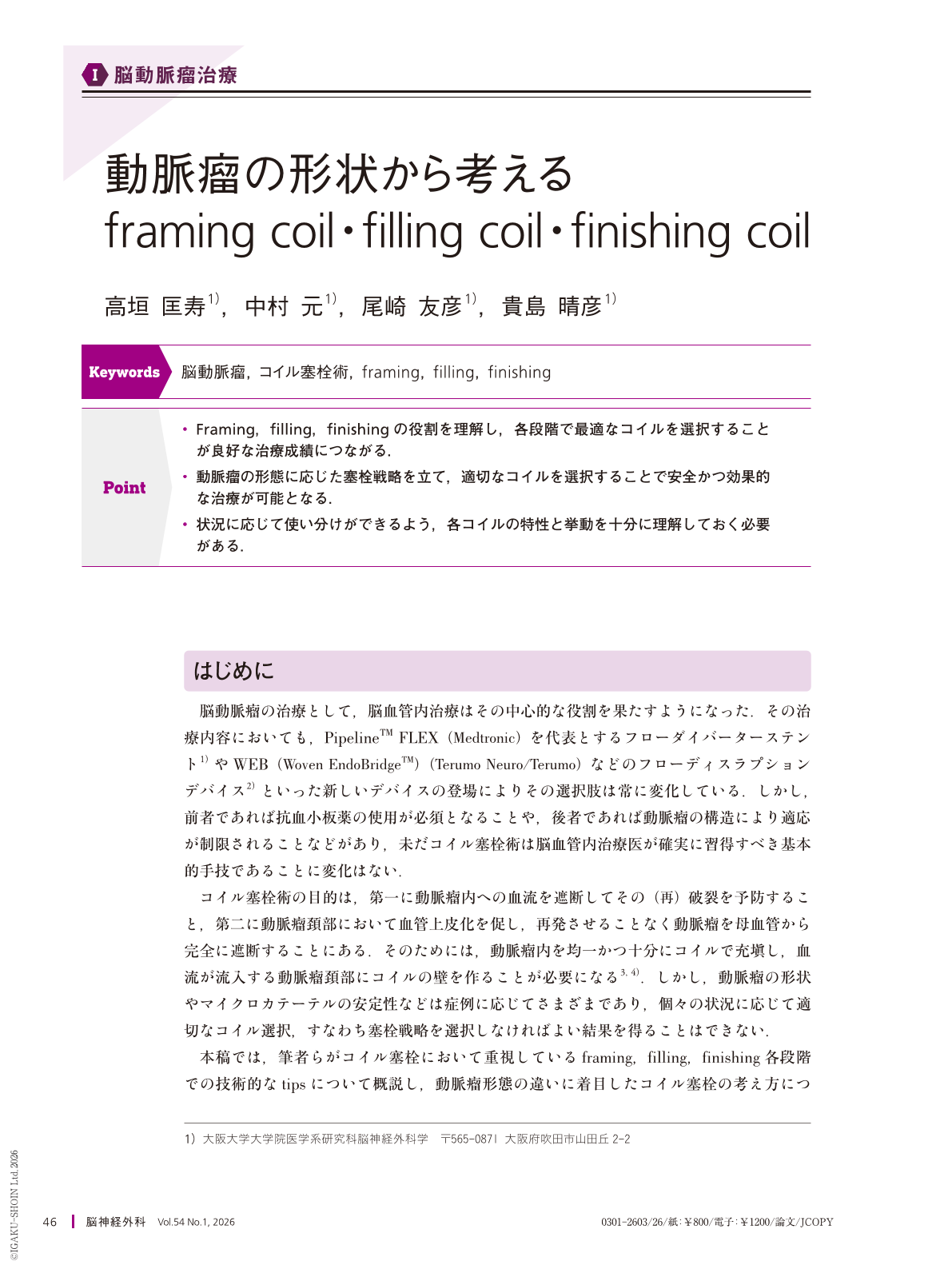
Point
・Framing,filling,finishingの役割を理解し,各段階で最適なコイルを選択することが良好な治療成績につながる.
・動脈瘤の形態に応じた塞栓戦略を立て,適切なコイルを選択することで安全かつ効果的な治療が可能となる.
・状況に応じて使い分けができるよう,各コイルの特性と挙動を十分に理解しておく必要がある.
Coil embolization remains an important technique for treating cerebral aneurysms, even with the development of new devices such as flow diverters and flow disruption systems. To achieve stable occlusion, it is important to use coils in three steps: framing, filling, and finishing. The framing coil creates the initial support inside the aneurysm and helps prevent rupture during the procedure. Filling coils are then placed to pack the aneurysm densely and evenly. Finishing coils are used at the end to close the small space near the neck and reduce the risk of recurrence. As aneurysms vary in shape—simple, irregular, or very small—the optimal coil strategy differs from case to case. Selecting the appropriate type of coil for the aneurysm shape and catheter position is essential for both safety and effectiveness. This review explains practical considerations for each step and shows how aneurysm morphology can guide coil selection to improve treatment outcomes.
Copyright © 2026, Igaku-Shoin Ltd. All rights reserved.