Japanese
English
- 有料閲覧
- Abstract 文献概要
- 1ページ目 Look Inside
- 参考文献 Reference
要旨
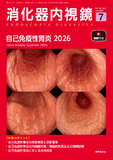
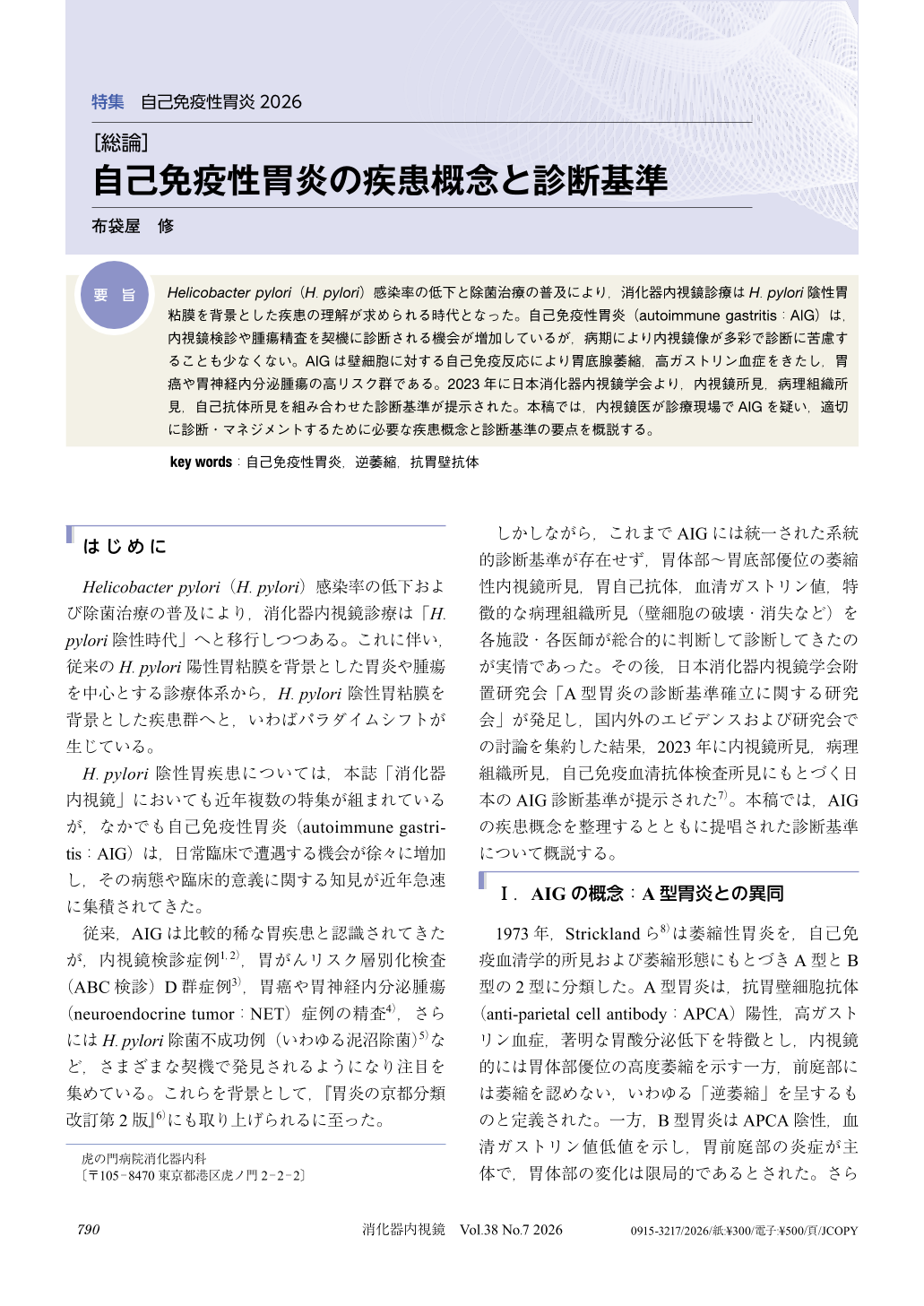
Helicobacter pylori(H. pylori)感染率の低下と除菌治療の普及により,消化器内視鏡診療はH. pylori陰性胃粘膜を背景とした疾患の理解が求められる時代となった。自己免疫性胃炎(autoimmune gastritis:AIG)は,内視鏡検診や腫瘍精査を契機に診断される機会が増加しているが,病期により内視鏡像が多彩で診断に苦慮することも少なくない。AIGは壁細胞に対する自己免疫反応により胃底腺萎縮,高ガストリン血症をきたし,胃癌や胃神経内分泌腫瘍の高リスク群である。2023年に日本消化器内視鏡学会より,内視鏡所見,病理組織所見,自己抗体所見を組み合わせた診断基準が提示された。本稿では,内視鏡医が診療現場でAIGを疑い,適切に診断・マネジメントするために必要な疾患概念と診断基準の要点を概説する。
With the declining prevalence of Helicobacter pylori infection and the widespread use of eradication therapy, gastrointestinal endoscopic practice has entered an era in which diseases arising in H. pylori-negative gastric mucosa must be properly recognized. Autoimmune gastritis (AIG), once considered a rare disorder, is increasingly identified during screening endoscopy and diagnostic workup for gastric neoplasms. However, its endoscopic appearance varies depending on disease stage, often making diagnosis challenging for endoscopists.
AIG is characterized by immune-mediated destruction of parietal cells, leading to oxyntic gland atrophy, hypergastrinemia, and an increased risk of gastric adenocarcinoma and gastric neuroendocrine neoplasms. Traditionally, a unified diagnostic system for AIG had been lacking. In 2023, the Japan Gastroenterological Endoscopy Society proposed diagnostic criteria based on a combination of endoscopic findings, histopathological features, and serological autoimmune markers.
This review outlines the disease concept and pathophysiology of AIG and summarizes the newly proposed Japanese diagnostic criteria, with particular emphasis on endoscopic features relevant to daily practice. Understanding stage-specific endoscopic findings and integrating them with pathological and serological information are essential in order for endoscopists to appropriately diagnose and manage AIG in the era of H. pylori-negative gastric disease.
© tokyo-igakusha.co.jp. All right reserved.